
One of the most popular “doomsday” scenarios from Citrini Research has heightened Wall Street’s already existing concerns about artificial intelligence, causing market volatility and further fueling worries about the rapid pace at which AI could shake up white-collar sectors. The hypothetical, which was 7,000 words, presented a future scenario and suggested that the quick progress made in AI could result in the discounting of human intelligence, which could lead to job displacement, cuts in spending, and financial contagion, said a WSJ report.
Markets reacted swiftly. Major software companies including Datadog, CrowdStrike and Zscaler recorded steep declines, while IBM posted its worst single-day fall since 2000.Financial institutions like American Express, KKR, and Blackstone, all of which have been mentioned in the report, also fell. This shows that investors are very sensitive to stories about the disruption caused by AI. This resulted in a sharp fall in US stocks, with the Dow Jones Industrial Average falling 1.7%.
The report amplified an emerging shift in investor focus. Earlier concerns about excessive spending by hyperscale technology firms have expanded into broader fears that AI could fundamentally reshape productivity models across software, finance, private credit and wealth management. Analysts note that markets are reacting not only to the possibility of disruption but to the speed at which it could occur.
The volatility unfolded alongside renewed uncertainty around US trade policy after President Donald Trump signaled plans to introduce a new 15% global tariff framework. While many economists expect limited macroeconomic impact, the policy added another layer of caution for investors already rotating capital toward defensive sectors such as energy and consumer staples.
AI-related disruption concerns have also spread into credit markets, where lenders heavily exposed to technology companies experienced declines. Analysts warn that a rapid shock could strain contractual protections, though most still expect adjustment to occur over multiple years rather than abruptly.
The scenario described by Citrini appears to be that many industries are interlinked by the assumption of continued productivity growth based on knowledge workers, which could be disrupted by AI. Businesses that are based on inefficiencies or intermediated services could be especially threatened by the cost-cutting and efficiency-enhancing capabilities of AI.
Ultimately, however, this episode highlights a larger trend in market psychology. Even in the realm of speculation, the ability to affect market prices is now possible, and this reflects a greater sensitivity to technological change. Strategists may urge a measured response to individual announcements, but the market reaction does, in fact, reflect a recognition that the economic implications of AI may be more profound and rapid than was anticipated.
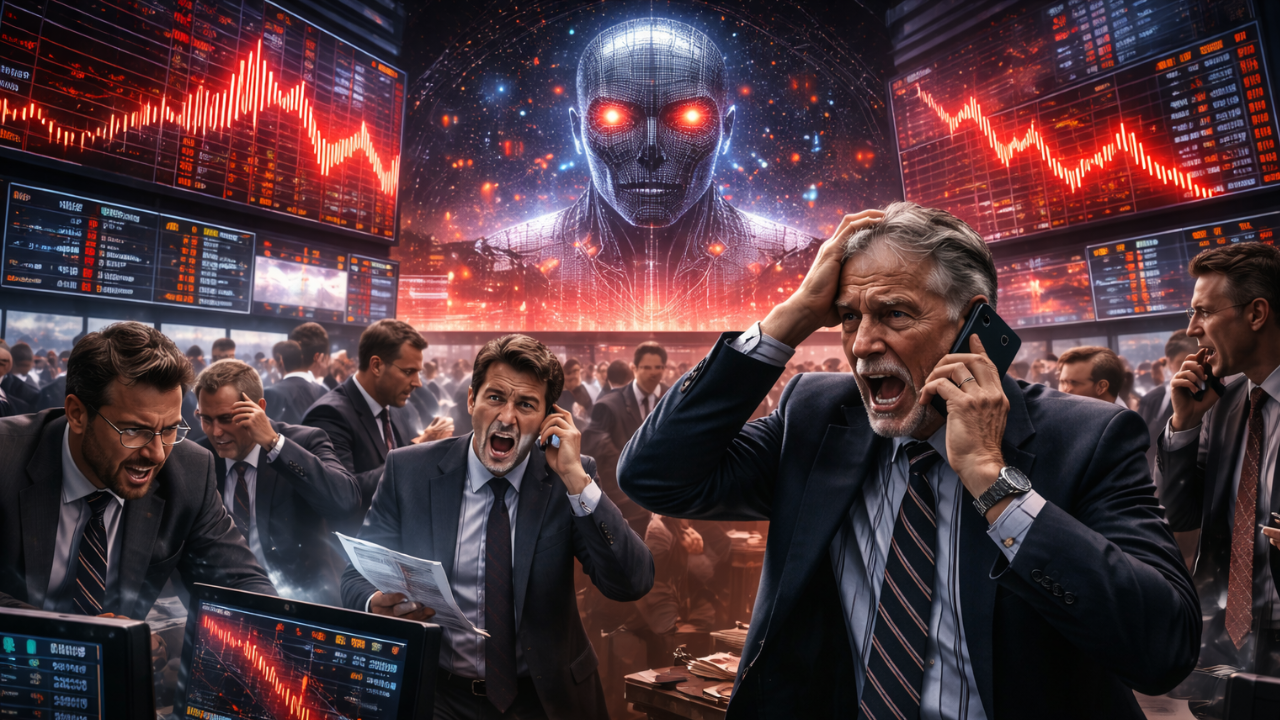
Viral 7,000-Word AI DOOMSDAY Report Sparks Market Panic as Wall Street Fears White-Collar Collapse
