
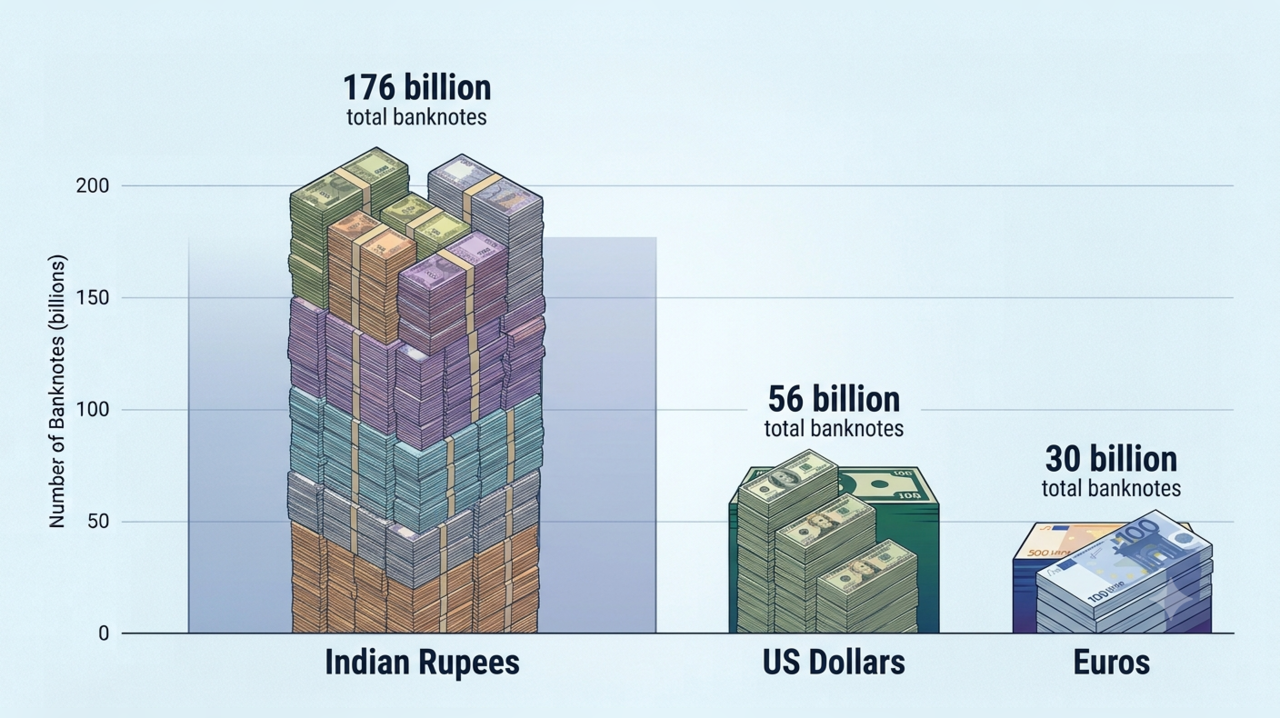
India has a much higher number of banknotes in circulation than the US and Euro area. According to recent remarks by Reserve Bank of India Deputy Governor Shirish Chandra Murmu, around 176 billion Indian banknotes are currently in circulation, compared with roughly 56 billion US dollar bills and 30 billion euro banknotes at the end of last year.
So why does India have far more banknotes in circulation than the US dollar or Euro. The key reason is the widespread use of lower-denomination notes in India, which means more physical notes are needed for everyday transactions. Experts believe India’s huge population, cash usage and large volume of small-value transactions contribute to the higher note count. However, analysts caution that the high note count should not be interpreted as Indians using more cash than Americans or Europeans in every context. They believe this data highlights the currency denomination structure, ecosystem and the importance of cash even as digital payments continue to expand.
RBI Deputy Governor, Shirish Chandra Murmu in a keynote address had recently stated, “over the past few years, we have produced between 28 and 30 billion banknotes annually across six denominations, and disposed of roughly 21 billion pieces a year. As of today, 176 billion banknotes are in circulation in India. By comparison, roughly 56 billion US dollar bills and 30 billion euro banknotes were in circulation at the end of last year. One caveat, in fairness to the comparison: our count is driven partly by a denomination mix weighted toward lower-value notes, which naturally means more pieces change hands for the same value of transactions. Even so, the volume gives you a sense of the scale of the logistics we manage every day.”
India’s denomination mix, including the continued circulation of lower-value Rs 10 and Rs 20 notes contributes to the overall number of banknotes in circulation.Experts believe this data shows how India’s denomination mix contributes to the number of banknotes in circulation, the scale of the country’s cash economy and the RBI’s vast currency-management network.
Why Indian Rupee Has More Banknotes In Circulation Than US Dollar And Euro
