
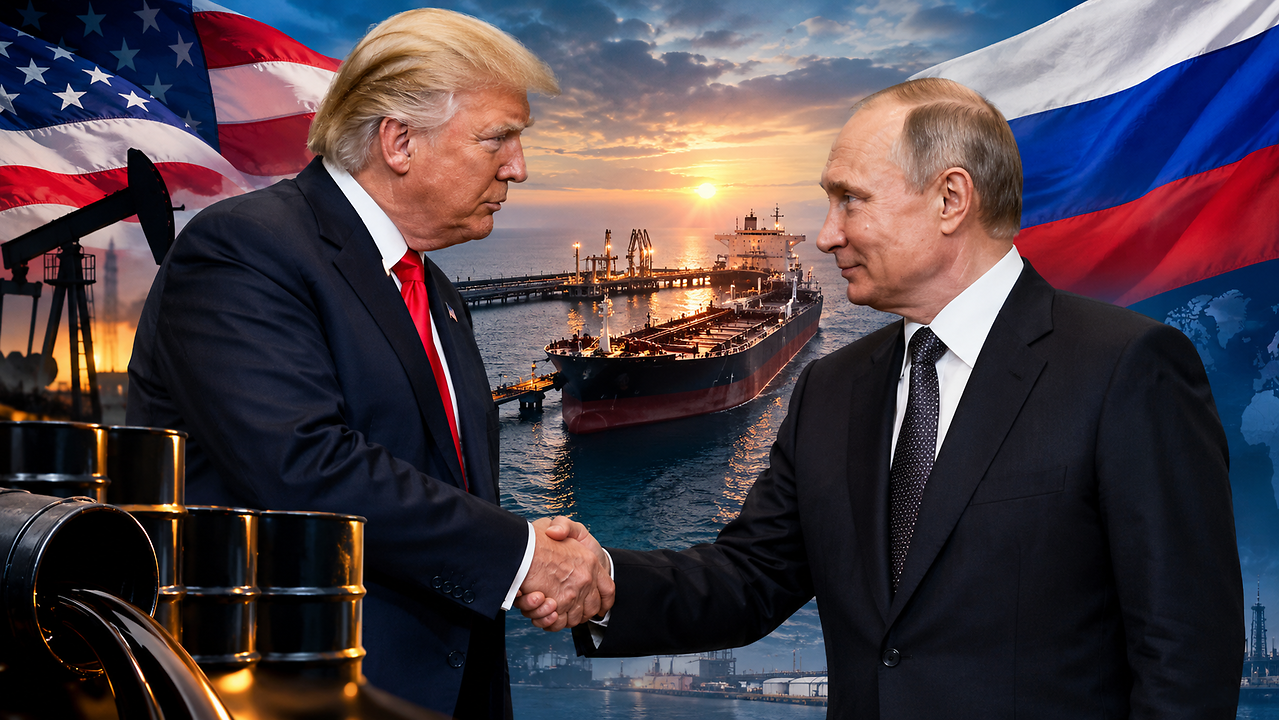
The Trump-Putin Diesel Deal & What Is The Agreement
US President Donald Trump has decided to turn to Russia for diesel-however, this has raised fresh concerns about the US’ approach to Russian energy. After threatening tariffs of up to 100 percent on major buyers of Russian oil and gas, including India and China, the Trump administration is now easing restrictions to secure Russian fuel for its own market. The Trump–Putin diesel deal is an agreement announced that is intended to inject millions of tonnes of Russian diesel fuel into American and global energy markets to curb soaring fuel costs. Trump announced on October 9 that Russia would supply more than 300,000 tonnes of diesel immediately, followed by additional shipments in November and beyond. The US Treasury issued a temporary licence allowing specified Russian diesel transactions through April 7, 2027. The move marks a sharp shift from years of US efforts to restrict Moscow’s energy revenues following its invasion of Ukraine.
The Question The Deal Raises
This contrast has raised difficult questions for the US: if buying Russian energy risks financing Moscow’s war against Ukraine, does that principle change when American consumers, farmers and truckers face higher fuel bills? Experts believe this deal exposes the tension between US’ geopolitical objectives and its domestic economic priorities.
The Trump-Putin Diesel Deal & What It Means For India
For India, the implications extend beyond the immediate impact on oil prices to the cost and availability of fuel ahead of winter, when demand for diesel typically rises in several major markets. Any additional Russian fuel supplies that ease pressure on global markets could help moderate price volatility, although the benefit for India would depend on how much supply reaches the market, freight and insurance costs, and the extent of disruption to other oil flows. India’s exposure is significant because it imports most of its crude oil, leaving its import bill, the rupee and domestic inflation vulnerable to sustained increases in global energy prices.
Why Diesel Ahead Of Winter Matters
Diesel powers freight transport, agriculture, construction and industrial activity, while related distillate fuels are used for heating in the winter. As winter approaches in the Northern Hemisphere, seasonal demand spikes. This year, that risk comes against a backdrop of volatile oil markets, with the US-Iran conflict disrupting energy flows and uncertainty over shipping and refining availability adding to supply concerns. Thefore, diesel prices can surge faster than crude oil if refining margins widen, inventories tighten or transport costs increase. Senior Economist, Mitali Nikore told Times Now Digital, “diesel runs our trucks, farms and freight, and it is nearly 30% of the world’s oil use. Right now the world is short of about 1.6 million barrels of diesel a day compared with February, because Gulf and Russian exports have fallen. Winter makes it harder. In the US, diesel and heating oil use in January and February is about 3% above the yearly average, and fuel stored on the East Coast is 20 to 30% below normal. As per the terms of this new deal, Russia has committed to about 125,000 barrels a day, far short of 1.6 million. Most of it also depends on Russia’s damaged refineries recovering. This may calm prices for a few weeks. But the wider shortage will last until Gulf exports and Russian refineries recover. The bottom line-this deal shows that Trump will do business with anyone to bring fuel prices down, even the Russians, a month after signing a sanctions law against the country!”
Oil Market Pressure: Will Russian Diesel Bring Prices Down?
Oil prices have fluctuated significantly in 2026, primarily due to the US-Iran conflict that has added a consistent layer of uncertainty on oil flows and rates. With crude oil prices remaining sensitive to developments in West Asia, the availability of additional Russian diesel could help ease pressure on refined fuel markets. However, the extent of any relief will depend on actual volumes reaching buyers, shipping and insurance costs, refinery capacity. Global oil expert and CEO-Australia, Trading.com & Chief Strategist Asia-Pacific XM.com, Peter McGuire told Times Now Digital, “after reviewing US President Donald Trump’s comments on diesel fuel and Russia, the commitment from Russia will certainly assist reported shortages to the American and global marketplace.”
