
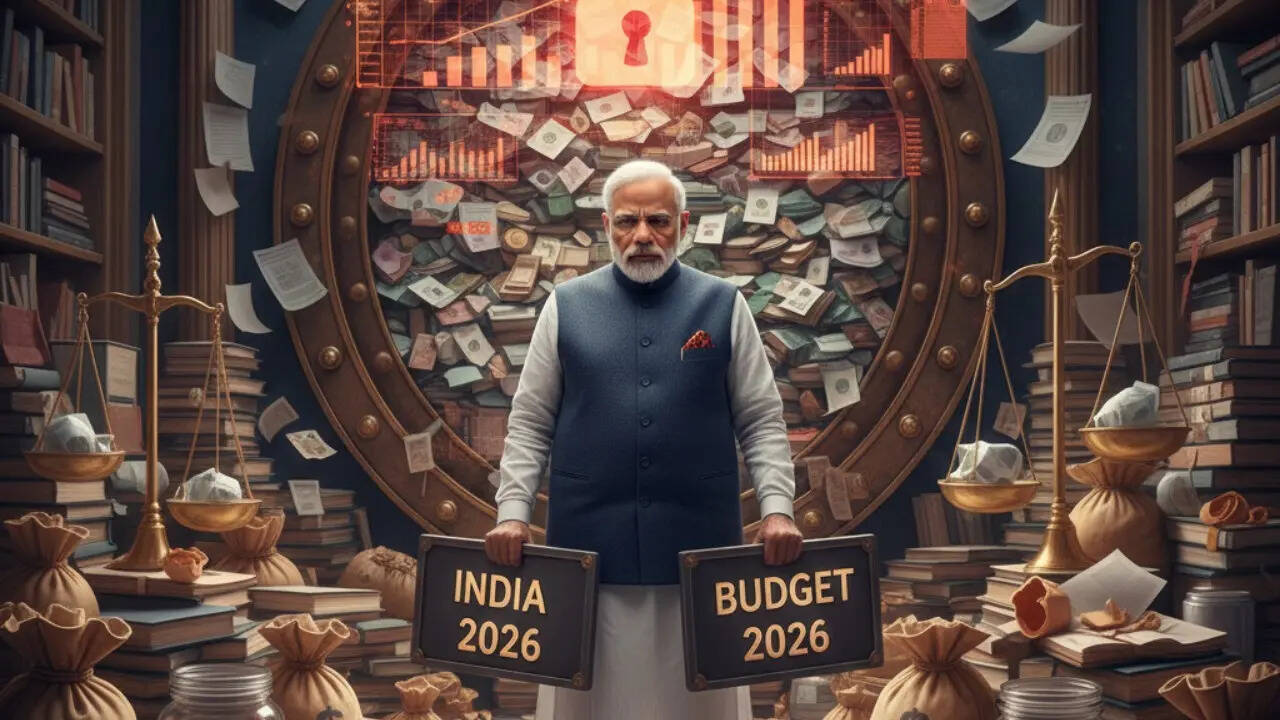
Budget 2026: The government is expected to stick to tight control over its spending in the Union Budget 2026 to be presented on February 1, according to all economists surveyed by Reuters. The main reason: the government is earning less than expected, largely due to recent tax cuts. Therefore, the first budget of Modi 3.0 is likely to focus more on fiscal consolidation.
What Does “Fiscal Consolidation” Mean?
In simple terms, fiscal consolidation means the government is trying to reduce its borrowing and control its expenses, instead of spending freely and piling up debt.
Economists say slower revenue growth has left the government with very limited options. As a result, it may have to cut or delay some spending and depend more on money transferred from the Reserve Bank of India (RBI) and public sector companies.
WATCH: Former Finance Secretary Subhash Chandra Garg Shares Vision For Viksit Bharat
“There will be some cuts in expenditure to meet the shortfall in revenue…there is no other option,” said Anitha Rangan, chief economist at RBL Bank.
Why Is Government Income Under Pressure?
Although India’s economy grew 8.2% between July and September, government income has not kept pace.
Net tax collections until November 2025 are 3.4% lower than last year
Collections are less than half of what the government planned for the full year
This gap means the government must either borrow more or spend less, and economists say it is choosing the second path.
WATCH: What Should FM Nirmala Sitharaman Prioritise As India Eyes Viksit Bharat 2047?
How Is the Government Managing the Gap?
One key support has come from the RBI’s dividend payments – essentially profits transferred by the central bank to the government. These transfers have jumped nearly 5,000% over the past two decades, RBI data shows.
“Especially with the kind of tax shortfall we are experiencing in the current fiscal year, the excess dividend has come in really handy. Otherwise, the government would have had to pull back expenditure a lot (more) to meet the fiscal deficit target,” said Dhiraj Nim, economist at ANZ.
