
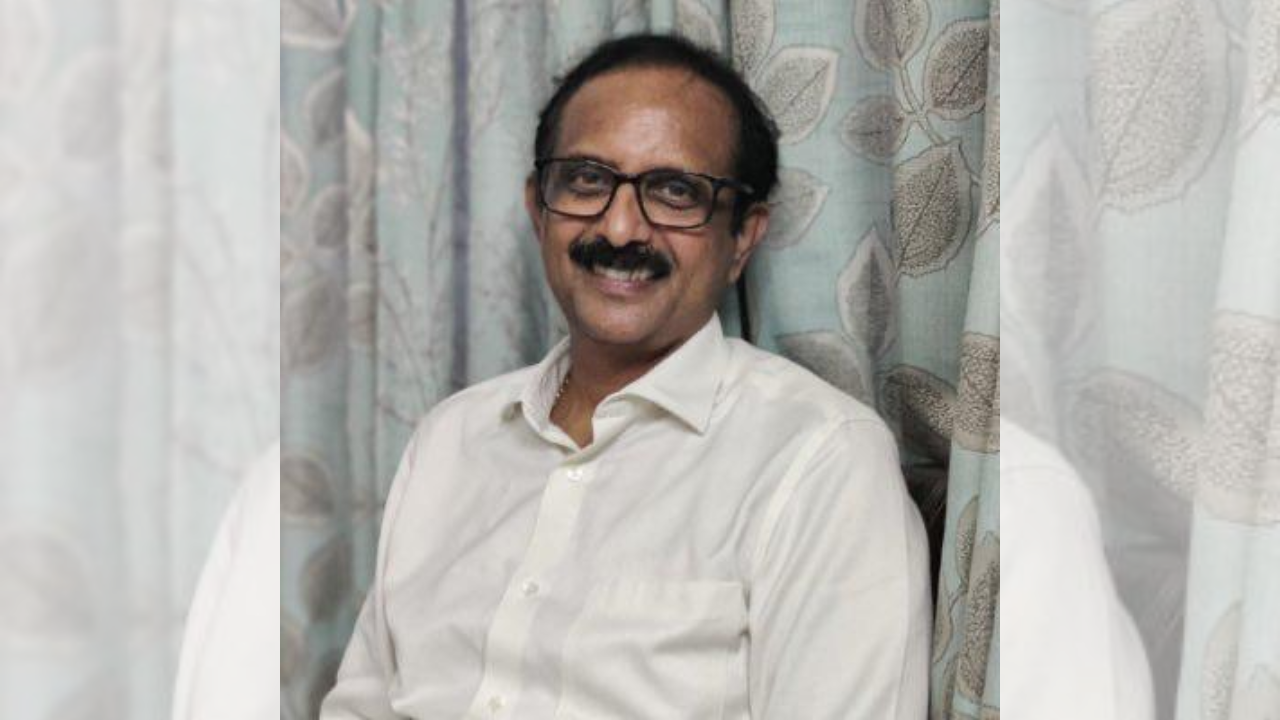
India is moving beyond the phase of simply narrowing the gap with advanced economies and is increasingly positioning itself as a force that will influence global economic trends in the decades ahead, the State Bank of India Chairman Challa Sreenivasulu Setty said during his keynote address at the Citi India Conference 2026 on Wednesday. Setty argued that despite growing uncertainty across the world, India continues to stand out for its economic resilience and long-term potential.
“I thought I’ve seen everything, but every year brings new dimensions of challenges. But India stands out as a source of stability, resilience and opportunity. Don’t look at Sensex. Look at India as a long-term story,” said State Bank of India Chairman Challa Sreenivasulu Setty at the Citi India Conference 2026, according to an ANI report.
The SBI Chairman outlined the ambitions behind Vision India 2047, the government’s long-term roadmap aimed at transforming the country into a developed economy, or Viksit Bharat. A central objective of this vision is to raise India’s per capita income to at least $10,000.
According to Setty, achieving this goal will require focused attention on three critical areas: improving rural prosperity for the majority population living outside cities, preparing urban centres for rapid expansion, and investing in India’s growing workforce. He noted that the country’s urban population could approach 800 million by 2050, while the working-age population is expected to exceed 1.1 billion during the same period.
Another major priority is expanding manufacturing’s contribution to the economy. Setty stressed the importance of increasing the sector’s share of GDP from the current 17 per cent to at least 25 per cent in the years ahead.
Rs 650 Trillion Investment Need Over The Next Decade
Setty highlighted the enormous financial resources required to sustain India’s growth trajectory. “Based on internal assessments, India may require incremental investments of nearly Rs 200 trillion rupees by 2030, another Rs 400 to Rs 450 trillion by FY35 across infrastructure, manufacturing, energy transition, urban development, MSMEs and innovations,” Setty said.
He added that the banking sector must undergo a significant transformation if it is to support these ambitions effectively.
‘For banks to support India’s aspiration, they themselves must evolve. The future banking model must be built on some key pillars, ensuring access to banking services across every segment of society and the economy,’ he added.
The SBI Chairman also underscored the scale of investments required for India’s green transition. He estimated that the country would need around USD 22 trillion in cumulative investments by 2070 to achieve its net-zero emissions target.
He pointed out that renewable energy now accounts for more than half of India’s electricity demand, a milestone achieved five years ahead of the timeline associated with the Paris Agreement goals.
On the banking front, Setty cited strong growth in lending activity. Infrastructure financing by scheduled commercial banks has risen from Rs 9.6 trillion in 2016 to nearly Rs 14 trillion in 2026. Agricultural credit disbursements crossed Rs 26 trillion in FY26, while outstanding credit to MSMEs has reached approximately Rs 67 trillion.
Setty also highlighted the success of India’s digital public infrastructure. He noted that the Unified Payments Interface (UPI) now processes around 200 billion transactions annually, with SBI handling nearly 30 per cent of the total volume through about 250 million transactions each day.
Banking Sector Will Drive The Next Growth Chapter
Looking ahead, Setty said India faces a challenging yet promising journey toward its 2047 goals. “The journey to vision India 2047 will undoubtedly be challenging, but it is also one of the most compelling growth stories of our time. India has already demonstrated how inclusion can be achieved at scale,” Setty said.
“The next chapter is to demonstrate how inclusion can be transformed into prosperity at scale. The banking sector will be at the heart of the transformation, not merely as providers of credit, but as mobilizers of savings, enablers of entrepreneurship, allocators of capital, and partners in nation building,” he stated.
