
A long-lost second memoir penned by a famed 19th-century British soldier named Shadlock Byfield resurfaced in a rather unexpected place—Cleveland, Ohio. As explained in a study recently published in the Journal of British Studies, Byfield’s second book depicts a very different war veteran than the one described in his first autobiography written 11 years earlier.
Who was Shadrack Byfield?
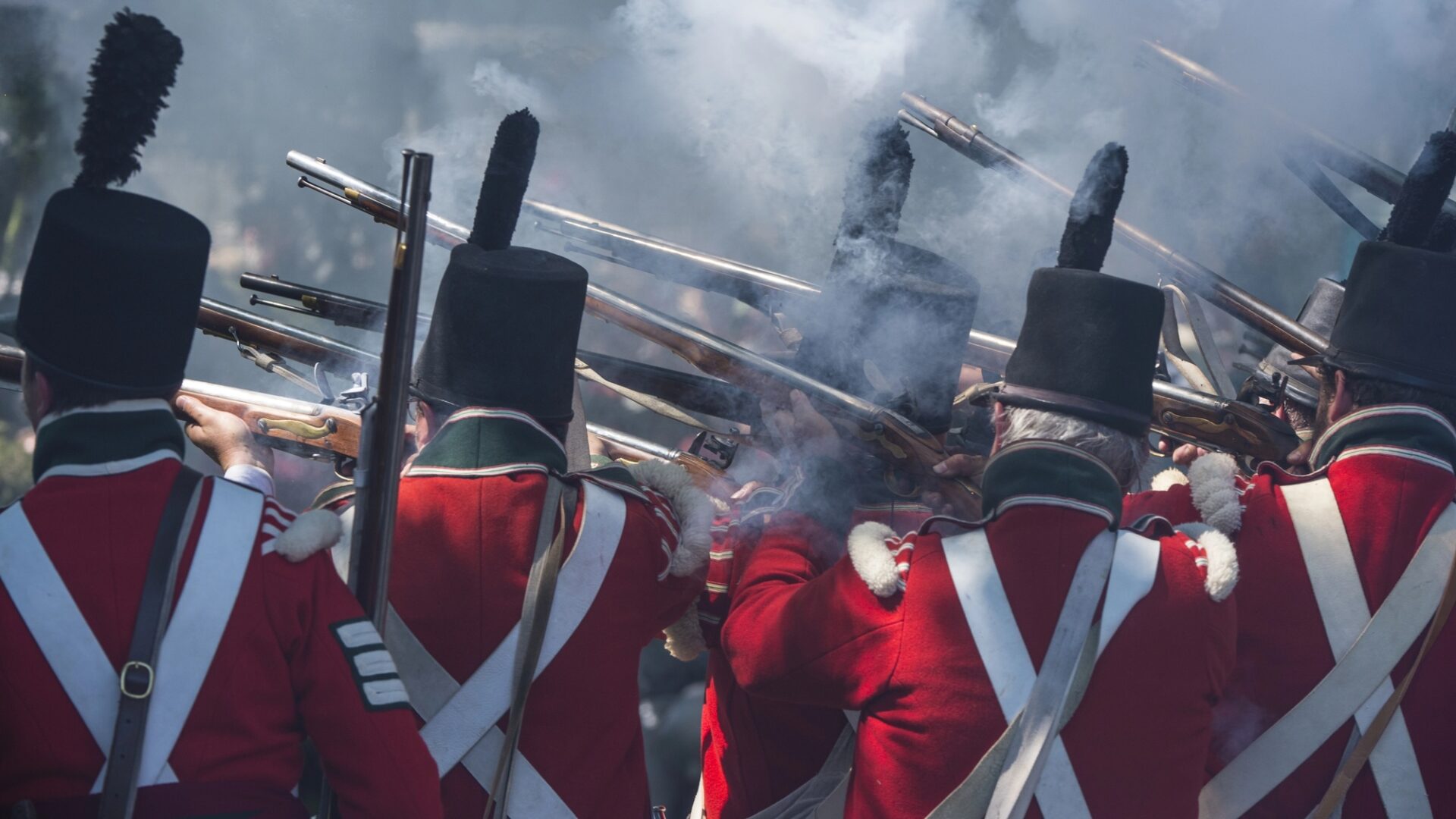
Although he may not be a household name, many early American history buffs are well acquainted with Shadrack Byfield. The British soldier served at Fort George near the Niagara River during the War of 1812, fighting in multiple battles over the course of the roughly three year-long conflict.
At one point, a musket ball wound forced doctors to amputate Byfield’s left forearm—without anesthesia. After learning his limb had been tossed into a “dung-heap,” the recuperating soldier reportedly retrieved it himself so he could bury it in a makeshift coffin.
Byfield returned to England after the war, but his disability prevented him from going back to his previous job as a weaver. After dreaming of an “instrument” to solve the problem, Byfield asked a nearby blacksmith to build the tool for him. In 1840, the veteran published A Narrative of a Light Company Soldier’s Service, a memoir detailing these and other experiences.
A new chapter
For over 200 years, historians believed the 1840 book to be Byfield’s only manuscript. However, Cambridge University historian Eamonn O’Keeffe recently discovered the only known copy of an entirely separate book in the Western Reserve Historical Society’s library in Cleveland, Ohio. But unlike Byfield’s first publication, his 1851’s History and Conversion of a British Soldier tells his life story from a very different angle.
“In the 1840 narrative, Byfield sought to impress wealthy patrons by presenting himself as a dutiful soldier and deserving veteran,” O’Keeffe said in an accompanying statement. “The 1851 memoir, by contrast, was a spiritual redemption story, with Byfield tracing his progress from rebellious sinner to devout and repentant Christian.”
The second book is also far more confessional. Where A Narrative explored the experiences of a Byfield “comfortably” supporting his family for almost 20 years after receiving his prosthetic forearm, History and Conversion describes his chronic pain and everyday difficulties due to the injury.
“It now pleased the Lord to afflict me with a violent rheumatic pain in my right shoulder, from which the [musket] ball was cut out,” Byfield writes in the latter book. “I was in this condition for nearly three years…oftentimes I was not able to lift my hand to my head, nor a tea-cup to my mouth.”
Other memories were more unflattering, such as abandoning his army duties to engage in a plundering excursion with other soldiers.
“Such unflattering incidents are conspicuously absent from Byfield’s earlier accounts of his military service,” said O’Keeffe. “In the 1851 memoir, the veteran also dwells on periods of indebtedness, illness and unemployment after returning to England.
New details of resilience
Byfield’s difficulties didn’t end after publishing History and Conversion. In 1853, fellow church parishioners accused him of injuring a rival’s eye and face using his prosthetic’s iron hook. The dispute was part of a larger entanglement over rightful control of the village chapel, which eventually grew to include arson, vandalism, and even a riot. Although never convicted of a crime, Byfield and his supporters eventually lost the fight and his job at the time.
By 1856, Byfield was a widower and returned to his hometown. While he married a second wife, he continued to sometimes struggle financially. In 1867, he published another personal narrative, The Forlorn Hope, and died at the age of 84 in 1874. No copies of this third and final book are known to exist.
“Uncovering these new details about his life provides remarkable insight into the suffering and resilience of Britain’s homecoming soldiers,” said O’Keeffe. “Byfield’s 1851 memoir emphasises the challenges of post-war reintegration, especially for veterans with disabilities, in the decades after the Napoleonic Wars.”
The post British soldier’s long-lost memoir rediscovered in Cleveland appeared first on Popular Science.
British soldier’s long-lost memoir rediscovered in Cleveland
