
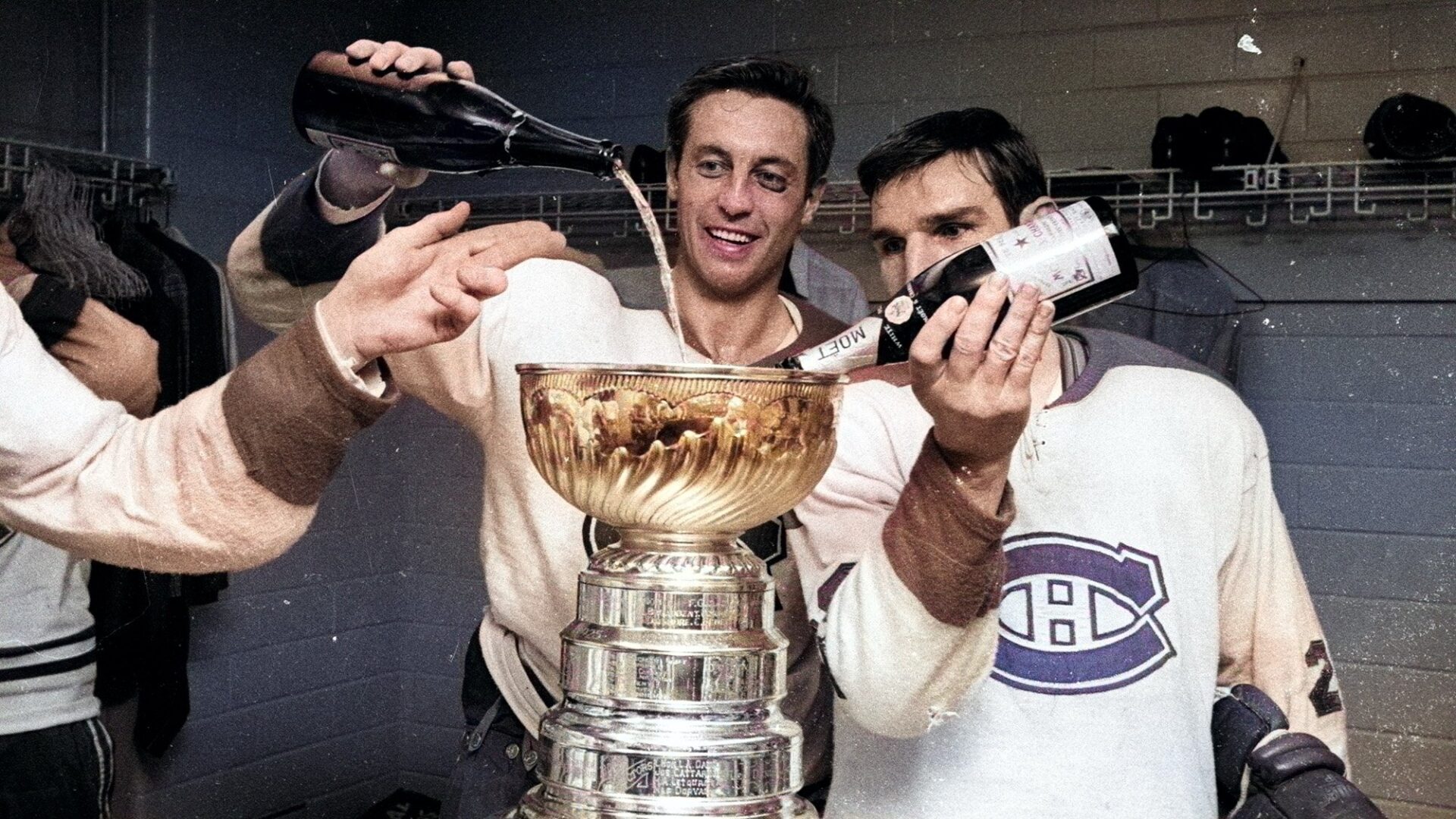
The Stanley Cup—hockey’s biggest prize—has survived champagne showers, championship parades, accidental drops, and even a trip to the bottom of a canal. But one of its strangest adventures happened before it became the towering icon known around the world.
Originally a short, week-long tournament requiring as few as four wins in the 1920s, the Stanley Cup Playoffs have expanded alongside the league over the past century. Today, it’s a grueling, two-month marathon where 16 teams must survive four sequential best-of-seven rounds to capture the trophy.
In 1924, after the Montreal Canadiens won the cup, several players were driving to a celebration when they got a flat tire. To reach the spare, they had to remove the Stanley Cup from the car and place it on the side of the snowy road. They changed the tire, climbed back in, and drove away. It was only after arriving at the party that someone realized the trophy was missing. Panicked, the players rushed back, relieved to find hockey’s holy grail sitting untouched on the road’s shoulder.
Today, the Stanley Cup is one of the most recognizable trophies in the world. It is photographed, protected, and carefully maintained. Yet it has always lived an unusual life. Unlike most historic objects that spend decades behind glass, the Cup travels from city to city and passes from champion to champion. From being left on the side of the road in a snowbank to being dropped in swimming pools, the Stanley Cup has survived many wild misadventures. And somehow, it keeps surviving.
From a silver bowl to a hockey icon
When Canada’s Governor General, Lord Stanley of Preston, donated the trophy in 1892, he couldn’t have imagined it would become professional hockey’s most iconic trophy. The original Cup was a modest silver bowl, about seven inches tall—far smaller than the nearly three-foot trophy that champions hoist up today. Silver was a radiant choice, resisting corrosion and polishing to a brilliant shine.
Canada’s Governor General, Lord Stanley of Preston, donated the so-called Stanley Cup trophy in 1892, just a decade before this photograph was taken. Image: Hulton Archive / Staff / Getty Images Hulton Archive
However, silver is also relatively soft. That physical property presented a major problem as the Stanley Cup grew even more famous and additional names required engraving. Craftsmen engineered a brilliant solution. Instead of replacing the trophy, they added engraved rings beneath the original bowl, transforming it into a living record of hockey history.
Today’s Stanley Cup continues in that original spirit, but metallurgists have strengthened the cup using a silver and nickel alloy that can withstand constant travel, handling, and celebration. It is not a trophy frozen in the past; it is an object adapting to the future.
The engineering problem of too many champions
The barrel section of the Cup consists of five tiered bands, often referred to as rings. Each ring is built to hold the names of 13 winning teams. The precision seen today is a modern creation. Before official engraving started in 1948, the process was unorganized and inconsistent, requiring winning teams to hire their own independent silversmiths to find open space on the metal.
Today, Louise St. Jacques is the person who does the engraving. She works out of Boffey Promotions in Montreal and is only the fourth official engraver in the history of the trophy. She has been the sole person responsible for painstakingly hand-stamping every single name onto the Stanley Cup since 1988.
When the bottom ring fills up after 13 seasons, the topmost ring, which contains the oldest batch of champions on the main barrel, is carefully removed. To make room for the future, these older bands are retired. They are hammered flat for easier reading and storage and permanently displayed in Lord Stanley’s Vault at the Hockey Hall of Fame in Toronto.
The remaining four bands slide up one position, and a new blank band attaches at the bottom to record the next era of champions. Because of this 65-year lifespan on the trophy itself, names are never simply erased; they retire with honor.
In 1924, after the Montreal Canadiens (shown here) won the cup, several players left the trophy on the side of the road. Image: Public Domain
No one originally knew how much the game would grow. “Every 13 years we alter a ring—remove one and add another to the bottom—maintaining the look, size, and the history of the cup,” explains Phil Pritchard, vice president and curator of the Hockey Hall of Fame and colloquially known as the Keeper of the Cup.
Hall of Fame staff members take extra care in preserving the sport’s greatest trophy. “Daily cleaning, care, and preservation goes into it, so it looks as good today as it did years ago.” Their meticulous work ensures every era gets its turn on the Cup, while keeping the trophy at approximately 35 pounds.
Every scratch tells a story
The Stanley Cup’s greatest stories often come from the moments when things went wrong. It’s been dropped during celebrations and dented during enthusiastic victories. In 1905, after celebrating their championship victory, players from the Ottawa Silver Seven tried to drop-kick the Stanley Cup across the frozen Rideau Canal. The kick fell short, and the Cup was stranded on the ice while the intoxicated team went home for the night. Realizing their mistake the next morning, the players returned to recover it. Surprisingly, it survived unscathed.
Players have filled it with champagne and pasta, let their dogs eat out of it, and a baby even used it as a personal diaper! Those moments might sound like mistreatment, but they are the exact reason the Cup matters so much. It is an active participant in the celebration.
Pritchard believes this shared connection with the players is what sets the prize apart. “In hockey you don’t just win the trophy, you become a member of the greatest union in sport, a Stanley Cup Champion,” Pritchard notes. “It is the only sport where the trophy is the same one every year, meaning your heroes won it, their heroes won it, etcetera.”
That’s what makes the forgotten Cup on the side of the road such a fitting chapter in its history. It was never meant to be a fragile decoration. It’s become something rare: a historic object that still actively lives its purpose. Every repaired dent, every shifted band, and every new champion added to its surface tells the same story.
The trophy truly belongs to the communities that welcome it across the world. “The amazing part about it is the smile and memories people have of it when they see it for the first time,” says Pritchard.
The Stanley Cup has survived not because it was built to be untouched, but because generations of people have cared enough to keep it going. “Remember, every June when we hand it out to the winner, it is a new chapter in the life of the Stanley Cup.”
In That Time When, Popular Science tells the weirdest, surprising, and little-known stories that shaped science, engineering, and innovation.
Related ‘That Time When’ Stories
From bones to steel: Why ice skates were a terrible idea that worked
Pilates started in a WWI internment camp
During WWII, the U.S. government censored the weather
In the 1890s, the U.S. hired a team of globe-trotting plant hunters
After WWII, flying saucer-shaped houses almost filled American suburbs
Beef tea was all the rage in the 1800s
In 1960, movie theaters tried Smell-O-Vision. It stunk.
The post In 1924, the Montreal Canadiens left the Stanley Cup on the side of the road appeared first on Popular Science.
