
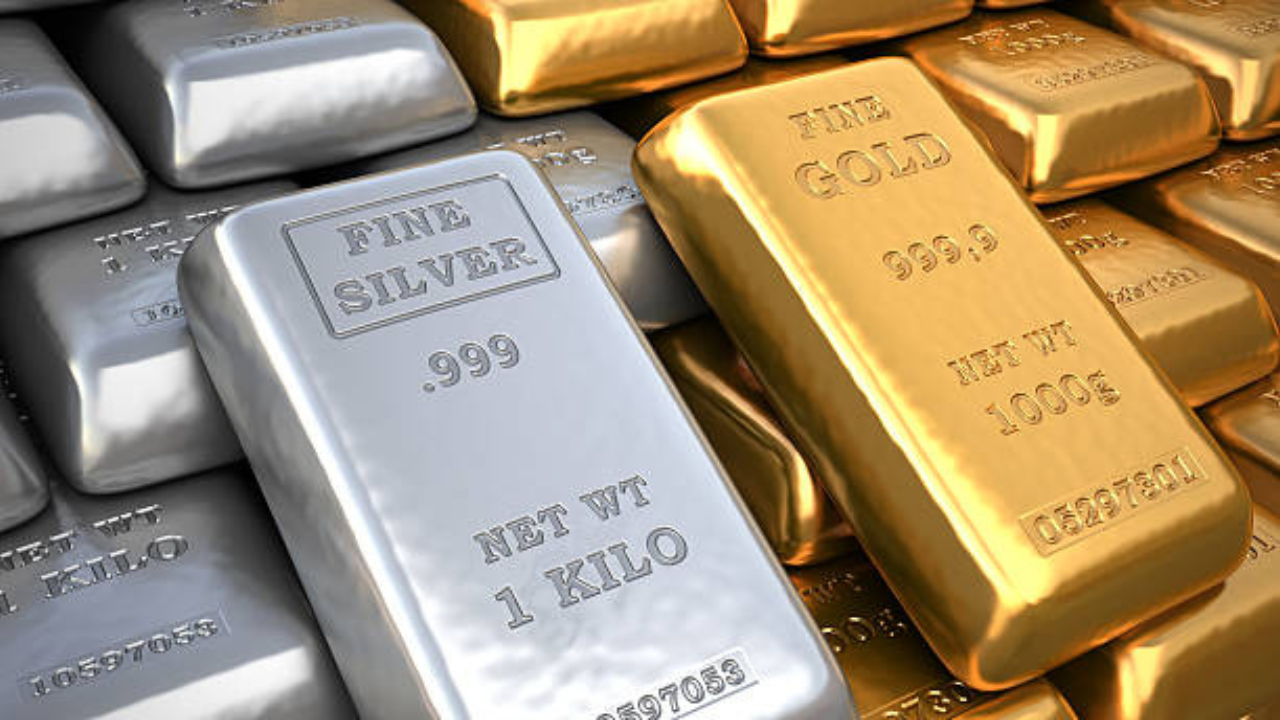
Precious metals, silver and gold markets saw renewed movement after fresh economic data from the United States, and rising geopolitical tensions influenced investor sentiment. Prices edged higher after weaker-than-expected employment data strengthened expectations that the Federal Reserve could consider cutting interest rates later this year.
However, the gains were limited as the US Dollar Index strengthened significantly during the week. A stronger dollar tends to weigh on gold prices because it makes the metal more expensive for international buyers. Meanwhile, growing tensions in the Middle East also pushed investors toward safe-haven assets.
Other precious metals, including silver, platinum and palladium, also recorded price movements. Despite the short-term rise, most metals remained on track for weekly losses, highlighting ongoing volatility in the sector.
Why Gold and Silver Prices Are Moving
Recent price movements in precious metals were largely driven by weaker labour market data from the United States and expectations surrounding future monetary policy. The latest employment report showed that nonfarm payrolls fell by 92,000 jobs, while economists had forecast an increase of 59,000 jobs. The unemployment rate also climbed to 4.4 per cent. These developments have strengthened market speculation that the Federal Reserve may eventually lower interest rates.
Gold and silver typically benefit when borrowing costs fall because these assets do not generate income like bonds or deposits. Lower interest rates often encourage investors to seek alternative stores of value.
Rising crude oil prices and geopolitical tensions have also increased uncertainty in financial markets, further supporting demand for precious metals.
Gold’s Reaction To Weak Payroll Data
Gold prices moved higher on Friday after the weak employment report raised expectations of a rate cut from the Federal Reserve. Spot gold gained 1.4 per cent to $5,149.14 per ounce by early afternoon trading in the United States. Despite the daily rise, the metal still recorded a weekly decline of 2.4 per cent, marking its first weekly fall in five weeks. Meanwhile, US gold futures for April delivery ended the session 1.6 per cent higher at $5,158.70.
Independent metals trader Tai Wong said in an ET report the weak payroll report showed job losses in the private sector along with rising wages. He said these signals could indicate stagflation and might help gold recover after a difficult week.
Middle East Conflict and Dollar Strength
Geopolitical developments also played a role in shaping precious metals markets. Israel launched strikes on the suburbs of Beirut controlled by Hezbollah after ordering evacuations in the southern parts of the Lebanese capital. The escalation marked a broader expansion of the conflict involving Iran and the United States, increasing uncertainty across global markets.
At the same time, the US dollar index moved toward its strongest weekly rise in more than a year. Rising geopolitical tensions also increased demand for the dollar as a safe asset.
A stronger dollar typically reduces global demand for gold because it increases the cost of dollar-priced commodities for overseas buyers. Precious metals trader Hugo Pascal said in the report that the algorithmic traders often sell precious metals automatically when the US dollar strengthens. This also contributed to weak performance in the sector during the week.
Interest Rate Outlook and Inflation Concerns
Investors are now focusing on the upcoming Federal Reserve policy meeting scheduled for March 18. Analysts expect the central bank to keep interest rates unchanged during the meeting, though markets are increasingly anticipating the first rate cut in July, according to the CME FedWatch Tool, the report added.
Gold generally performs well during periods of low interest rates because holding the metal does not generate interest income. Lower borrowing costs can also boost demand for alternative assets.
Despite recent volatility, gold has still risen more than 18 per cent this year, indicating strong underlying demand.
Meanwhile, crude oil prices are heading toward their biggest weekly increase since Russia’s invasion of Ukraine in February 2022, raising concerns about inflation. Higher inflation expectations can sometimes support gold prices as investors seek protection against rising costs.
Outlook: Rally Or Continued Volatility?
The outlook for precious metals remains uncertain as multiple factors continue to influence prices simultaneously.
While expectations of lower interest rates could support gold and silver later this year, a stronger US dollar, automated trading strategies and geopolitical tensions may keep markets volatile in the short term.
Analysts say investors are closely watching economic indicators, central bank decisions and global conflicts to assess whether precious metals will resume a sustained rally or continue to experience sharp price swings.
