
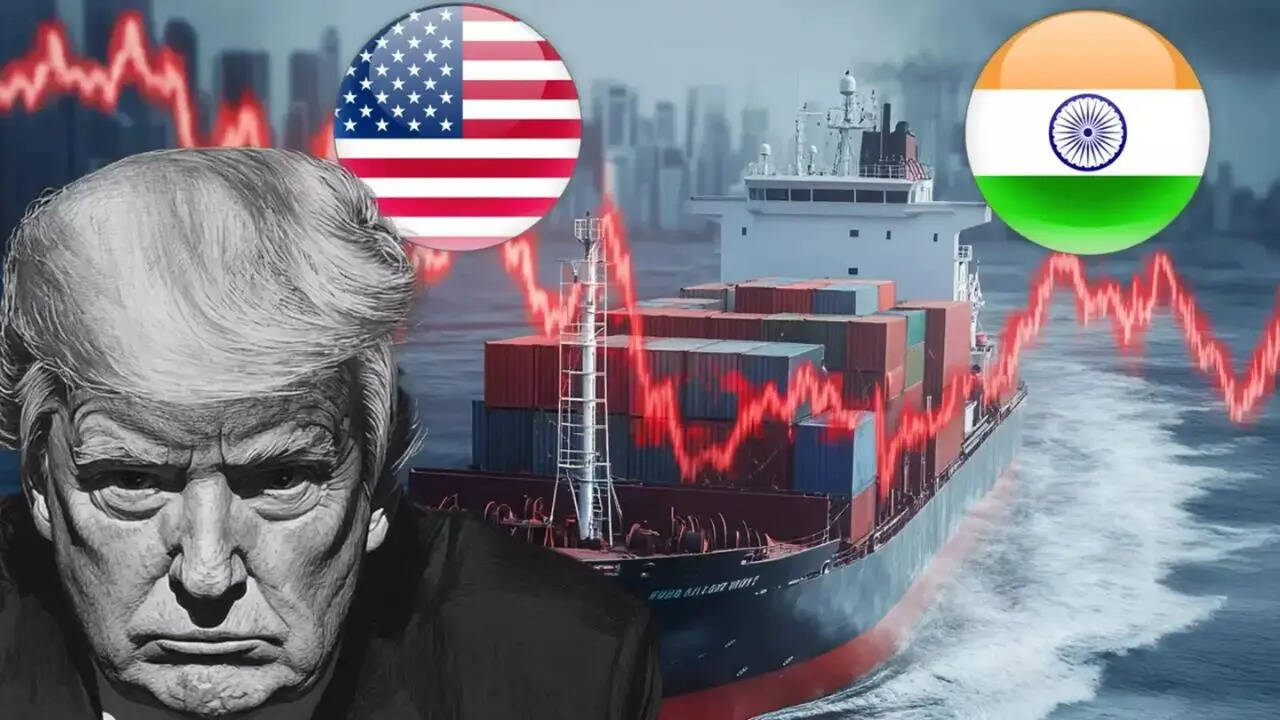
A United States (US) federal court has ruled against the global tariffs that President Donald Trump imposed after a stinging loss at the Supreme Court. The court comprising of a split three-judge panel of the Court of International Trade in New York found the 10% global tariffs were illegal after small businesses sued.
The ruling came months after the US Supreme Court struck down a broader set of tariffs imposed by the Trump administration last year on imports from nearly every country.
The court stopped short of blocking the tariffs nationwide instead the decision applied only to the three plaintiffs involved in the case which are the state of Washington, spice company Burlap & Barrel, and toy maker Basic Fun!
As reported by news agency AP, Jeffrey Schwab, director of litigation at the Liberty Justice Center, which represented the two businesses, said it remained uncertain whether companies not involved in the lawsuit would still have to pay the tariffs.
“It’s not clear’’ whether other businesses would have to continue to pay the tariffs, Schwab said.
Impact on India:
India was one of the major hit country due to the US tariffs with a 25 per cent duty and an additional 25 per cent penalty tariff linked to its continued imports of Russian crude oil. Later, an interim India-US trade arrangement later reduced the effective tariff rate to 18 per cent before the Supreme Court struck down the measures.
Among the various sectors doing businesses with the US, pharma, textile, automobile and engineering sectors were projected to hit hard.
After the US Supreme Court decision on the tariffs, India and the United States remain divided as New Delhi seeks lower rates and Washington resists renegotiation.
Donald Trump had said there is no change in the trade deal with India and emphasised that the India deal is on. He said that his relationship with India is fantastic and they are doing trade with India.
Under the trade deal, Washington will charge a reduced tariff on New Delhi, lowering it from 25 per cent to 18 per cent.
In February, Trump had announced that India and the US reached an interim trade agreement after a phone call with Prime Minister Narendra Modi.
As per the arrangement, India promised to reduce its standard tariffs on all US industrial goods as well as several food and agricultural products, while the US agreed to lower reciprocal tariffs that apply to about 55% of Indian exports, bringing them down from 50% to 18%.
