
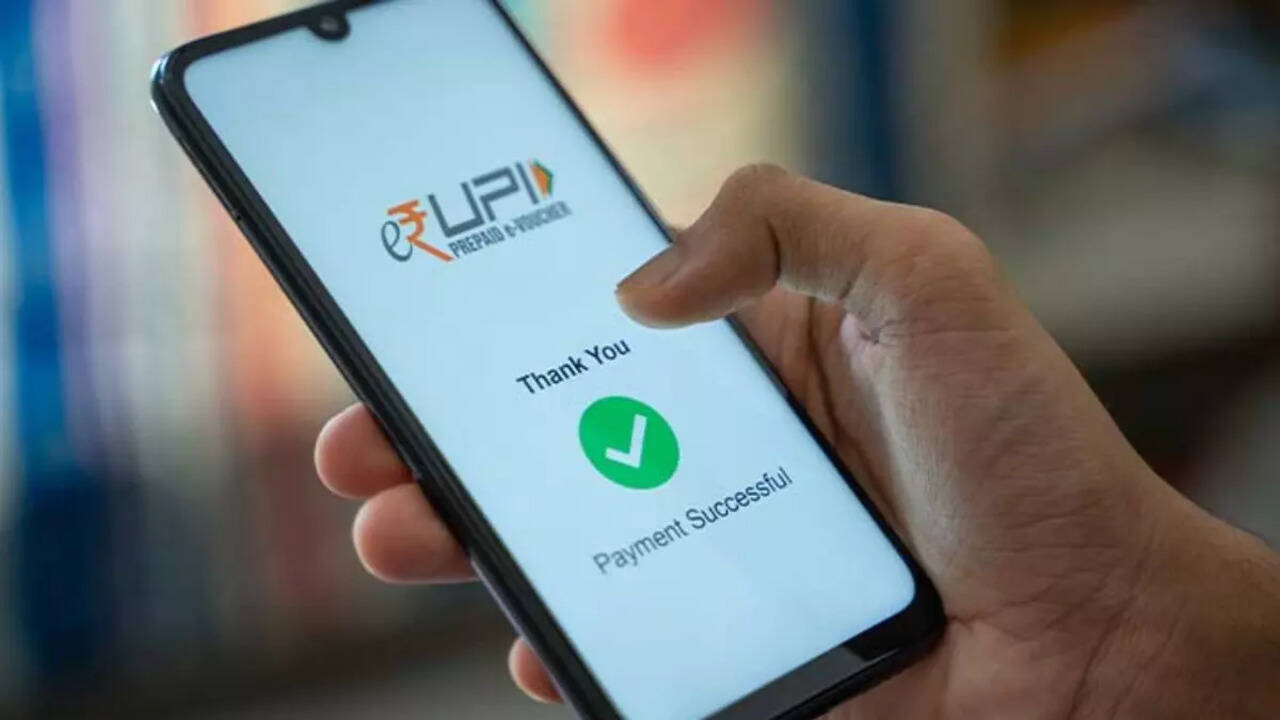
The Lok Sabha on Thursday approved an amendment to the Payment and Settlement Systems Act, 2007, paving the way for the Centre to authorise banks and payment service providers to levy charges on Unified Payments Interface (UPI) transactions and other electronic payment modes notified by the government. The amendment, passed through a voice vote amid disruptions in the House, removes an existing legal restriction that barred banks and payment system providers from collecting Merchant Discount Rate (MDR) on specified digital payment methods.
The proposed change forms part of the wider Taxation and Other Laws (Amendment) Bill, 2026, which was introduced earlier this week. The legislation also contains amendments to the Income Tax Act, 2025, and the Finance Act, 2026.
Under the revised framework, the Centre will have the authority to notify one or more electronic payment modes on which charges may be applicable, replacing the earlier provision that specifically referred to payment methods prescribed under Section 269SU of the Income Tax Act.
The Bill states, “In the Payment and Settlement Systems Act, 2007, in Section 10A, for the words, figures and letters ‘the electronic modes of payment prescribed under section 269SU of the Income-tax Act, 1961’, the words ‘one or more electronic modes of payment as the central government may, by notification, specify’ shall be substituted with effect from the date of publication of this Act in the Official Gazette.”
Currently, Section 10A of the Payment and Settlement Systems Act prevents banks and payment system providers from imposing charges on notified electronic payment methods. Meanwhile, Section 269SU of the Income Tax Act requires businesses with an annual turnover exceeding Rs 50 crore to provide customers with specified digital payment options, including BHIM-UPI QR codes and RuPay debit cards.
As things stand, neither banks nor payment system operators can levy any direct or indirect charges on these prescribed payment modes.
Why The Amendment Matters
Unlike UPI, real-time fund transfer systems such as RTGS and NEFT already attract service charges. The amendment opens the possibility of introducing a similar charging mechanism for UPI and other notified digital payment platforms if the government chooses to do so in the future.
The government’s stated objective is to create a sustainable financial model for banks, payment service providers (PSPs), and payment infrastructure companies that support India’s rapidly expanding digital payments ecosystem, while ensuring any potential charges remain modest for consumers and small businesses.
The issue of MDR has long been debated within the banking and payments industry. Financial institutions have consistently argued that processing digital payments involves significant infrastructure costs, making a sustainable revenue model necessary as transaction volumes continue to surge.
RBI Governor Urges Patience On MDR Decision
A day before the Bill was passed, RBI Governor Sanjay Malhotra said it would be “premature” to speculate on the introduction of MDR for digital payments.
He stressed that maintaining public digital infrastructure requires continuous investment. “The choices before us are simple: either the general public has to pay for it through taxes, or we have to levy the merchant discount rate (MDR), following the ‘user pays’ model. Right now the government is getting us the amendment. Costs have to be paid by someone. We all want this public infrastructure to strengthen and become more efficient, etc. We continue to do that. That is our focus right now; let us wait and watch for further developments,” Malhotra said.
The RBI Governor also underlined that, irrespective of whether MDR is imposed, the costs associated with maintaining payment infrastructure cannot be avoided.
“What is important is that we continue to invest and continue to find the means, whether it is MDR or others. Let us wait and see how the situation evolves,” he said.
Industry participants have suggested that if MDR is eventually introduced, it is more likely to apply only to higher-value merchant transactions rather than peer-to-peer UPI payments. However, no such proposal has been formally announced, and the government has yet to specify whether or when any charges would be implemented under the amended law.
(With PTI Inputs)
