
New York’s Port Authority police are reportedly leaning on new digital surveillance tactics to crack down on unlicensed taxi hustlers. These scammers operate at transit hubs across the city in a gray market that critics say exploits passengers and steals fares from licensed cab drivers.
The new enforcement effort is part of a $100 million initiative called Operation Legal Ride. Officers use controversial license plate readers to automatically scan every car that enters John F. Kennedy International Airport’s (JFK) five terminals, regardless of whether the driver is a scammer. Officials told local news site Gothamist that the data is then used in coordination with undercover officers on the ground to identify suspects and issue fines.
But this expansion of license plate readers and other digital surveillance tech also comes from growing public pushback against the technology in communities nationwide. Recently elected Mayor Zohran Mamdani has also publicly expressed weariness over police use of similar surveillance tools in the past.
‘Need a ride?’
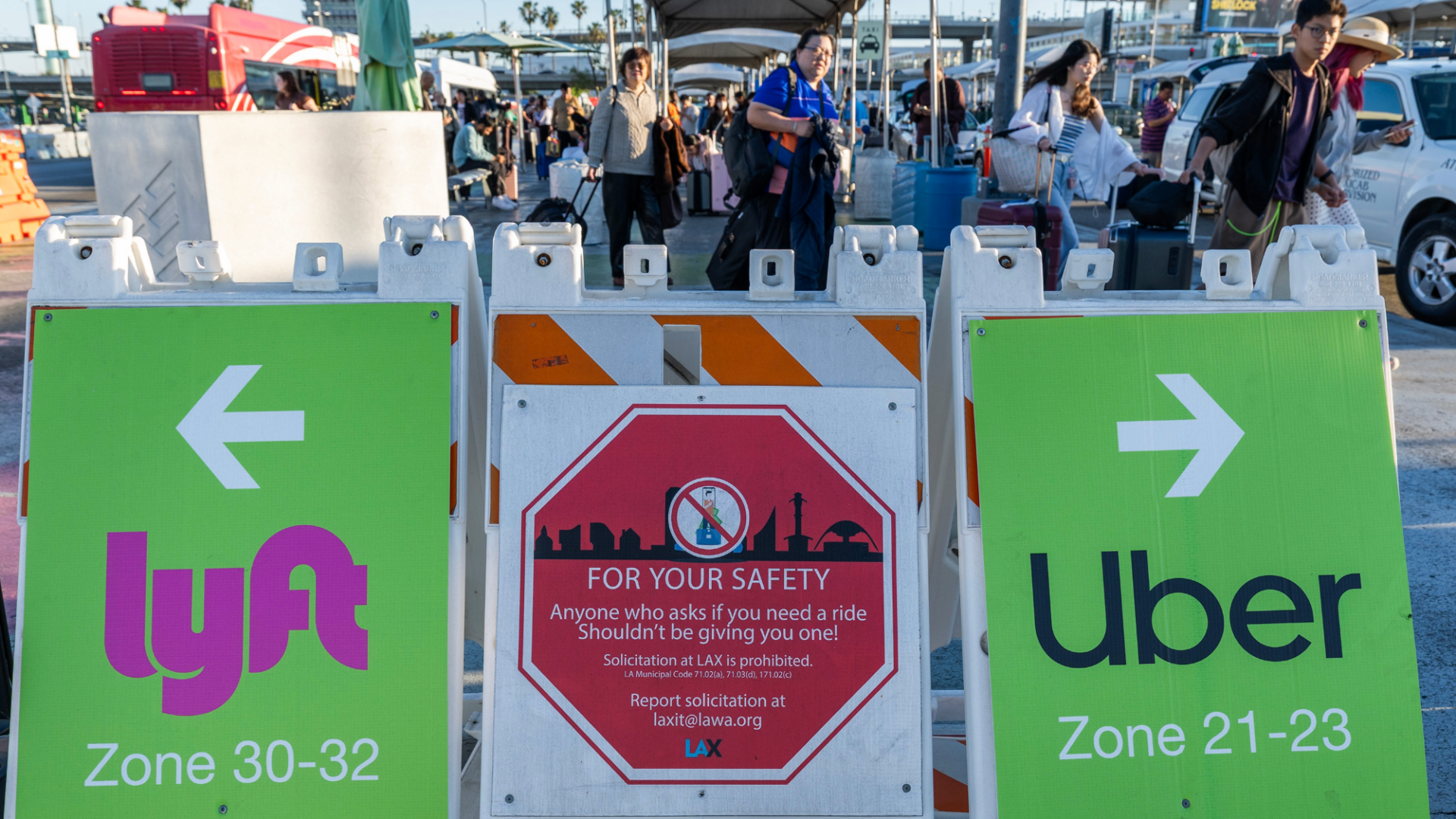
Anyone who has spent time in one of New York City’s transit hubs has almost certainly come across one of these so-called hustlers. These drivers, often walking on foot around baggage claims areas, solicit rides from unsuspecting travelers. However, the drivers have not obtained a license from the Taxi and Limousine Commission—which is illegal. These unregulated rides mean that the hustlers can charge passengers whatever they want. Their prices sometimes undercut those from licensed taxis and rideshares, but often dramatically exceed them.
Earlier this year, Gothamist reported a particularly striking example of a Kenyan couple arriving at JFK. The pair accepted a ride to Times Square–-normally a $70 flat fare in a Yellow Cab. They were charged a whopping $800, including a bogus $180 bridge crossing fee. Unable to dispute the charges with any regulated entity, passengers are often left with little choice but to pay. These rides also cut into earnings for legitimate, licensed cab drivers already fighting against rising gas prices and competition from Uber and Lyft.
The issue also isn’t limited to the Big Apple. Most major cities that have their own licensed taxi services have to contend with similar drivers working outside official channels. But New York is particularly susceptible, partly due to the sheer volume of visitors and often confusing signage at airports and other transit hubs. Drivers caught soliciting can face fines of $750 or more, but that has seemingly done little to stem the tide. Last year, the Port Authority Police Department issued over 2,400 summonses for illegal taxi solicitation, nearly double the figure from the year prior. Gothamist estimates there are likely around 500 of these taxi hustlers operating around JFK alone.
New York’s iconic Yellow Cabs driving through Times Square. Image: Deposit Photos.
Tracking plates
Police are betting that technology can help close that gap. License plate reader data and other digital information collected by cameras outside the terminals are fed into a Port Authority command center, where “AI-aided CCTV” systems and human analysts synthesize incoming data against a database of unpermitted drivers. Gothamist toured the command center, reporting it consists of dozens of screens displaying camera feeds of the airport’s arrival and departure areas. As cars pass through, their plates are scanned and that data is used to help officers track down scammers.
“Taxi hustling is criminal,” Port Authority of New York and New Jersey (PANYNJ) spokesperson Seth Stein tells Popular Science. “Not only are taxi hustlers unlicensed and uninsured, but they take advantage of travelers, stealing fares from hard working, legally licensed taxi and for-hire-vehicle drivers. We are fully committed to protecting travelers from predatory ride solicitation.”
But license plate readers in particular have drawn increased scrutiny from privacy and civil liberties advocates. The ACLU says they risk creating an “enormous database” of driver records that go beyond just the plate number. When these systems photograph a plate, they also capture the date, time, and location of the scan. That data is often retained for months or years and, in some cases, is shared with other agencies. And in order for detection to work, the cameras need to take photos of all drivers entering the airport areas, even if they are licensed cab drivers or everyday commuters.
“A taxi from JFK to Midtown should never cost hundreds of dollars, but automated license plate readers are also a scam,” Will Owen, the Communications Director at Surveillance Technology Oversight Project, tells Popular Science.
The New York-based organization is among several pushing to pass a bill limiting license plate reader surveillance across the state. Owen worries that the data collected could be attractive to other federal agencies less interested in stopping cab hustlers.
“These tools are foundational to Trump’s far-right agenda, driving deportations and targeting seekers of abortion or gender-affirming care,” he adds. “Their deployment at JFK is sweeping up the data of everyone in the vicinity, putting immigrant communities especially at risk.”
Flock, the most widely known private license plate reader vendor, has faced backlash following numerous reports found that its data was used by federal immigration officials. As result, over 30 municipalities around the country have either deactivated their Flock cameras or terminated their contacts with the company.
For travelers to New York and elsewhere, the best way to steer clear of these hustlers, is to confidently follow signage directing them to official taxi and ride share options. That often means taking the extra time to potentially wait in a taxi line instead of walking around baggage claim or other areas where a hustler soliciting a ride may be lurking. Skipping the queue might feel good at the moment, but that opens up the passivity of paying exorbitant fees, or worse.
The post NYC deploys surveillance tech to catch fake airport cabbies appeared first on Popular Science.
NYC deploys surveillance tech to catch fake airport cabbies
