
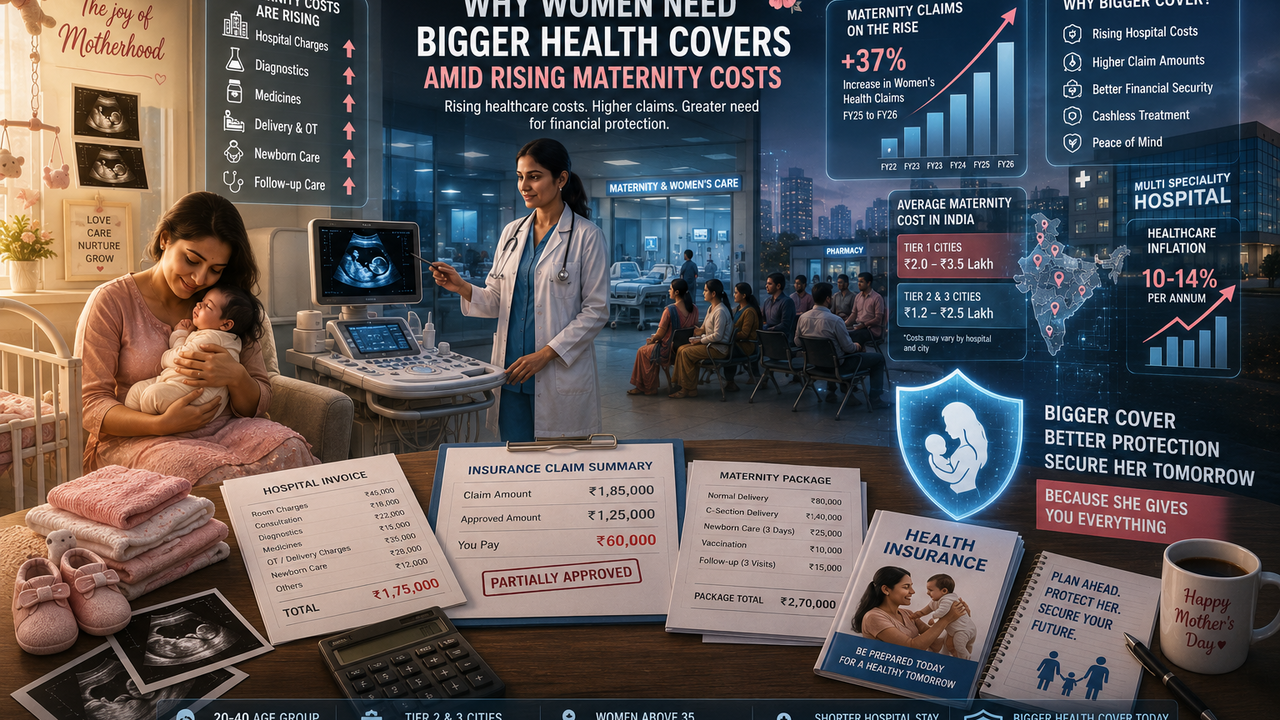
Women’s health insurance claims in India rose sharply by 37 per cent between FY25 and FY26, driven largely by rising maternity-related expenses and increasing hospital-based maternal care, according to a report by Care Health Insurance. The 20–40 age group continuing to drive this growth, increasing from 25% over the same period.
The maternity-related claims are becoming more cost-intensive with Tier 2 and Tier 3 cities continue to account for a larger share of overall claims contributing to 60% of all maternity claims reported to the company.
Overall maternity claim outgo has risen by 25% over the last two years, even as claim volumes have fluctuated, indicating a shift towards higher spend per case, the report by Care Health Insurance said.
Deliveries becoming increasingly institutionalized
According to the data from the Ministry of Health and Family Welfare, with over 88–90% of births now occurring in institutional settings, the share of institutional deliveries has reached 97.3% in 2023–24, signalling a sustained shift towards formal, hospital-based maternal care.
Government data presented in 2025 further showed that C-section deliveries accounted for over 27% of all reported births in India during 2024–25, reinforcing the growing shift towards medically intensive maternity care.
While deliveries are becoming increasingly institutionalized and becoming more efficient, the proportion of women discharged within five days for maternal care has increased from 75% in FY24 to 82% in FY26. This duration of discharge is not resulting in cost reduction, instead the company has seen an upward trend in cost intensity for maternal treatment, the report said.
Rising cost intensity
The Care Health Insurance report has highlighted a structural shift in maternal healthcare, with rising cost intensity and evolving care patterns driving higher financial exposure.
The findings are further reinforced by broader public health data, which indicates that a majority of women in India are accessing formal antenatal care services, while three out of four continue to have inadequate dietary iron intake, highlighting persistent nutritional gaps and long-term health vulnerabilities beyond maternity.
