
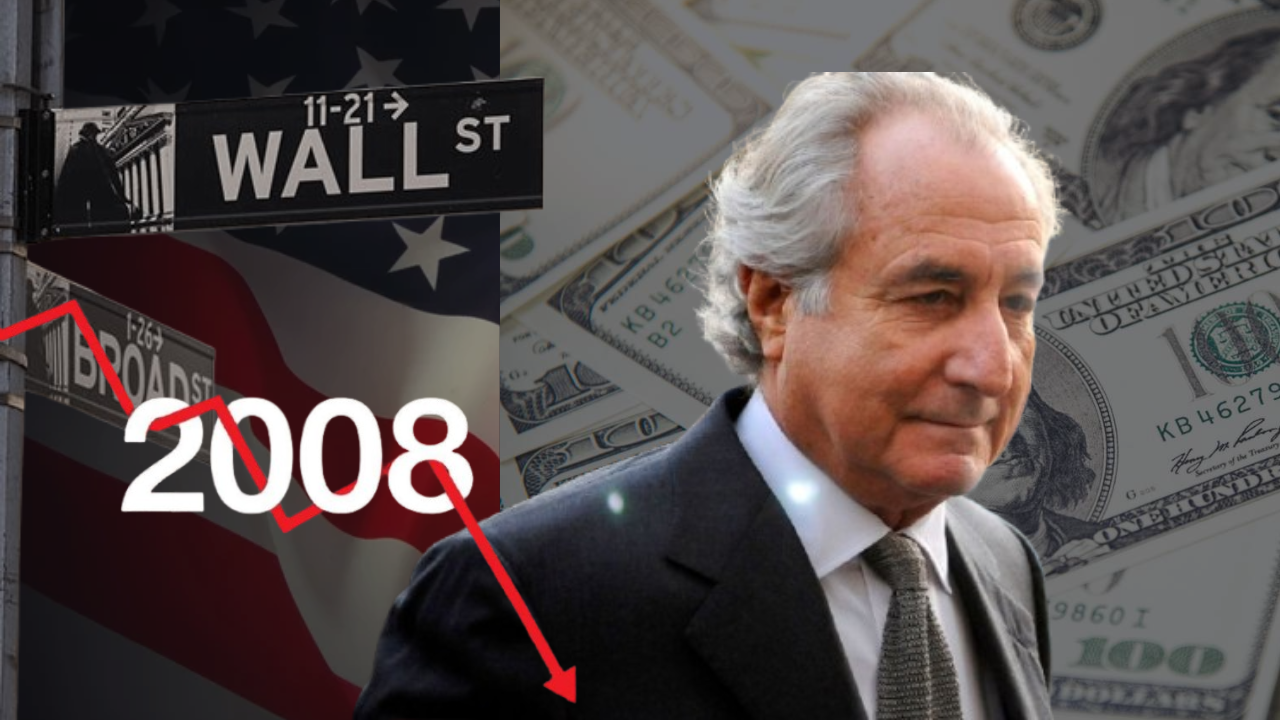
Bernard Lawrence “Bernie” Madoff orchestrated what is widely regarded as the largest Ponzi scheme in history, defrauding investors of an estimated $64.8 billion over several decades. While some references cite a 15-year span, evidence indicates the fraud likely began in the 1970s or early 1990s and continued until its collapse in 2008, spanning roughly 20 to 30 years.
Madoff’s scheme exploited trust within affluent communities, particularly Jewish networks, and relied on fabricated, consistently positive returns to lure new investors. The fraud unraveled during the 2008 global financial crisis, leading to his arrest, a 150-year prison sentence, and ongoing efforts to recover funds for victims.
Early Life and Career
Born on April 29, 1938, in Queens, New York, Bernie Madoff grew up in a middle-class Jewish family. He attended the University of Alabama before transferring to Hofstra University, where he earned a degree in political science in 1960.
To fund his early ventures, Madoff worked as a lifeguard and sprinkler installer, saving $5,000 to start his own firm. In 1960, he founded Bernard L. Madoff Investment Securities LLC as a penny stock trader, initially operating out of his father-in-law Saul Alpern’s accounting office. Alpern provided referrals and a loan, helping Madoff attract early clients from Jewish communities in Queens, Long Island, and the Catskills.
By the 1970s and 1980s, Madoff’s firm had grown into a major market maker for over-the-counter stocks, handling a significant share of trading volume. He pioneered practices such as payment for order flow and developed early computer-based trading systems. His firm played a key role in the growth of electronic trading and the early success of NASDAQ, where Madoff served as chairman in the early 1990s.
Building the Firm and the Seeds of Fraud
Madoff’s legitimate brokerage business helped conceal the fraudulent investment advisory division. Family members occupied key roles: his brother Peter served as senior managing director and chief compliance officer, his sons Mark and Andrew worked in trading operations, and his niece Shana was a compliance attorney.
The Ponzi scheme is believed to have originated after a bad trade decades earlier, when Madoff began fabricating returns to avoid admitting losses. Over time, fake performance reports replaced real trading activity. By the early 1990s, the fraud had fully taken hold, with fabricated trades and falsified account statements becoming standard practice.
The advisory business operated separately from the legitimate brokerage arm, physically isolated within the firm’s offices, limiting internal scrutiny.
How the Scheme Operated
Madoff promised steady annual returns of 10–12%, claiming to use a “split-strike conversion” strategy involving blue-chip stocks and options to manage risk. In reality, no meaningful trades occurred after the early 1990s.
Investor funds were deposited into a single bank account, and withdrawals were paid using money from new investors. Account statements were fabricated to show smooth, consistent gains, with almost no losing months—an implausible performance that should have raised alarms.
The scheme targeted high-net-worth individuals, charities, and institutions, often through affinity fraud. Entry was exclusive, with minimum investments of $1 million. Feeder funds funneled billions into Madoff’s operation while earning fees and shielding investors from direct visibility into the fraud.
Key Figures and Accomplices
Although Madoff claimed he acted alone, investigations revealed multiple accomplices:
Peter Madoff: Brother; pleaded guilty and served prison time
Frank DiPascali: Key lieutenant; cooperated with prosecutors
Daniel Bonventre: Operations director; convicted
Annette Bongiorno: Bookkeeper who fabricated trades
Jerome O’Hara and George Perez: Programmers who automated fake statements
Several feeder fund operators faced lawsuits and settled for billions. Madoff’s wife forfeited most assets, while his sons were not charged, though their estates later reached settlements.
Red Flags and Warnings Ignored
Multiple warnings went unheeded over the years. Regulators received repeated whistleblower complaints highlighting the impossibility of Madoff’s returns. Financial publications questioned the secrecy and consistency of his strategy.
Despite being audited multiple times, regulators failed to uncover the fraud. Conflicts of interest, regulatory blind spots, and misplaced trust allowed the scheme to continue unchecked.
The 2008 Financial Crisis and Collapse
The scheme collapsed during the 2008 financial crisis when redemption requests surged and new investments dried up. By December, Madoff could no longer meet withdrawal demands.
He confessed to his sons that the business was “one big lie” and a massive Ponzi scheme. They reported him to authorities, leading to his arrest days later.
Arrest and Confession
Madoff was arrested in December 2008 and later pleaded guilty to 11 federal felony charges, including securities fraud and money laundering. In June 2009, he was sentenced to the maximum penalty of 150 years in prison and ordered to pay massive restitution.
Aftermath and Victim Recovery
More than 4,800 victims worldwide were affected, including individuals, charities, pension funds, and institutions. Total paper losses amounted to $64.8 billion, though actual invested principal was lower.
A court-appointed trustee recovered billions through clawback actions against beneficiaries who had withdrawn more than they invested. By the late 2010s, a significant portion of verified claims had been repaid.
The scandal also had devastating personal consequences, including multiple suicides linked to financial losses.
Madoff’s fraud exposed deep regulatory failures and highlighted the dangers of affinity scams and unchecked trust. It led to reforms in oversight and enforcement, while permanently damaging confidence in financial institutions.
Ironically, Madoff’s legitimate contributions to electronic trading and his leadership roles in market institutions helped shield his fraud for decades. His dual legacy—as both a market innovator and history’s most notorious fraudster—remains one of the most disturbing paradoxes in financial history.
