
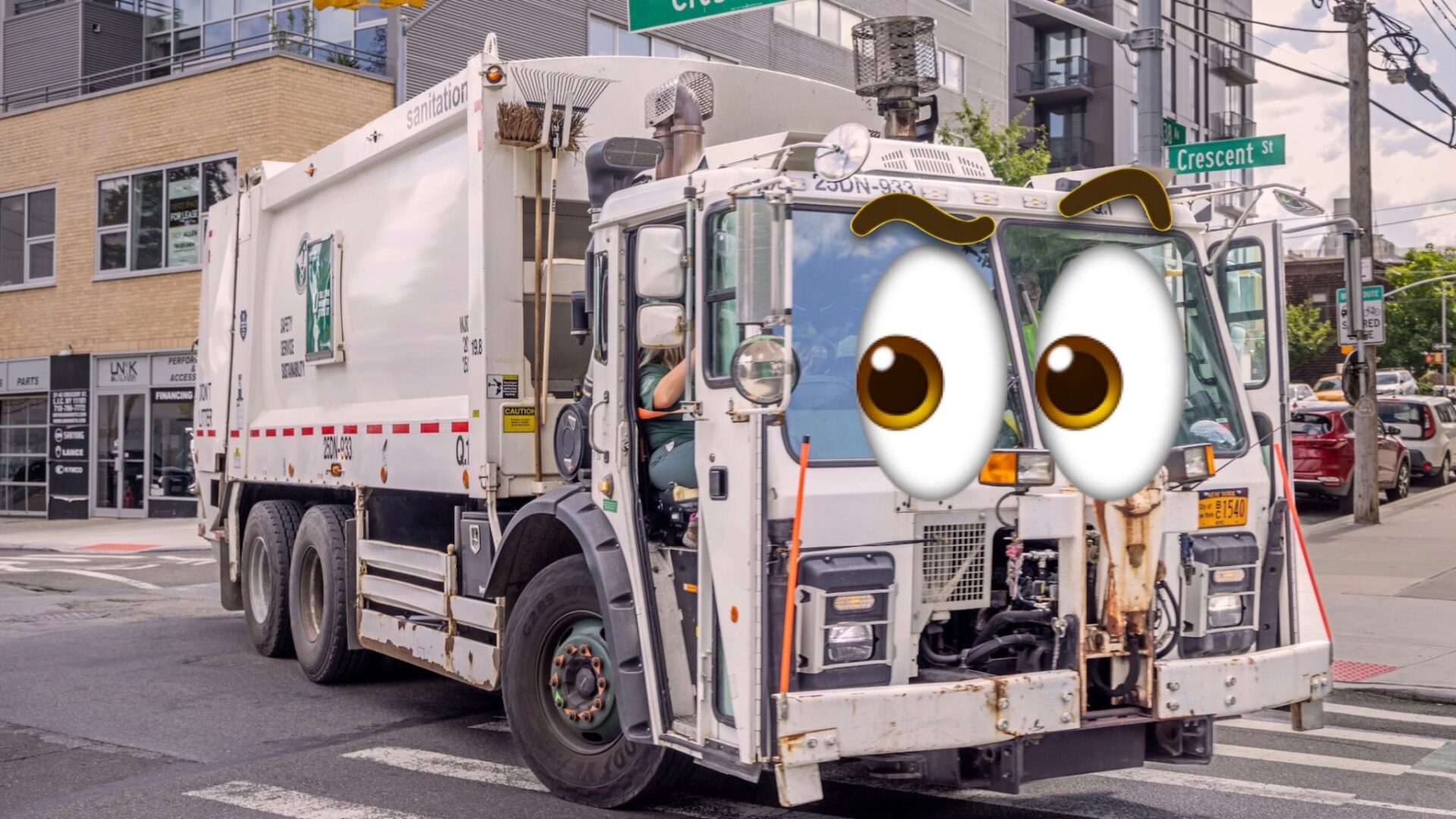
Garbage trucks now do more than just pick up tossed-out food scraps and junk. They also snitch on people with unkempt lawns.
In at least four states (California, Georgia, South Carolina, Texas), some city-run sanitation vehicles are being outfitted with AI-equipped cameras from a company called City Detect. The cameras quietly snap photos of residents’ yards and run the images through software that flags tall grass, litter, graffiti, or other more serious code violations like collapsing roofs. Properties found in violation then get assigned a “Blight Score” from 1 to 4, reflecting the severity of the mess. If left unresolved, human reviewers can use information gleaned from those snapshots to issue fines. In Dallas, Texas, the system has reportedly flagged at least one possible code violation in more than 21,000 properties analyzed since the city began testing the service last April. City Detect claims its camera system has already detected 6,000,000 violations issued nationwide.
A City Detect camera. Image: City Detect
The garbage truck tattletales are just the latest example of how increasingly connected AI infrastructure and so-called smart-city technology are being used to ramp up local enforcement. This expansion of cameras is happening even as vigilantes, local communities, and some lawmakers across the country push back against automated license plate readers and other AI-assisted technologies viewed as vectors for surveillance.
Full-time garbage truck, part-time code inspector
City Detect was founded in 2021 and is based in Tuscaloosa, Alabama. The underlying idea behind that service is relatively simple: City Detect provides the cameras and AI software, which cities mount on local fleet vehicles as they go about their normal routes. The examples reported so far involve attaching these cameras to garbage trucks, but in theory they could also work on other government vehicles. In the case of garbage trucks, two cameras get mounted, one facing each side of the street. The cameras snap photos while the truck operates on public roads, capturing the front of each residence. A software City Detect calls PASS AI then processes the image and looks for signs of possible code violations relevant to that jurisdiction.
Once the image is processed, the AI assigns the supposed code violation a score based on its severity. It’s not immediately clear exactly how the software delineates those scores. Regardless, once blight scores are assigned, they get sent to a human reviewer, who can look over areas and quickly see which residences supposedly have higher-severity or more urgent issues, at least according to the AI. Homeowners then receive a “courtesy notice” telling them they could get a fine if they don’t voluntarily address the issue.
It’s worth noting that City Detect says any actual fines must be issued by a city reviewer. The company claims it’s simply giving cities information to help them make a decision. The goal, City Detect says, is to free up staff to address more serious structural issues and spend less time combing through smaller, less urgent ones.
“Manual inspections, vague 311 complaints, and limited staff slow everything down. Cases pile up. Residents get frustrated,” City Detect writes on its website. “PASS AI® shifts your team from reactive to proactive with mapped detections, rapid reporting, and smart filtering of recurring complaints.”
Who pays the price for imperfect lawns?
Critics worry the supposedly time-saving technology will also lead to an uptick in fines and citations, especially in lower-income neighborhoods that may have less time or fewer resources to keep their lawns in tip-top shape.
Details of Dallas’ partnership with City Detect emerged this week in a report from local news outlet NBC 5. A public records request filed with the city revealed that City Detect has captured images of tens of thousands of residences since testing began earlier this year. Those records show the date and time each photo was taken, as well as a brief summary of the supposed code violation and its severity. Labels like “grass height,” “lawn debris,” “branches,” and “litter” were all considered a 2 out of 4, according to an image of the document published in the report.
Those Blight Scores aren’t necessarily evenly distributed. NBC 5 took the address of the more than 21,000 supposed violations from the city data and created a heat map showing where detections were most common. The outlet found that some of the areas with the most detections were areas with lower average incomes. One resident living in one of those neighborhoods told NBC 5 he felt the program was unfair and “trying to flush us out.”
He’s not alone. Last year, the city of Huntsville, Alabama, reportedly shelved a proposed contract with City Detect following backlash from residents over worries of surveillance and the potential economic impact on poor communities. Just this week, Dallas City Council member Chad West proposed a budget amendment that would cut funding for the cameras, citing privacy concerns and worries of “unintended consequences” for low-income residents who can’t afford to immediately fix issues like peeling paint. West has since withdrawn the budget amendment, but says there are still issues that need addressing.
“I have serious concerns about the Code AI cameras on City sanitation trucks, due to privacy issues and the unintentional burden this might place on our most vulnerable residents,” Councilmember Chad West to Popular Science. “I support technology, but we need to ensure that the benefits outweigh concerns.”
City Detect did not immediately respond to Popular Science’s request for comment. On its website, the company says it takes steps to preserve privacy by automatically blurring faces or license plates that appear in its photos. The system also requires human review before any monetary fines or other enforcement measures are taken. They also say their system doesn’t connect to law enforcement or federal databases, and that it doesn’t collect revenue based on the number of citations a local government issues. In other words, it isn’t working on a commission.
Public backlash to surveillance cameras grows
Camera-equipped garbage trucks exist in a broader, growing ecosystem of AI services attempting to bring more automation to local law enforcement. In 2024, Los Angeles began implementing automated on-bus cameras to snap photos of cars illegally parked in bus lanes and then use those photos to issue tickets. Austin, Texas, recently did something similar, placing AI-enabled cameras on its city school buses to automatically detect when cars (or even robotaxis) fail to properly stop around them. Albuquerque, New Mexico, meanwhile, reportedly installed over 60 solar-powered photo-snapping “SafetySticks” around the city to catch drivers blocking bike lanes, bus lanes, and crosswalks. Each of these efforts attempts to boost enforcement (and local revenues from citations) by automating detection.
DeFlock privacy advocacy sticker warns of a nearby Flock Safety AI-enabled automated license plate reader tracking vehicles, San Francisco, California. Image: Smith Collection/Gado/Getty Images Smith Collection/Gado
But a growing number of communities around the country are experiencing a renewed anti-surveillance fervor. According to Oakland-based advocacy group Secure Justice, at least 214 cities and counties have dropped their contracts with controversial automated license plate reader firm Flock since 2021, including 90 in August 2026 alone. The surge in cancellations follows privacy concerns and a number of reports detailing how law enforcement can misuse the technology. Likewise, cities and even some states have issued moratoriums on AI data center buildouts, as public perception of technology sours. Forty percent of US adults polled in a recent Pew Research survey said they thought AI’s impact on society would be more negative than positive, compared with just 16 percent who said they thought it would be more positive than negative.
The post Garbage trucks analyze thousands of homes with AI-powered cameras appeared first on Popular Science.
