
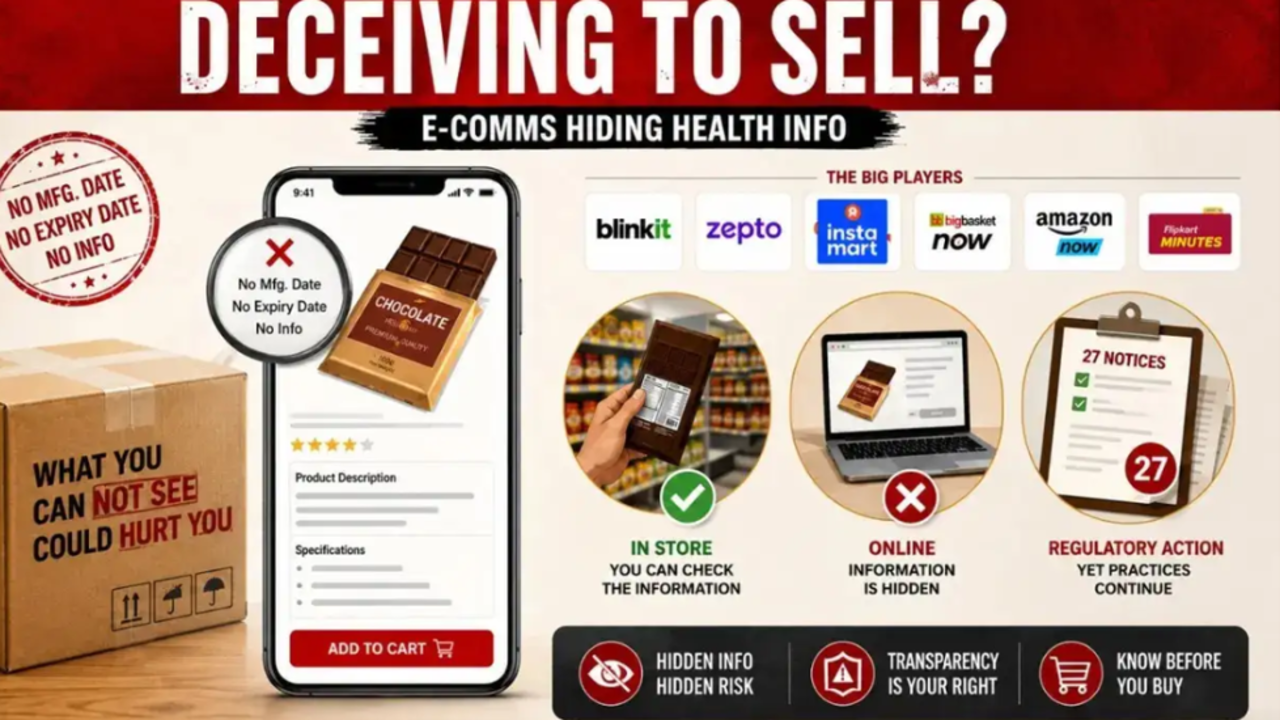
As part of Times Now Digital’s campaign highlighting the lack of visibility/limited visibility of manufacturing and expiry dates on e-commerce or quick commerce platforms, as well as the importance of boosting consumer awareness, Times Now Digital spoke to Revant Himatsingka, FoodPharmer, Founder of Only What’s Needed and health advocate on why access to information is crucial for consumers. Given below is the full interview.
Q. Revant, do you think e-commerce and quick-commerce platforms have in fact made it very difficult for consumers to access details like manufacturing dates, expiry dates and ingredient information?
A. Yes, to some extent. Earlier, if you were in a store, you could simply pick up the pack, turn it around and read the manufacturing date, expiry date, ingredients and nutrition information yourself. Online, you’re dependent on whatever information or images are uploaded on the platform, and that information isn’t always complete or easy to find. I’ve also seen cases where the expiry date shown online doesn’t match the product that actually gets delivered. So consumers often end up buying without having the same level of information they would have had in a physical store.
Q. What to your mind is the biggest problem in showing the manufacturing and expiry date/s?
A. The biggest problem is accuracy. Many consumers are actually guessing the expiry date because the exact batch they’re going to receive isn’t known. I’ve also come across listings where manufacturing dates are clearly incorrect, sometimes even showing future dates, which shouldn’t happen. If these details are displayed, they need to be accurate and updated. Otherwise, displaying incorrect information can be just as misleading as not displaying it at all.
Q. What to your mind is the accountability of e-commerce and quick-commerce platforms regarding the quality of the product?
A. I think it depends on the type of product. For packaged foods like biscuits, noodles or breakfast cereals, the primary responsibility lies with the food manufacturer. They are responsible for what’s inside the pack, its safety and compliance. But when it comes to products like milk, ice cream, frozen foods, fruits and vegetables, the e-commerce or quick-commerce platform also has a significant responsibility. They control storage, handling and delivery. If an ice cream reaches you melted or milk reaches you spoiled because the cold chain wasn’t maintained, that’s no longer just the manufacturer’s responsibility. So accountability depends on where the problem actually occurred.
Q. FSSAI issued advisories to online platforms to display key product details, including manufacturing and expiry dates. Do you think this has been effective?
A. Relatively, yes. I do think we’ve seen improvements. Compared to a few years ago, more products now display ingredients, nutrition information and other details online. So the advisory has definitely pushed the industry in the right direction. That said, there is still a long way to go. The information needs to be complete, accurate and consistent across all products.
Q. Do you think the speed of delivery from quick commerce/e-commerce platforms is coming at the cost of informed consumer choices? What basic information should every consumer be able to see before clicking ‘buy’?
A. I don’t think consumers should have to choose between speed and information. They deserve both. Before clicking “Buy”, every consumer should be able to clearly see the ingredient list, nutrition information, manufacturing date, expiry date, allergen information and net quantity. That’s basic information needed to make an informed decision. Today, even something as simple as checking the ingredients or calories can be surprisingly difficult on some listings. That shouldn’t be the case.
Q. What are the biggest challenges you faced when trying to inform all about hidden information on food products?
A. One of the biggest challenges is that marketing is often louder than facts. Many products make exaggerated front-of-pack claims, while the important information is hidden in small print or isn’t highlighted enough. Sometimes ingredient lists aren’t easy to find, and nutrition claims can create a very different impression from what’s actually in the product. Our job is to encourage people to look beyond the marketing and read the label before making up their mind.
Q. How will you balance the role of being a health advocate and a brand owner yourself now? What should consumers expect?
A. I’ll continue being a consumer advocate first, that’s how I started, and that’s not going to change. The good part is that we’ve built our brand with that philosophy from day one. We try to put the consumer first whenever we make decisions, even when it’s difficult. Consumers should expect the same standards from my brand that I’ve expected from everyone else. And if I see misleading practices in the industry, I’ll continue calling them out, irrespective of whether I’m running a food company or not. That’s the only way I think trust is built.
This report is part of Times Now Digital’s “E-Comms Hiding Health Info” campaign. Follow the series for more on your rights as a consumer and expert guidance on what to check before you buy online.
E-Comms Hiding Health Info: ‘Consumers Deserve Both Speed And Information’ Says FoodPharmer Founder
