
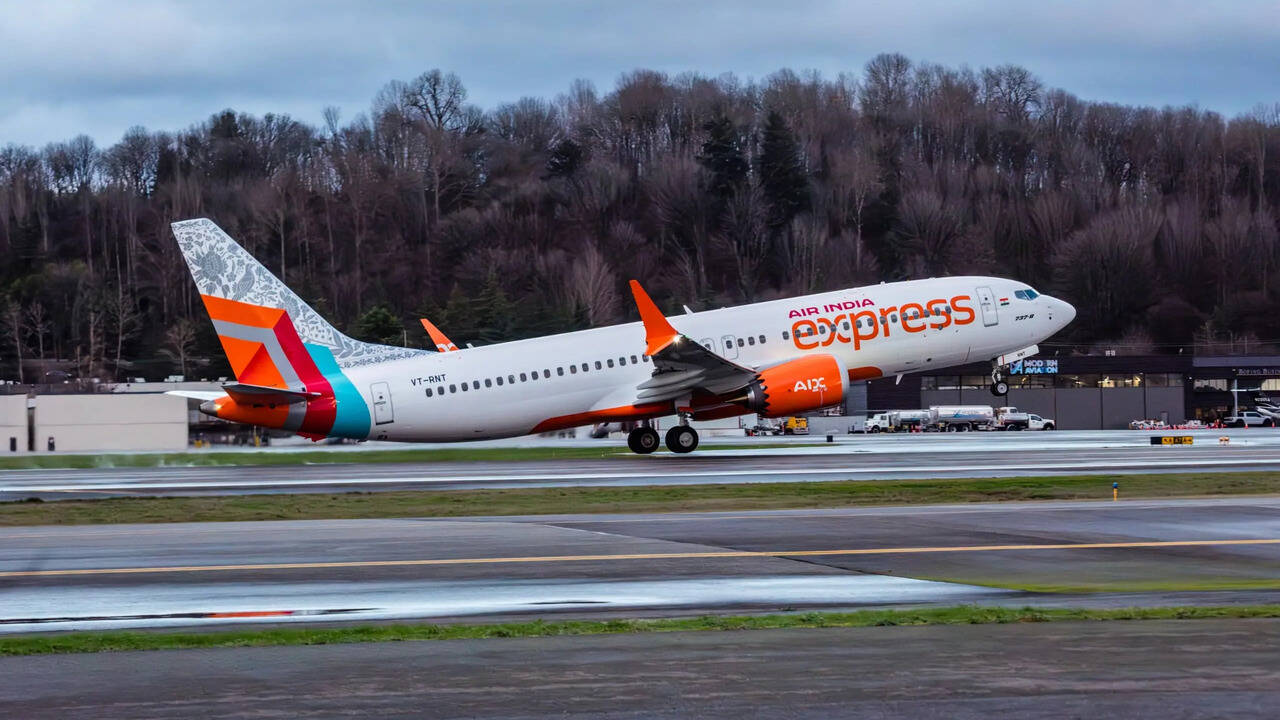
Air India Express Chairman Nipun Aggarwal during an event responded to Times Now question on impact of West Asia situation and said that the demand for travel between India and the Middle East has remained resilient despite geopolitical tensions in West Asia. However, he mentioned that operational restrictions caused by airspace closures emerging as the biggest challenge for the airline rather than weakening passenger demand.
Responding to Times Now on the impact of the evolving situation in West Asia, Air India Express Chairman Nipun Aggarwal said the airline has continued operating throughout the crisis wherever conditions permitted.
“This is a very evolving situation, and it’s been like that since the beginning of this financial year, from March-April onwards. It’s evolving, it’s very dynamic, and we are constantly trying to see how best we can deal with this situation,” the Air India Express chairman said.
Aggarwal said the airline’s exposure to the Gulf means developments in the region directly affect its operations, but stressed that demand has remained robust.
“Naturally, given our exposure in the region, it impacts us in many ways. But the biggest impact that we have is in terms of ability to fly into the region and out of the region. We are only constrained by that because the demand here is very strong. There is a large Indian diaspora. And so as long as we are able to operate, we will be deploying capacity and we will be operating,” he said.
Air India Express Continued Ops Even When Jet Fuel Prices Spiked
Aggarwal further said Air India Express did not suspend operations even when oil prices spiked sharply, with the airline instead focusing on operational feasibility.
“Even when oil prices went north of $200, even in that time, we were operating fully. We did not curtail any operation because operation to Middle East was still viable and the yields were very strong, the demand was very strong. We were only constrained by our ability to fly,” he said.
Aggarwal added that the airline continues to monitor developments closely in coordination with airports and local authorities before deciding whether to operate services.
“So as long as the airports are open, airspace is open, and we can deploy capacity, we will seek to deploy that capacity. That’s the only thing that’s constraining us,” the Chairman added.
“There may be occasional disruptions, but we have a very strong operational setup which continuously watches the situation. We do a risk assessment, and basis that risk assessment, we decide whether to operate or not in consultation with the airports, in consultation with the local government here. So we are constantly evolving and adapting to the situation,”he mentioned.
Air India Express Restores Capacity
Nipun Aggarwal answering media during an event in Abu Dhabi said it has already restored most of the capacity that was temporarily withdrawn during the peak of the crisis.
“When the crisis started, there were multiple headwinds we were facing. One is the oil price shot up. Second, the airspace is closed. And third is the impact on traffic itself, and longer flying time means more equipment, more flying, more crew, more maintenance. So that badly impacted our operation,” he said.
“But by and large, now we are restoring the network from second half of this year. All Middle East, already we are back to 90%. And in Europe and US, whatever curtailments we had taken, we had taken till August end, August, September end, most of those flights are already back on sale now,” he informed.
“From October onwards, pretty much it will be back to where we were pre-war, unless there is any further escalation or further flare-up or further surprises which we can’t forecast or predict today, we will be back to where we were pre-war by, in a couple of months from now.”
Aggarwal said higher oil prices have added to cost pressures, but airlines have found it difficult to fully pass those increases on to passengers.
“See, airfares are not at a level where we can recover the full impact of the oil price escalation that we have seen. Airfares are higher, but still not at a level where we can recover the full impact of the oil price. But so far, it’s been difficult to pass the full impact of the oil price in terms of the pricing that we have. But that’s the nature of the industry. It’s a very price-sensitive industry where it’s tough to pass the full impact to the consumer.”
Despite the external challenges, Aggarwal said the airline’s long-term expansion plans remain unchanged.
“We are on track with our transformation program. Whatever things we had planned is pretty much happening.”
He said fleet modernisation, investments in maintenance, repair and overhaul (MRO), training infrastructure and the airline’s rebranding programme are progressing as planned, although aircraft deliveries have been affected by global supply chain constraints.
Air India To Receive 50-60 Aircrafts in Next 12-18 Months
Air India Group expects to receive 50-60 aircraft every year over the next 12-18 months and remains on track with its fleet expansion and transformation plans despite supply chain disruptions, geopolitical tensions and oil price volatility, Air India Express Chairman Nipun Aggarwal said.
“I would say between now and end of next year, we should be getting 50 plus aircraft, if not more. And that was the plan and that remains on track,” Aggarwal said.
He added, “Boeing’s production was improving, with deliveries of the Boeing 787-9 already underway, while the airline continues to receive the Boeing 737 MAX 8 aircraft. We will be amongst the first few customers to get MAX 10 delivery, and that is awaiting certification. It’s in very advanced stages. And hopefully, that will start sometime next year, early next year. That program seems to be on track now. But all in all, I think with the order book we have, we should be getting 50 to 60 aircraft delivery in the next 12 to 18 months.”
