
The United States isn’t the only nation itching to restart supersonic passenger air travel. Earlier this month, China announced its TMS-10 experimental demonstrator plane has entered the final assembly phase and is on schedule to conduct its first test flight by the end of the year. The fullscale aircraft engineered by Tianmushan Laboratory in collaboration with Beihang University marks a major step forward from the 1:18-scale prototype tested in June 2025. In that phase, the smaller model flew below Mach 0.2 while researchers assessed the the plane’s low-speed takeoff, stability, control, and landing capabilities. This time around, the TMS-10 will attempt to reach supersonic speeds while mitigating any accompanying sonic boom.
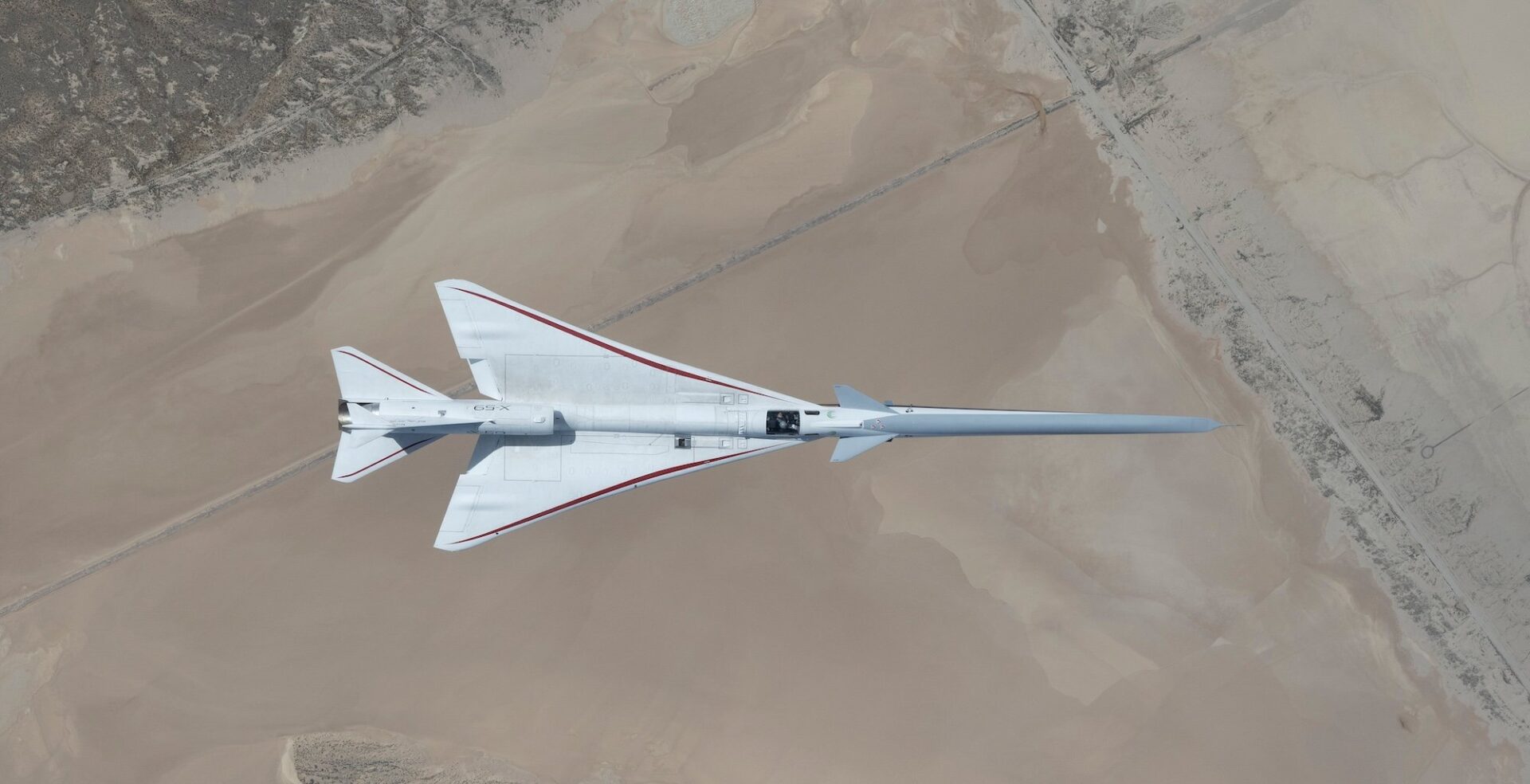
The TMS-10 project’s goal is to introduce a new business-class airplane that seats 10–15 passengers. Its overall design is markedly different from NASA’s X-59 supersonic plane, which relies on dampening any sonic boom so that it’s perceived as a much quieter sonic “bump” by anyone on the ground. Instead, TMS-10’s forward wing (known as a canard) and its T-tail shape work together to prevent shock waves formed around the nose and wings from combining into a single, louder wave. Meanwhile, rear features will also redirect and further weaken soundwaves to avoid unwanted decibels.
If successful, the TMS-10 will one day ferry travelers at an upward cruising speed of Mach 2 (around 1,300 miles per hour). The plane will also support subsonic flights at about Mach 0.95 (730 mph). Those speeds would hypothetically cut the current two-hour flight from Beijing to Shanghai down to only 30 minutes.
There is a lot to consider when creating a supersonic aircraft for everyday travel. The design must be durable enough to handle the heat generated at such high speeds while also remaining comfortable for its passengers. According to China’s Global Times, TMS-10 engineers said they also still need to finalize and validate the plane’s engine core as well as its exhaust and inlet systems. Multiple additional tests using updated model aircraft will also be needed before finalizing the TMS-10’s overall design.
This means China may have some catching up to do. The X-59 already reached supersonic speed earlier this year, reaching Mach 1.5 (990 mph) while flying at 55,000 feet.
The post China’s new supersonic plane could travel twice as fast as sound appeared first on Popular Science.
China’s new supersonic plane could travel twice as fast as sound
