
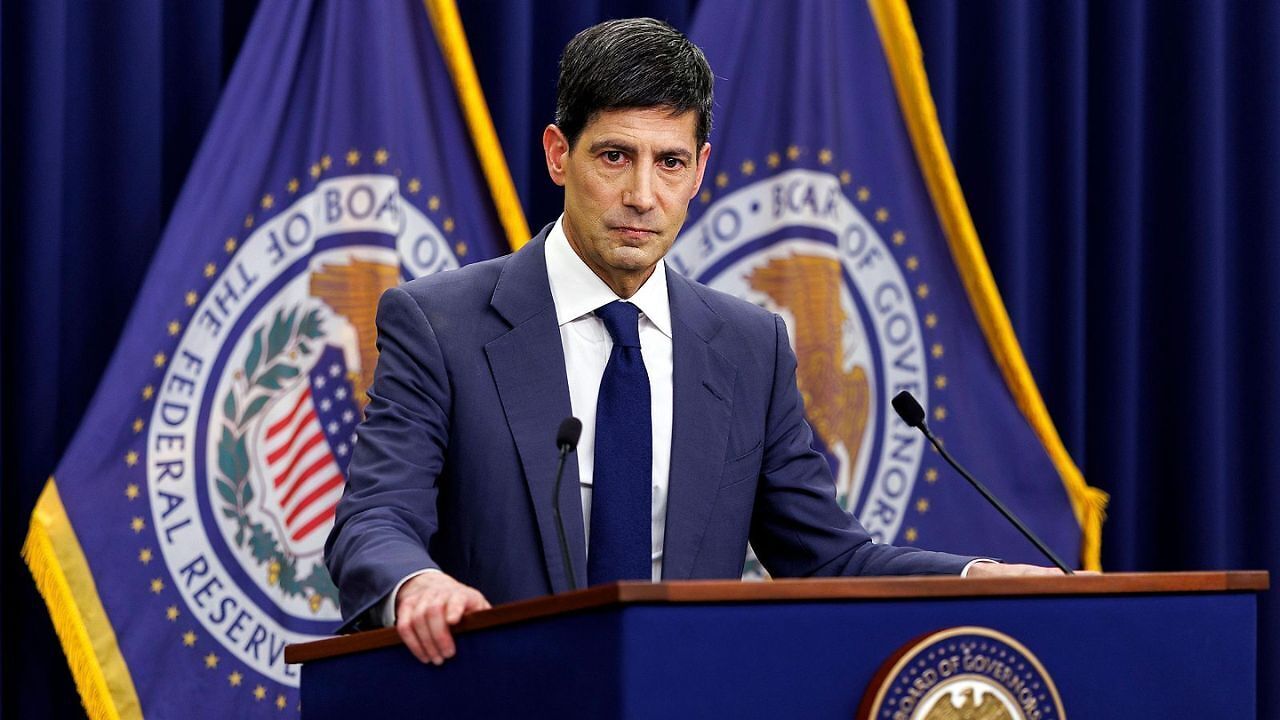
The US Federal Reserve on Wednesday raised interest rates for the first time in more than three years, as it steps up efforts to tackle rising inflation. The move puts its new chair, Kevin Warsh, at odds with President Donald Trump’s repeated calls for lower borrowing costs. The Fed increased its benchmark federal funds rate from a range of 3.50%-3.75% to 3.75%-4.00%.
It was the first US rate increase since 2023.
The decision followed a two-day meeting of the Federal Open Market Committee (FOMC), which weighed persistent inflation against signs of weakness in parts of the economy.
Inflation remains above the Fed’s 2% target, while higher energy prices have added to concerns about renewed pressure on prices. Oil prices have risen above $100 a barrel. At the same time, the US economy has shown signs of resilience. Retail sales rose 1.2% in August from the previous month, suggesting consumer demand remains firm.
The Fed’s latest decision comes after months of disruption in the Middle East, with volatile energy prices adding to pressure on the US economy.
Trump’s Call for Lower Rates
The rate increase comes despite repeated demands from Trump for lower interest rates. Days before the Fed’s meeting, the president said the US “should be paying the lowest interest rate in the world”.
He has also threatened additional tariffs if the Fed does not cut rates.
In August, Trump was asked about comments from Warsh suggesting rates could rise. “I have a lot of respect for him, and he’ll do what he has to do,” Trump said. He added: “I think our interest rates are too high.”
Earlier this month, following the August jobs report, Trump wrote on Truth Social: “High interest rates put the U.S.A. at a very unfair disadvantage, and I won’t allow that to happen!” He also wrote: “A STRONG COUNTRY MEANS A LOWER INTEREST RATE – IT’S A BETTER CREDIT…Very simple!”
Warsh became Fed chair in 2026 after being nominated by Trump to succeed Jerome Powell. He previously served on the Fed’s Board of Governors from 2006 to 2011, including during the financial crisis. He has also worked at Morgan Stanley and as a White House economic adviser.
Wednesday’s decision was his first major rate move as chair.
Trump’s relationship with Warsh’s predecessor, Jerome Powell, was marked by repeated disputes over interest rates.
During his second term, Trump repeatedly called for the Fed to cut rates and criticised Powell for not moving quickly enough.
In April 2025, Trump said Powell’s termination “can’t come fast enough” and accused him of “playing politics” over monetary policy.
Powell defended the independence of the central bank as it sought to balance inflation, economic growth and uncertainty surrounding Trump’s tariff policies.
