
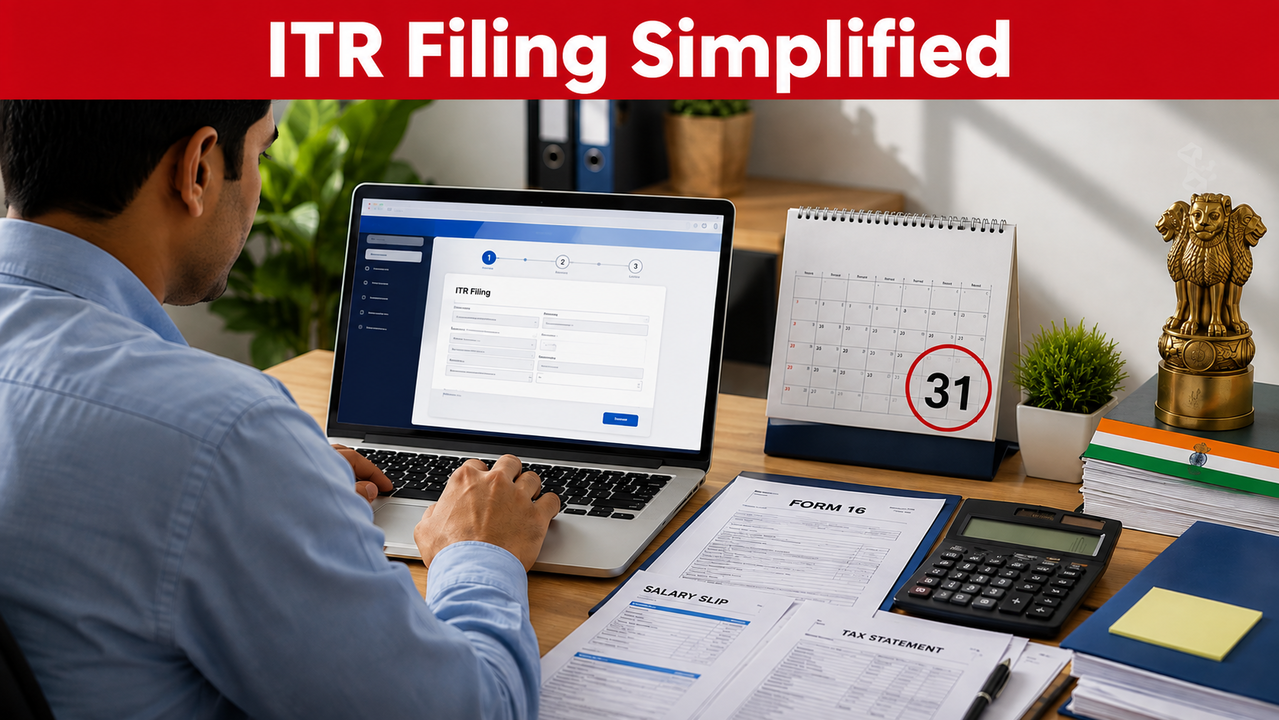
The last date for filing the Income Tax Returns (ITRs) has come to an end for the salaried professionals on July 31, but it remains open for the futures and options (F&O) traders till August 31.
For the F&O turnover, it is not based on the total value of trades but is calculated using specific tax rules.
The turnover figure is crucial because it determines whether a tax audit is mandatory and influences the ITR form you need to file.
It is crucial to understand how the turnover is calculated in F&O trading in determining whether a trader needs to undergo a tax audit. While the Income-tax Act does not prescribe a method for computing F&O turnover, the ICAI’s Guidance Note on Tax Audit lays down the rules that taxpayers are expected to follow.
Those earning income from a business or profession continue to have more time, with their ITR filing deadline set for August 31, 2026, subject to the applicable provisions.
There has been no update from the Income Tax Department as of now on extension of date.
The deadline applies to taxpayers filing ITR-3, ITR-4, ITR-5 and ITR-7 who have business or professional income and whose accounts are not required to be audited under the Income-tax Act, 1961.
Which ITR Forms are Applicable?
Till August 31, the taxpayers can file the forms including ITR-3, ITR-4, ITR-5, and ITR-7.
ITR-3 is used by individuals and HUFs who have income from a business or profession, and can also cover taxpayers with other sources of income, such as salary, capital gains or income from house property, along with business or professional income.
ITR-4 is meant for resident individuals, HUFs and firms, other than LLPs, who meet the eligibility conditions for the presumptive taxation scheme and have income within the prescribed limits.
ITR-5 is used by entities such as firms, LLPs, association of persons (AOPs), bodies of individuals (BOIs) and certain other entities, subject to the applicable conditions.
The form ITR-7 applies to persons, including certain trusts and institutions, who are required to file returns under specified provisions of the Income-tax Act.
