
Chances are sushi aficionados have left a restaurant take-out in tow and with a handful of adorable, but environmentally problematic, fish-shaped soy sauce packets. These single-use plastic “shoyu-tai” drip bottles are as iconic as they are convenient, but their small size and disposability mean they often end up sliding down sinks and into drains. Eventually, these plastic faux fish make their way to landfills or, worse, the ocean. Once in the big blue, they slowly break down into microplastics that are then eaten by real fish. Ironically, those microplastic-filled fish may one day end up nestled between rice at a sushi bar.
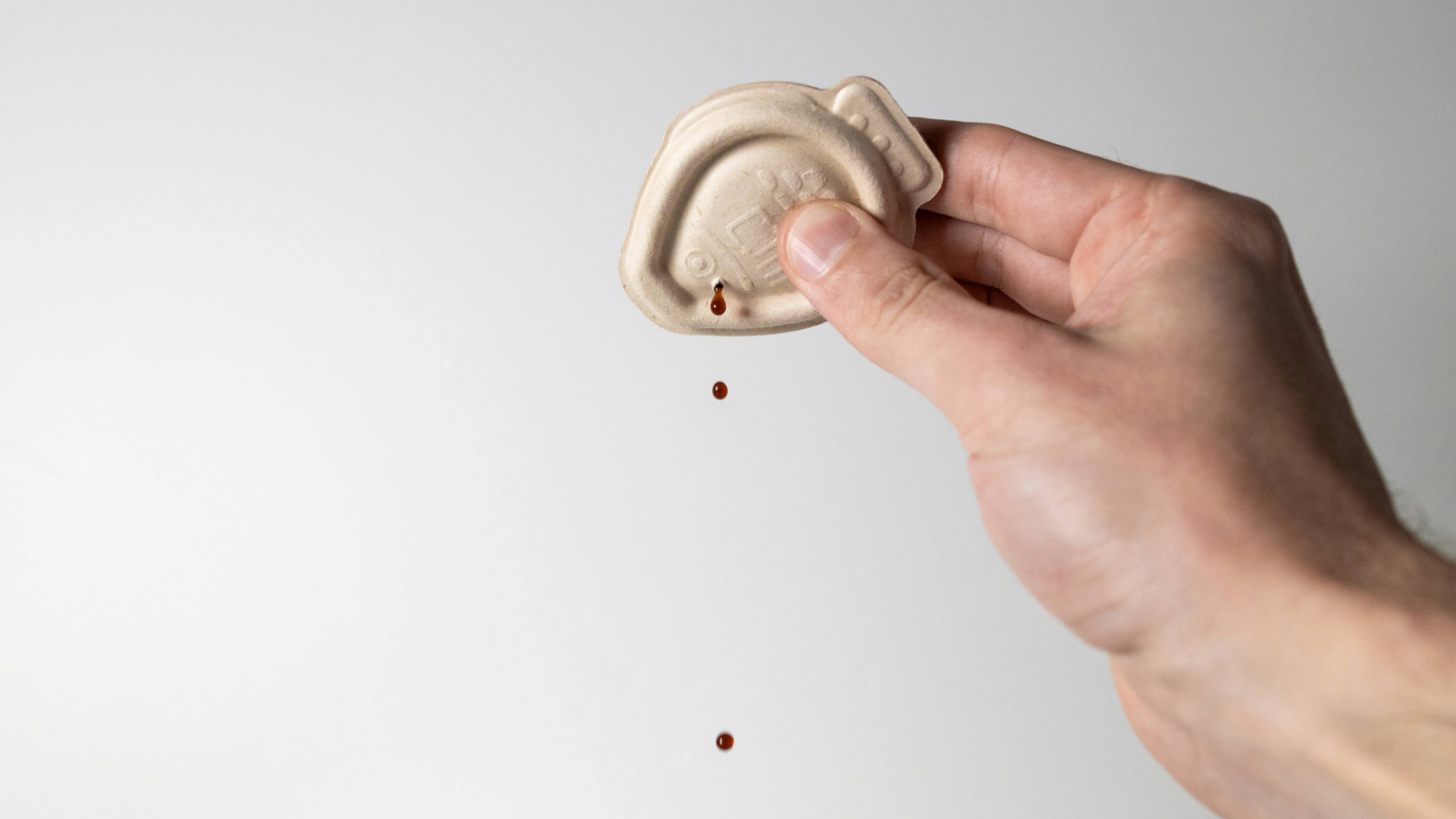
One Australian state has already passed legislation banning the plastic fish-shaped soy sauce packets, and others are reportedly considering following suit. But designers at Heliograf and Australian design studio Vert Design may have found a way to keep the fish packet alive—albeit in a more sustainable form. Their newly designed fish is called Holy Carp! and is made entirely from biodegradable plant fibers. Allegedly, these fibers will completely break down in just four to six weeks, leaving no microplastics behind. The new product is also noticeably heftier than a typical plastic fish, with a liquid capacity of 12 milliliters—a deliberate choice informed by research showing that diners often use more than one packet per meal.
“The soy fish are cute and convenient, but while they serve their purpose for just a few minutes, they can persist in the environment for hundreds of years,” Heliograf writes in a blog post. The company estimates somewhere between eight to 12 billion plastic fish soy sauce packets may have been discarded since the product’s introduction in the 1950s.
“They’ve become a symbol of a wasteful, linear economy that’s harming both people and the planet,” Heliograf adds.
A traditional plastic fish-shaped soy sauce container (left) with the new biodegradable option (right). Image: Heliograf.
A bigger, fresher, fish
Heliograf and Vert Design say they gathered feedback from restaurants to arrive at a design that preserves some of the original fish’s emotional nostalgia, while prioritizing sustainability. The new container is made primarily from bagasse pulp, a byproduct of sugarcane production that has already been proven effective in other biodegradable packaging. When diners squeeze the fish’s engorged belly, soy sauce trickles out through a small dropper near its head. The team says the container is made entirely without PFAS, synthetic compounds that can take thousands of years to degrade, often called forever chemicals .
However, there are some drawbacks. Since the fish containers needs to break down quickly, it can only hold sauce for a maximum of 48 hours. This means restaurants will have to fill the containers individually themselves. Heliograf and Vert Design optimistically suggest that this could result in fresher sauce for customers. It also means more work for store employees.
The inventors of Holy Carp! aimed to merge the original plastic fish-shaped design with sustainability. Image: Heliograf.
Fish containers warrant’ always made of plastic
The plastic fish were reportedly first invented in Japan in 1954 by Teruo Watanabe, the founder of Japanese houseware company Asahi Sogyo.The earliest versions were made of ceramic and glass, but the push for mass production, and the timely advent of inexpensive industrial-grade plastics, led to the creation of the now-iconic polyethylene container. As in so many other cases, the pursuit of scale prompted manufacturers to adopt single-use plastics.
Like water bottles and plastic grocery bags, these plastic fish are particularly problematic because of how long it takes for them to break down. That’s partly why lawmakers in South Australia passed legislation in 2025 officially banning the fish-shaped containers. Defending the law, government officials noted that the packets were especially troublesome because their petite size caused them to be captured, or missed entirely, by recycling sorting machines.
The new containers are made without dangerous forever chemicals. Image: Heliograf.
Relying too broadly on recycling to reduce plastic waste has proven to be a losing bet. Even as recycling has become more common, the vast majority of single-use plastics are not recycled. A 2023 United Nations report found that nearly half (46 percent) of all plastic waste ends up in landfills, while another 22 percent is mismanaged and becomes litter.
Holy Carp! provides an elegant, though admittedly imperfect solution to the problem. The reality is, plastics are popular for a reason and sustainable alternatives will almost always struggle to match their convenience and functionality. But it’s been that and the more microplastic in the ocean, the real fish would certainly prefer the former.
The post Plastic-free soy sauce container biodegrades in 4 weeks appeared first on Popular Science.
Plastic-free soy sauce container biodegrades in 4 weeks
