
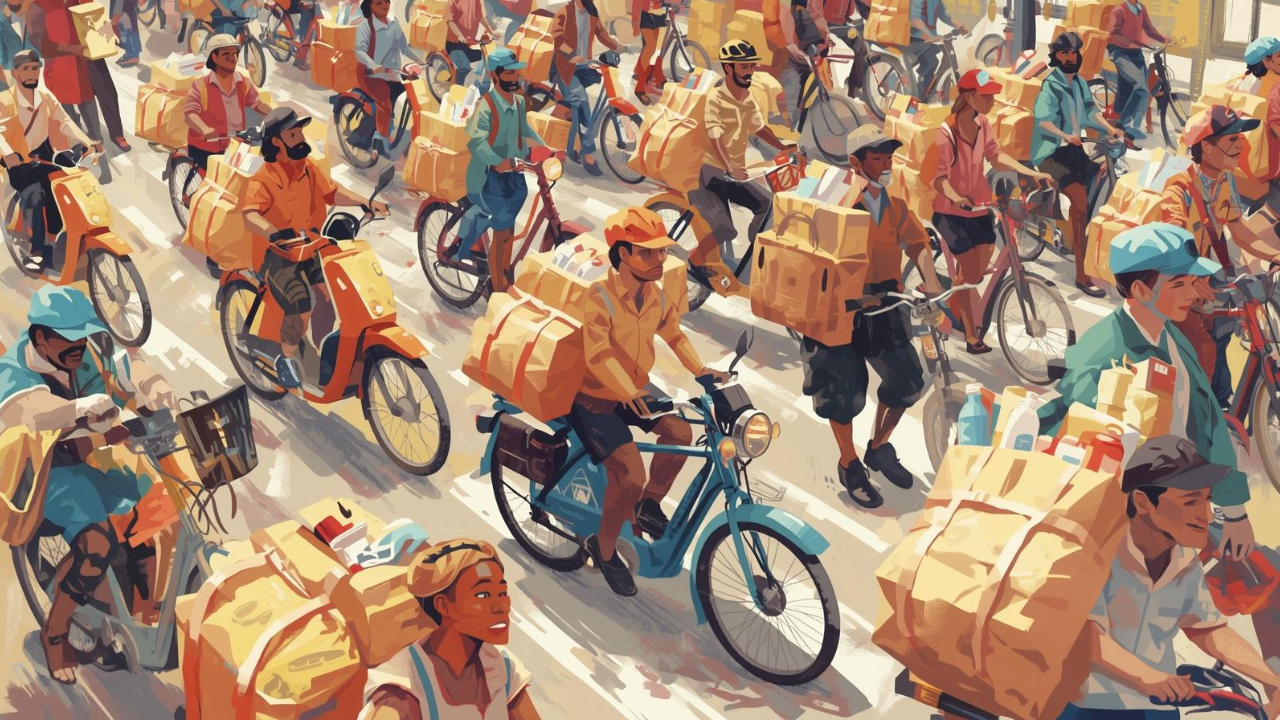
As the clock ticked toward midnight on December 31, one of the most lucrative nights for food delivery and quick commerce, gig workers across India attempted coordinated protests to push for changes in pay, incentives, and social security. While deliveries largely continued uninterrupted, the calls for a strike succeeded in doing something else: they forced the economics of gig delivery work into the national conversation.
Delivery platforms today present a paradox. At the entry level, cash earnings can appear attractive, especially in big cities. But beneath those headline numbers lies a system where income growth depends less on career progression and more on longer hours, higher order volumes, and hitting incentive thresholds.
What Delivery Workers Earn Today
According to the Staffing platform TeamLease Services, estimates a full-time delivery partner in a metro city can earn up to Rs 30,000 a month before costs, depending on multiple variables. “On average, a full-time delivery partner in a metro city earns a gross monthly income of Rs 20,000 to Rs 30,000, and in some cases even more,” said Balasubramanian A, Senior Vice President, TeamLease Services. “The wages are a function of the platform, location or locality, hours worked, and incentives earned,” he said, according to a Moneycontrol report.
These figures broadly align with statements from Eternal founder and CEO Deepinder Goyal, who has shared platform data suggesting that partners working around 10 hours a day for most of the month can gross roughly Rs 26,500, with net earnings closer to Rs 21,000 after expenses.
How The Pay Structure Works On The Ground
Most delivery partners choose between structured full-time shifts and flexible, part-time log-ins. Orders are algorithmically assigned, and while riders can reject some, repeated refusals come at a cost. “You can reject one or two orders, but if you keep doing it, the app just stops sending work (for that particular individual),” said a Delhi-based rider who works for Zomato, states the report.
Earnings are split between base pay per order and incentives. Base pay typically ranges from Rs 20–50 for short distances, with additional per-kilometre payouts beyond a set radius. Incentives, however, often make or break the day.
“The system pushes you to stay logged in longer and chase the next slab,” a delivery partner working with Swiggy told Moneycontrol. “If you stop short of the target, the day’s earnings drop sharply.”
During peak demand, payouts can surge. This New Year’s Eve, riders reported earning Rs 120–150 per order during high-demand hours, the report claims.
What Platform Data Reveals
Following the strikes, Goyal disclosed that average hourly earnings for Zomato delivery partners in 2025 stood at Rs 102, excluding tips. “Most delivery partners work for a few hours and only a few days in a month. But if someone were to work for 10 hours/day, 26 days/month, this translates to ~Rs 26,500/month in gross earnings. After accounting for fuel and maintenance (~20 per cent), the net earnings for the partner are ~Rs 21,000/month,” Goyal said.
Longer-term data show growth has flattened. Earnings rose sharply between 2021 and 2023 but have since plateaued, even as order volumes increased. “Only 2.3 per cent of partners worked more than 250 days in the year. Demanding full-time employee benefits like PF, or guaranteed salaries for gig roles, doesn’t align with what the model is built for,” Goyal noted.
Scale, Friction, And The Road Ahead
With over 15 lakh delivery partners engaged monthly across major platforms, even small changes ripple widely. Workers argue that shrinking base pay has made incentives unavoidable, states the report. “Earlier, even without chasing incentives, the base itself made the day workable,” said a delivery partner in the report. “Now, if you don’t hit the slabs, your earnings drop very quickly.”
