
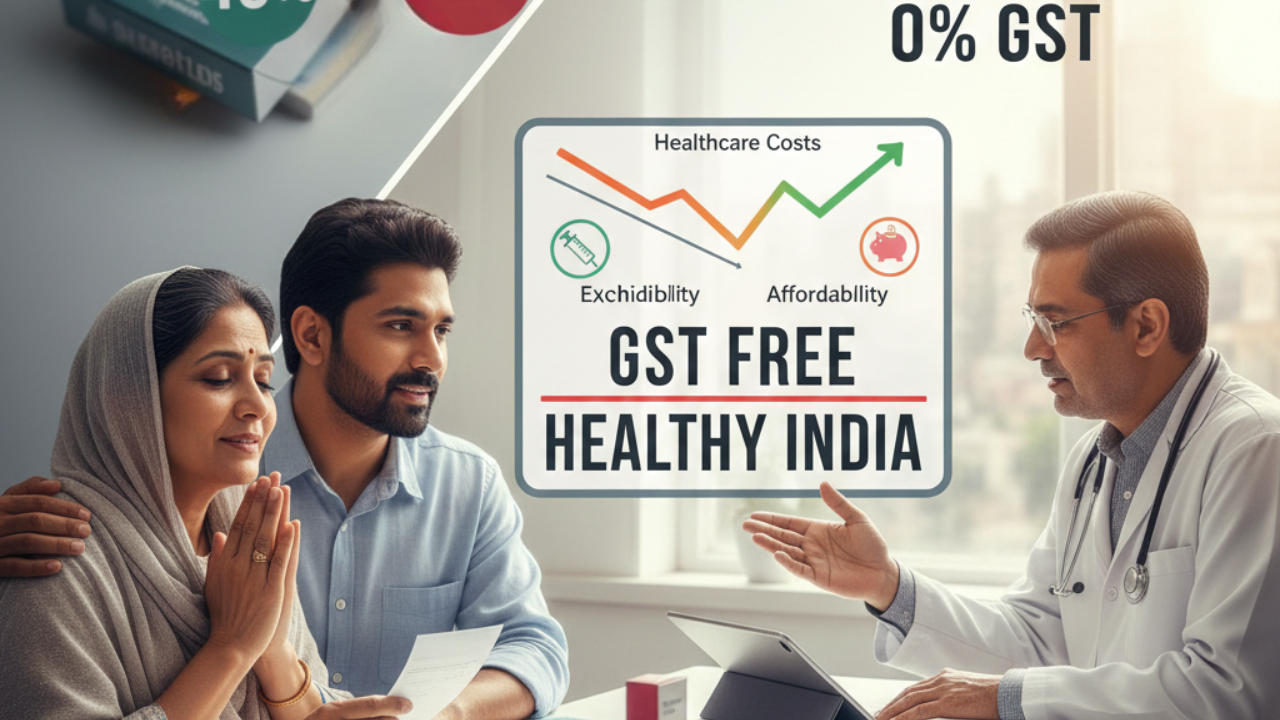
Recent modifications to India’s Goods and Services Tax (GST) framework signal a strong shift in healthcare affordability, especially for cancer patients, say AIIMS researchers. Dr Abhishek Shankar and Dr Vaibhav Sahni of the Department of Radiation Oncology at Dr BR Ambedkar Institute Rotary Cancer Hospital, AIIMS, Delhi, explained in Frontier that these reforms aim to ease the financial toxicity often faced by patients undergoing costly therapies, according to a PTI report.
Among the key steps, the GST council in its 56th meeting recommended the full exemption of 33 critical drugs used in cancer care and rare diseases, from 12 per cent or 5 per cent previously to zero. Additionally, GST will no longer apply to individual health and life insurance policies, which were earlier taxed at 18 per cent. The exemptions even cover certain patented drugs with no generic alternatives, emphasising equitable access to essential treatment.
Targeting Health-Harming Products
Another major change comes in the form of increased taxes on tobacco. The GST rate on tobacco products has been raised to 40 per cent, making it the highest slab for any goods in India, although products remain under 28 per cent until certain levies and compensations are cleared.
“Regardless, the new taxation slab on health-harming products is a step in the right direction and provides increased opportunity to redirect the generated revenue for funding cancer care in the country,” the researchers noted. Evidence suggests higher tobacco taxation encourages quitting, especially among economically disadvantaged groups. A state-level study found that a modest price hike led to nearly 665,000 fewer deaths and over $1.96 trillion in averted treatment costs.
Potential Financial Relief For Patients
Dr Shankar stressed, “The complete removal of GST on several life-saving cancer drugs and rare disease therapies, along with reductions on medical equipment and diagnostics, will significantly lower out-of-pocket expenditure for patients, provided the benefits are fully passed on by manufacturers.”
Exempting health and life insurance from GST may further reduce financial barriers for middle- and lower-income households. The researchers also stressed that timely tax refunds to manufacturers and effective monitoring are essential to ensure these reforms deliver tangible benefits.
“Overall, these economic policy changes should be regarded as steps in making cancer care more affordable and accessible, as well as ones which promote health in society. The key takeaways from these reforms in terms of healthcare involve a simplified tax structure, removal of tax on drugs and medical equipment and increased taxation on tobacco products,” they concluded.
