
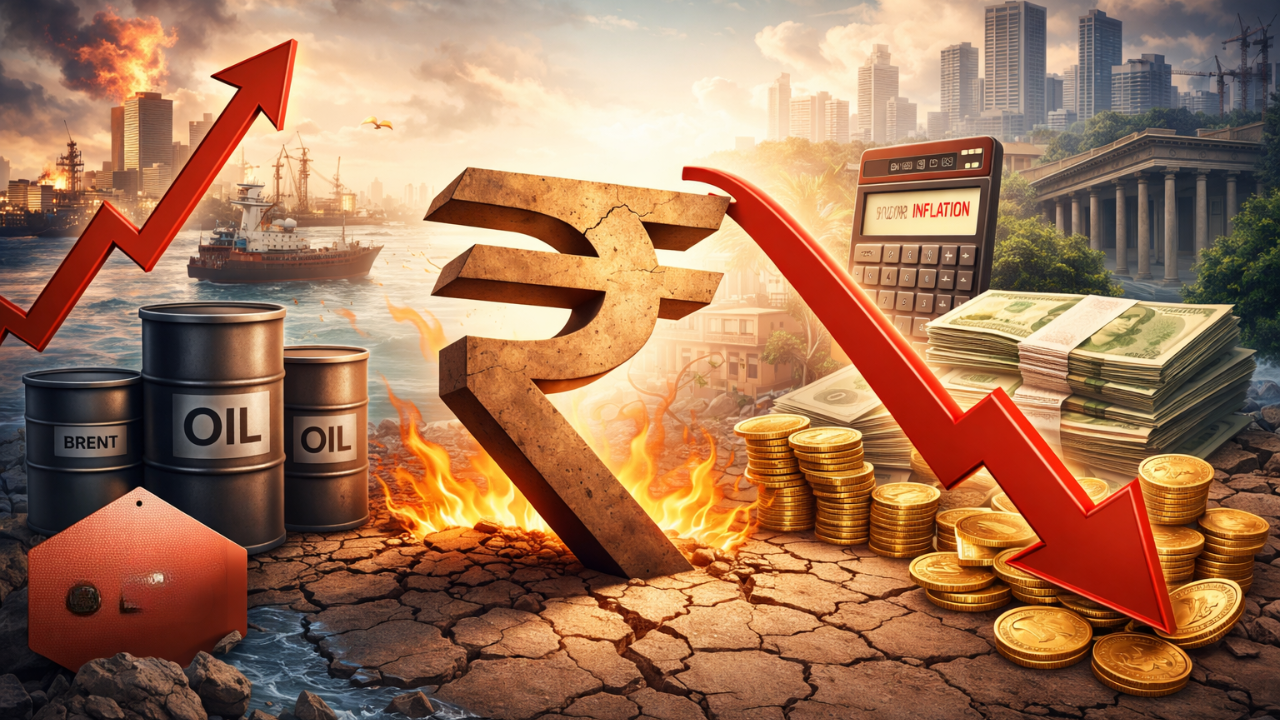
Indian rupee plunged to a historic low of Rs 95 against the US Dollar on Monday, March 30. The rupee has been under immense pressure ever since the US-Israel-Iran conflict started on February 28. The Indian currency opened strong at 93.60 per dollar, gaining over 1 per cent, but couldn’t maintain that momentum and slipped later in the day. Experts suggest that the early gains didn’t last because of a mix of new rules and market moves.
The volatility came after the Reserve Bank of India asked banks to reduce their foreign exchange positions after the rupee was continuously under pressure amid the Middle East conflict. Because of this, banks had to sell dollars in the local market and take positions in the offshore non-deliverable forward (NDF) market. This created a gap between onshore and offshore prices.
Companies quickly took advantage of this gap. They bought dollars in the local market and sold them in the NDF market. This limited how much the rupee could rise and led to uneven movements during the day.
Market estimates suggest these flows were between $25 billion and $35 billion. The price gap between the one-month NDF and the onshore market, which is usually very small, widened sharply to over Rs 1 at one point. It later came down to around 40–50 paise, but was still high enough to attract such trades.
“As banks begin adjusting their positions, they are likely to sell dollars in the market, which can temporarily support the rupee. This creates a phase of relief, driven by position unwinding, not by a major shift in fundamentals, but still meaningful in the near term,” Amit Pabari, Managing Director at CR Forex Advisors, told PTI.
At the same time, demand for dollars from importers, especially large companies covering their near-term payments, also put pressure on the rupee and pulled it down throughout the day.
Additionally, this drop is also attributed to rising crude oil prices as tensions between Iran and the US and Israel grow. Higher oil prices increase India’s import bill, push up inflation, and lead foreign investors to pull out money, which puts further pressure on the rupee.
“For India, this is critical. Being a major oil importer, higher oil prices increase dollar demand, which directly puts pressure on the rupee,” Pabari said.
Impact On Indian Economy
Previously, Goldman Sachs said that the rupee is currently the weakest currency in South Asia and could slide further to 95 per dollar by next year. If that happens, it could pose a serious challenge for the Indian economy.
Madhavi Arora, Chief Economist at Emkay Global, said the RBI’s move is more of a signal to the market rather than a big policy change. She explained that the central bank wants to show it is watching the market closely, which is why the rupee could not hold on to its early gains.
She added that the move is meant to reduce speculative trades and excessive arbitrage, especially when short-term interest rates are low. According to her, the overall trend of the rupee has not changed. It is still under pressure due to global trade conditions and lower capital inflows. The RBI’s goal is mainly to prevent speculative activity from making the situation worse.
