
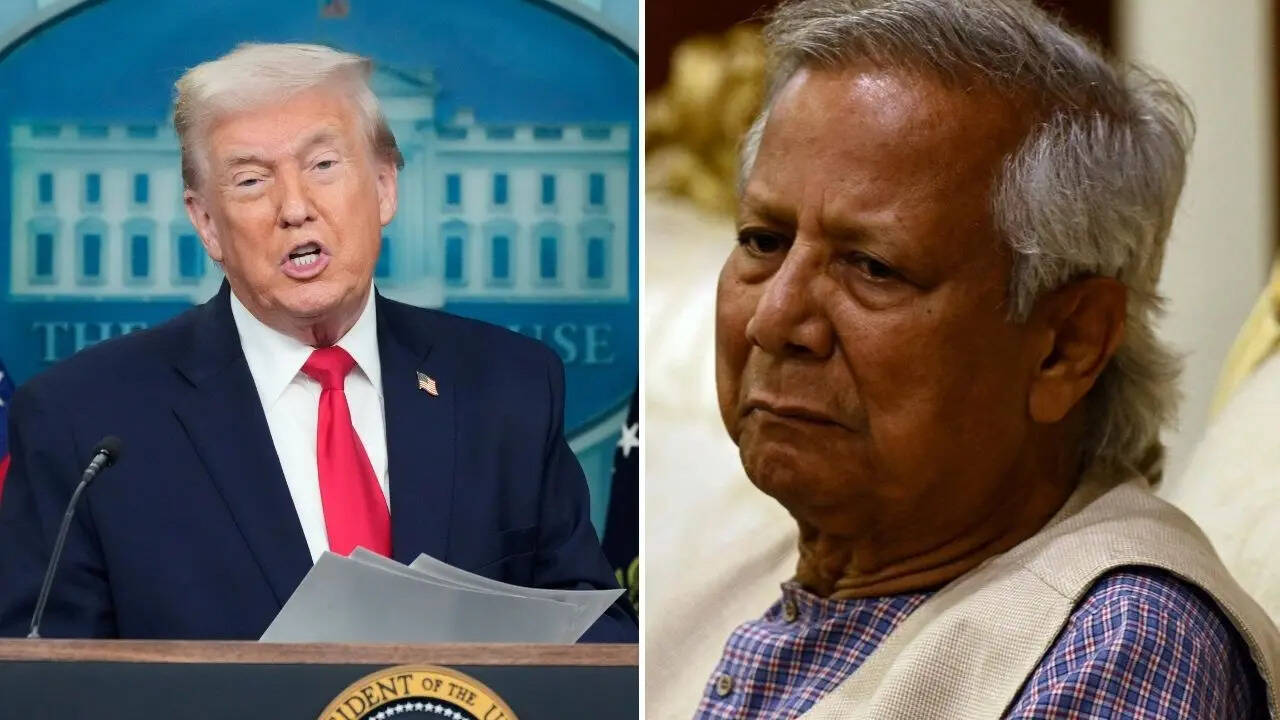
Bangladesh and the United States on Monday finalized a reciprocal tariff agreement that lowers duties on Bangladeshi exports to the American market to 19 percent, down from 20 percent, according to a statement from the office of Muhammad Yunus, the chief adviser of Bangladesh’s interim government.
Under the agreement, Bangladesh will also extend comparable duty concessions to selected American imports. The deal was signed on behalf of Bangladesh by Commerce Adviser Sheikh Bashir Uddin and National Security Adviser Khalilur Rahman. The United States was represented by Jamieson Greer, the US trade representative. Officials on both sides characterized the agreement as a meaningful advance in bilateral economic relations.
As part of the agreement, the United States will provide duty-free or reduced-duty access to roughly 2,500 Bangladeshi products, including several of the country’s core export categories. Garments produced using imported American cotton will qualify for zero-duty entry into the US market. Other sectors expected to benefit from lower or eliminated tariffs include pharmaceuticals, fisheries, particle board and food products.
Bangladesh, in turn, agreed to grant duty-free or reduced-duty access to about 4,400 American products, a move officials said was intended to help address trade imbalances while expanding opportunities for two-way commerce.
Negotiators also agreed to establish a mechanism that would allow zero reciprocal tariffs on certain Bangladeshi textile and apparel exports made using US-produced cotton and man-made fibers. Bangladeshi officials said the provision would provide an additional boost to the country’s garment sector, which accounts for a significant share of export earnings.
Regional Comparisons
The agreement places Bangladesh in the middle of a shifting regional trade landscape as Asian economies seek improved access to the US market.
India recently concluded its own trade agreement with Washington, reducing its reciprocal tariff to around 18 percent, slightly below Bangladesh’s rate. Indian officials and analysts have said the lower tariff gives Indian exporters a marginal pricing advantage in the American market.
Elsewhere in South and Southeast Asia, Pakistan’s reciprocal tariff has been reported at about 19 percent, while Vietnam and Sri Lanka have negotiated rates of around 20 percent. China’s tariff, by contrast, remains significantly higher at approximately 30 percent.
