
Could the launch of the Namo Bharat Corridor result in a boost for housing demand in North Haryana? As per reports the connectivity plans put Sonipat, Panipat and Karnal in focus.
While ANAROCK’s data states residential prices in Sonipat are likely to be at Rs 3,500-6,000 per sq ft, compared with Rs 10,000-18,000 per sq ft in Gurugram, Knight Frank’s data highlights higher annual capital growth for Tier-II markets than Tier-I markets overall; this broader assessment is not for any specific city.
The proposed 136.3-km Delhi-Panipat-Karnal Namo Bharat corridor is expected to connect Delhi with Sonipat, Panipat and Karnal. Approved by the Haryana Cabinet in March 2026, the project has an estimated cost of Rs 33,051 crore and is targeted for completion by 2030. Once operational, travel to Panipat is expected to take about an hour and to Karnal around 90 minutes.
Industry experts believe this corridor could give homebuyers’ more choices, beyond the current established NCR areas and boost access to some employment and education centres. With 22 proposed stations and trains expected to operate every five to ten minutes, the project could make daily commuting more convenient for working professionals, students and business owners.
Parvinder Singh, CEO, Trident Realty, said, “the Delhi-Panipat-Karnal Namo Bharat corridor could be a significant catalyst for transforming the residential landscape of North Haryana. Spanning approximately 136 km, the proposed corridor will connect key growth centres, including Sonipat, Panipat and Karnal, with Delhi through a faster regional transit network. Improved connectivity can expand homebuyers’ choices beyond established NCR markets, while creating opportunities for planned residential developments and integrated townships. The inclusion of the corridor under Haryana’s Transit-Oriented Development policy further strengthens the potential for organised urban growth around transit nodes. Over time, accessibility, social infrastructure and employment opportunities could drive demand for quality housing.”
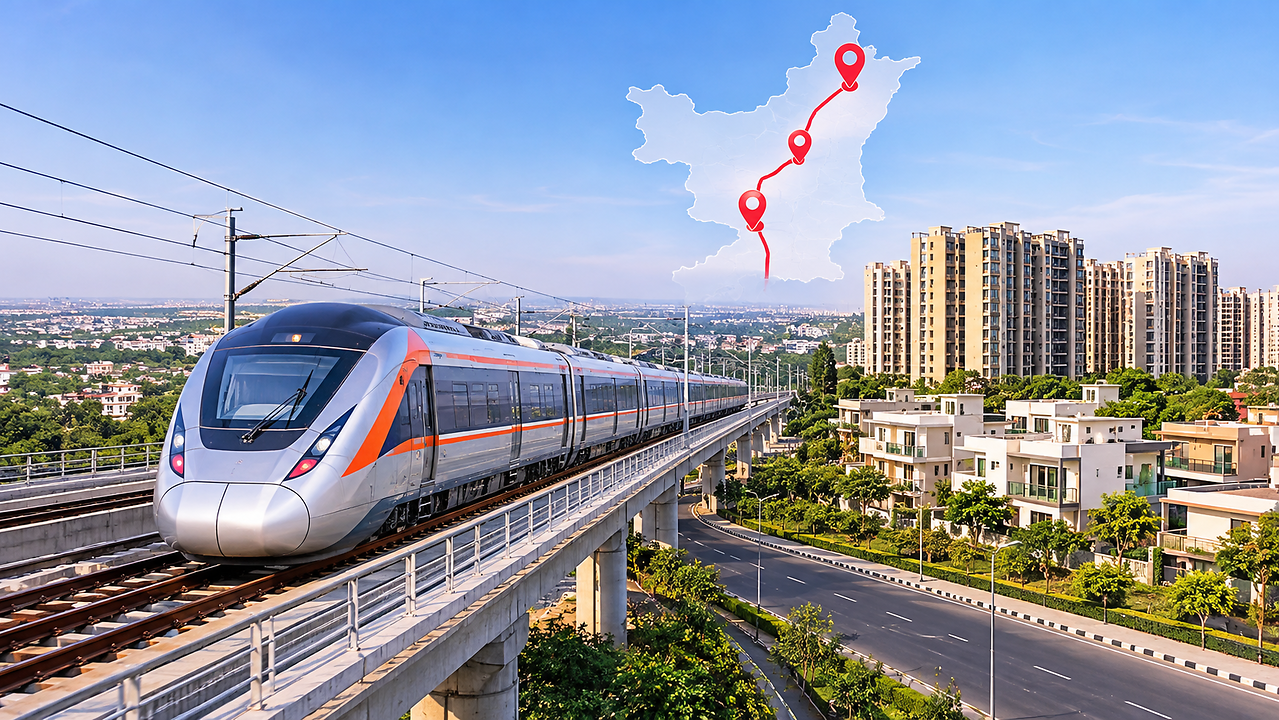
Namo Bharat Corridor: Could Delhi-Panipat Rail Link Drive Housing Demand In North Haryana?
previous post
