
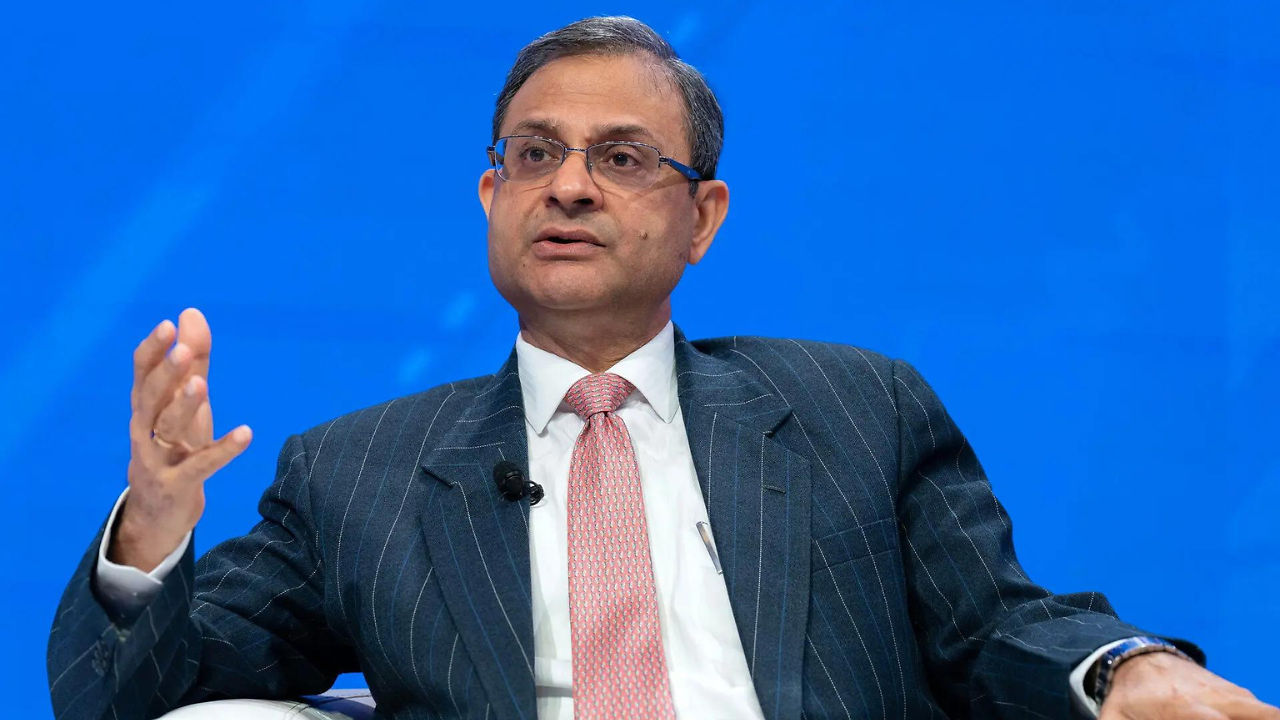
The Reserve Bank of India (RBI) has turned more cautious on inflation, announcing its first repo rate hike in more than three years as higher crude oil prices, food inflation and weather-related uncertainties threaten to put renewed pressure on prices. The Monetary Policy Committee (MPC), led by Governor Sanjay Malhotra, raised the policy repo rate by 25 basis points to 5.50 per cent on Wednesday. The move marks the first repo rate increase since February 2023 and comes as the central bank shifts its policy stance to calibrated tightening.
At the same time, the RBI upgraded its real GDP growth forecast for FY27 to 7.1 per cent from 6.7 per cent and raised its inflation projection marginally to 5.2 per cent from 5.1 per cent.
The decision to increase the repo rate was backed unanimously by all MPC members. However, the shift in policy stance to calibrated tightening was approved by a 4-2 majority.
The 25-basis-point increase takes the repo rate to 5.50 per cent, marking a major shift in the RBI’s approach after a prolonged period without a rate hike.
Following the latest decision, the Standing Deposit Facility (SDF) rate stands at 5.25 per cent. The Marginal Standing Facility (MSF) rate and the bank rate have both moved up to 5.75 per cent.
The RBI’s decision comes against a backdrop of rising global crude oil prices, higher food costs and uncertainty around rainfall. The central bank also pointed to geopolitical tensions, trade-related risks and volatility across global financial markets as factors that could complicate the domestic economic outlook.
“The MPC noted that the global context, on account of geopolitical developments, remains challenging. Nonetheless, the Indian economy has been strong, and the economic momentum remains broad-based,” the Governor said.
RBI Raises FY27 GDP Growth Forecast To 7.1%
Despite the renewed concerns over inflation, the RBI has become more optimistic about India’s economic growth prospects.
The central bank raised its FY27 real GDP growth estimate by 40 basis points to 7.1 per cent from the earlier 6.7 per cent. Its quarterly projections put growth at 7.2 per cent in Q2, 6.9 per cent in Q3 and 6.8 per cent in Q4 of FY27. For the first quarter of FY28, the RBI expects real GDP growth at 7.1 per cent.
The RBI said high-frequency indicators suggested that economic momentum remained firm during the second quarter, helped by services, manufacturing, domestic consumption and investment.
Purchasing Managers’ Index readings for both manufacturing and services remained in expansion territory, providing further support to the growth outlook.
However, the central bank has retained several downside risks on its radar. Global uncertainty, supply-chain disruptions, elevated commodity prices and geopolitical tensions could affect economic activity. Weather conditions are another concern, with a weak southwest monsoon and strong El Niño conditions potentially affecting the rabi crop and rural demand.
Inflation Forecast Raised To 5.2% For FY27
RBI’s FY27 CPI inflation forecast has been increased to 5.2 per cent from 5.1 per cent. Retail inflation had already climbed to 4.8 per cent in August from 4.5 per cent in July, with food and fuel prices contributing significantly to the increase.
The central bank has also detected signs that price pressures could become broader rather than remaining concentrated in a limited number of categories.
For FY27, the RBI expects CPI inflation at 4.9 per cent in Q2, 6 per cent in Q3 and 5.7 per cent in Q4. Inflation in Q1 FY28 has been projected at 5.6 per cent. The risks to the inflation outlook have been assessed as evenly balanced.
Core Inflation For FY27 Is Estimated At 4.4%.
Oil prices remain a key risk, particularly because international crude movements can feed into domestic fuel and transportation costs. The RBI also highlighted uneven rainfall and El Niño conditions, which could affect farm output and consequently food prices.
RBI Shifts Stance To Calibrated Tightening
Perhaps the most significant signal from the latest policy meeting is the change in the RBI’s stance.
The MPC voted 4-2 to move from its earlier approach to calibrated tightening, underlining the central bank’s increased focus on inflation risks.
The RBI said the inflation environment and outlook were not as favourable as they had been during the previous year. While inflation expectations have shown some signs of rising and price pressures have broadened, the central bank said there were limited indications of supply-side shocks becoming entrenched in pricing behaviour.
For borrowers and financial markets, Governor Sanjay Malhotra’s comments on future rate action are particularly important.
“Given the current conditions, rate cuts are off the table in the near term, and policy action ahead can only be a rate hike or a pause, depending on the evolving conditions and the outlook,” Malhotra said.
The RBI Governor added that the pace and extent of any future rate increases would depend on how growth and inflation evolve. Underlying inflation, the widening of price pressures and the potential second-round impact of supply shocks will also influence the central bank’s decisions.
Liquidity Surplus Remains High
The RBI also highlighted developments in system liquidity. Surplus liquidity had increased significantly over the past two months following measures aimed at attracting capital inflows.
Since the previous MPC meeting, average daily surplus liquidity, measured through the net position under the liquidity adjustment facility, stood at Rs 5.9 lakh crore.
The surplus moderated in September after liquidity-absorption measures and quarterly advance-tax outflows. Meanwhile, the weighted average call rate largely remained in the lower portion of the policy corridor, while short-term money-market rates also eased considerably.
The RBI said it would continue deploying an appropriate combination of liquidity-management measures to bring the weighted average call rate closer to the policy repo rate.
Account Aggregators And Financial Market Measures
Alongside the monetary policy announcements, the RBI unveiled measures to improve access to financial information and strengthen engagement with market participants.
One of the measures will permit interoperability between non-banking financial company account aggregators. This means customers will be able to consolidate financial information from different account aggregators by registering with just one of them.
The RBI will also enable SEBI-regulated depositories to incorporate bank deposit details into consolidated account statements. Individuals will consequently be able to view bank deposits alongside their securities, including equity and debt investments, in a single consolidated statement.
These measures are expected to be implemented by the end of 2026.
In another step, the central bank said it would establish a technical consultative committee for financial markets. The panel will provide a structured platform for discussions with market participants and other stakeholders on policy and operational issues.
