
InMobi and Glance are looking at how AI and technology could shape the way travellers discover destinations and experiences in India. Under their MoU with the Tourism Ministry, the companies are exploring digital initiatives aimed at promoting Indian tourism and increasing its reach. Given below is the full interaction with Dr Subi Chaturvedi-Global SVP, Chief Corporate Affairs and Public Policy Officer at InMobi:
Q. Under the Tourism Ministry MoU, how will InMobi and Glance use technology and AI to promote Indian tourism?
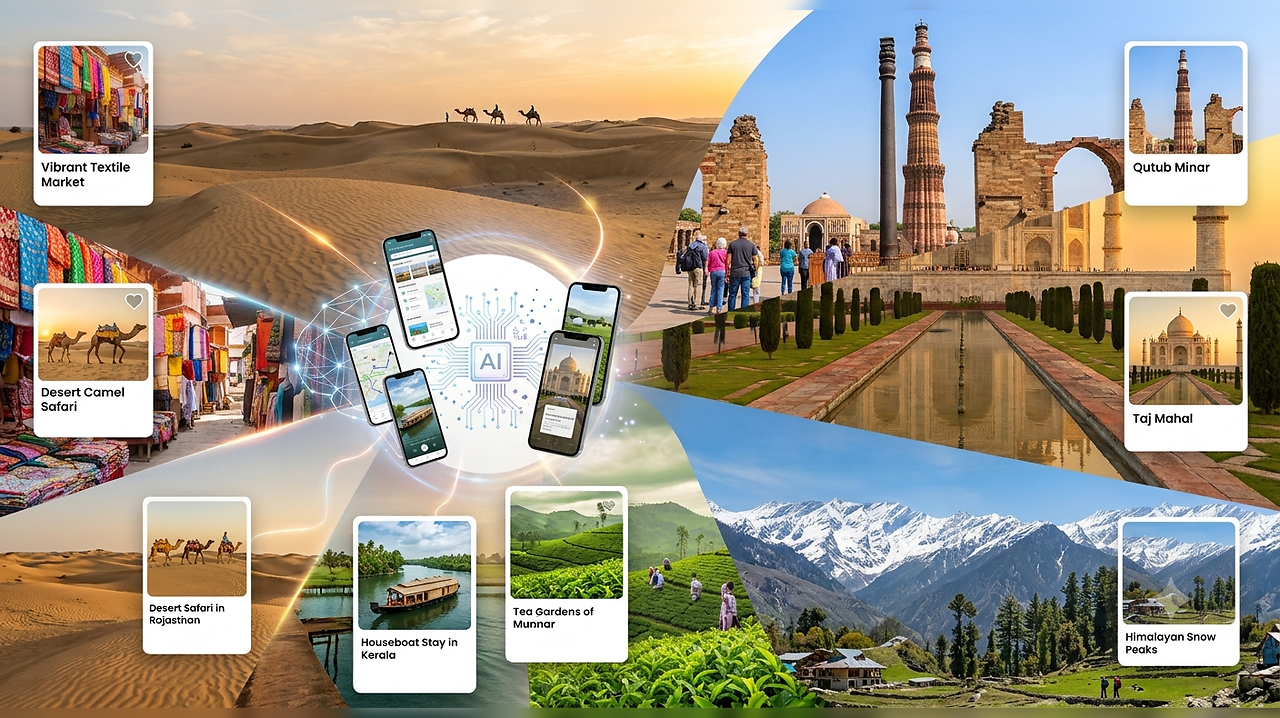
A. Glance, InMobi’s consumer platform, built the world’s first AI-powered lock screen, turning an idle screen people see every time they pick up their phone into a smart surface for content they care about. Under the MoU signed on World Tourism Day, we will use that platform to bring both iconic and lesser-known Indian destinations to millions of smartphone screens.
The Ministry will share content, data, insights and audio-visual material. Glance will use its AI and content expertise to generate, curate and distribute visual content cards under the Incredible India banner. Because our AI matches content to each user’s interests and usage, we can put the right destination in front of the right person: a lesser-known Himalayan trail for a trekker, a heritage town for a history enthusiast, a regional pilgrimage circuit for a family planning a festival trip.
This fits squarely with Dekho Apna Desh 2.0, which aims to spread tourist demand from crowded hotspots to tourism-ready alternatives across hill, coastal, heritage and pilgrimage destinations, and follows a ‘social media first’ approach to promotion. A mobile-native platform can build awareness of those places at scale, especially among young Indians, whom the MoU asks us to connect with the country’s cultural heritage.
The second pillar is behaviour change. Content cards will nudge travellers against littering, defacement and vandalism, and towards respectful etiquette at monuments and heritage sites, because promoting new destinations only works if we also protect them. We also plan joint thematic campaigns around festivals, national priorities and international events to draw visitors from India and overseas.
We will share campaign metrics with the Ministry and review progress every quarter, so what works can be scaled. It is a non-commercial partnership for two years, extendable by one, with no financial commitment on either side.
Q. Take us through InMobi’s core businesses? As AI reshapes the world, what are the company’s key priorities for its next phase of growth?
A. InMobi, India’s first unicorn, has two main businesses, both built on data, machine learning and generative AI.-
InMobi Advertising is our global advertising platform. Through our omnichannel exchange and demand-side platform, it connects brands, agencies and publishers with consumers across mobile apps and connected TV, with an advertising reach of about 2.5 billion users worldwide. This year we acquired MobileAction, an AI platform for app-store optimisation, to strengthen our iOS and app-growth offering, and launched Ad Experiences, which bundles inventory, targeting, creative and measurement around the outcome a brand wants.
Glance, our consumer platform, has about 300 million users globally. It began as the world’s first AI-powered lock screen and is now pioneering agentic commerce: Glance AI, launched in 2025 and built with Google’s AI models, helps people discover, visualise and buy products, and is live in India, the US and Japan. Glance is backed by Google and Jio Platforms.
Our priorities are threefold. First, AI across the business: agentic tools that deliver measurable outcomes for advertisers, and agentic shopping for consumers through Glance AI. Second, taking Glance to profitability as it scales in the US, Japan and India. Third, deepening our roots in India: we are becoming an India-domiciled company, building technology teams beyond the metros, and partnering with government on initiatives such as Dekho Apna Desh 2.0, where Glance’s reach can serve national priorities.
Q. What are the biggest challenges InMobi sees ahead – for instance in implementing this tourism initiative?
A. The biggest challenge is turning attention into responsible travel. Inspiring people to look beyond familiar hotspots is the
easier part; making sure the places we promote are ready for them is harder. Dekho Apna Desh 2.0 rightly focuses on tourism-ready destinations with the
infrastructure and capacity to receive more visitors. If promotion runs ahead of roads, stays, sanitation and local preparedness, we risk simply shifting overcrowding to fragile hill towns, coastlines and pilgrimage sites instead of spreading the benefits to local communities. So our content calendar must move in step with the Ministry’s and states’ readiness assessments, and responsible-travel messages must accompany every destination we promote.
Second is accuracy and authenticity at scale. AI lets us create and personalise content quickly, but travel information dates fast (seasonal access, permits, weather, closures) and cultural and religious sites demand sensitivity. We will keep humans in the loop, consult the Ministry on messaging as the MoU requires, and clearly label AI-generated visuals. A place should look on the lock screen the way it looks on arrival.
Third is trust. The lock screen is a personal space, so content has to earn its place by being relevant and useful, never intrusive, and personalisation must respect user consent under India’s data protection law.
Fourth is measurement. Impressions are easy to count; changed behaviour and footfall moving to new destinations are not. Connecting the two will need data from the Ministry and states and, in time, the National Digital Tourism Stack, which is why the quarterly reviews matter.
For InMobi more broadly, the challenge is pace. AI is rewriting how people discover, shop and travel, and staying ahead while building responsibly is the test for every technology company, including ours.
‘AI Is Rewriting How People Discover, Shop & Travel’: InMobi On AI, Growth & India’s Tourism Push
