
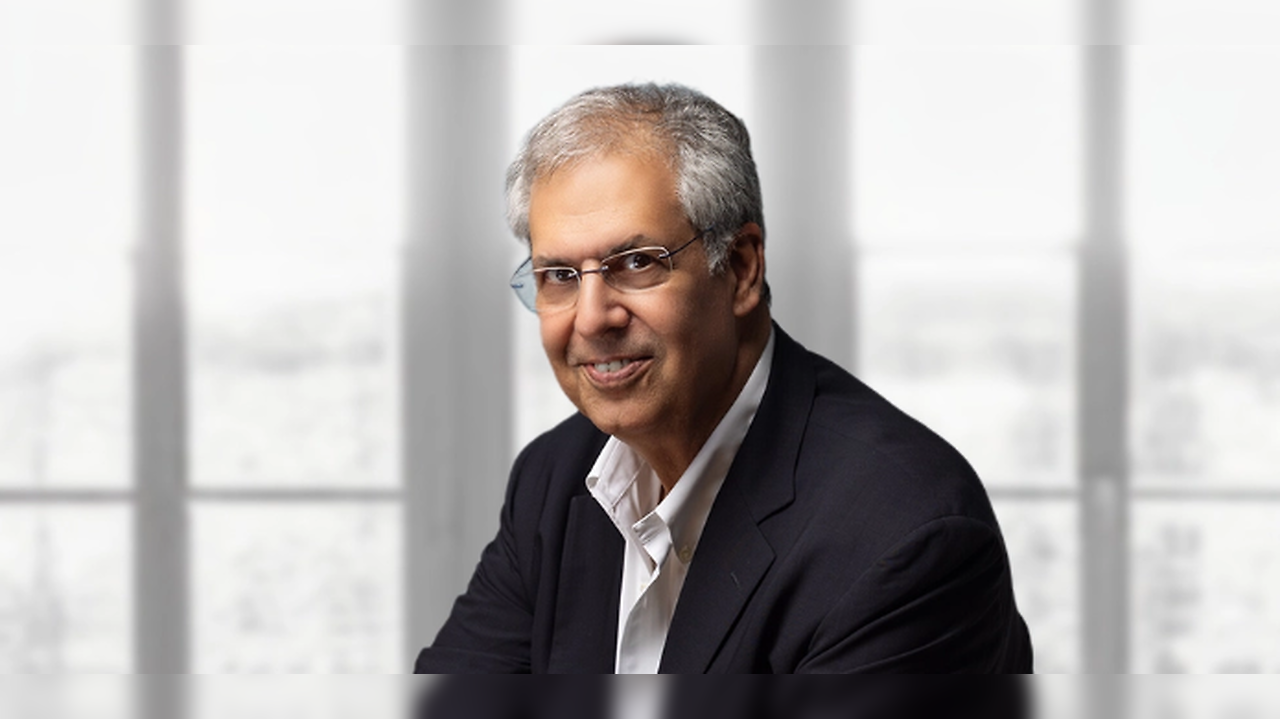
Noel Tata, Chairman of Tata Trusts, has opposed Tata Sons’ proposed listing, warning that going public would “destroy its character” and undermine the group’s longstanding ownership and philanthropic structure. His detailed statement to board members below:
Dear Board Members,
1. The Company recently received a communication dated 11 September 2026 from the Reserve Bank of India declining its application for voluntary surrender of its certificate of registration. That application was made in March 2024 pursuant to a unanimous resolution of this Board. This Board has already taken a decision on the question of whether this Company remains unlisted. A matter of this kind requires papers, explanations, advice and time, and I have no doubt that these are being assembled. The Board will need a full briefing.
2. Nothing in this statement is either directed at any individual or at the regulator. It is at first directed at a process, and at what I respectfully suggest this Board should now do.
3. I also record that the conduct of the House of Tatas and the Company has been that of an institution which has gone above and beyond in complying with the law of the land. When it was restricted from accessing bank funding, it repaid those borrowings. When a debt free profile became necessary, it repaid its borrowings and prematurely redeemed preference shares. When the core investment company rules were tightened, it divested its holdings outside the Group. At no stage has the Company sought to place itself beyond the reach of regulation. It has sought only to preserve a structure that existed for over one hundred years.
4. Turning to the 11 September 2026 communication received from the Reserve Bank of India, it is important to first understand precisely what this communication says. It records that the Company’s request for voluntary surrender of its certificate of registration cannot be acceded to, and it advises the Company to take necessary actions to ensure full compliance, immediately, with the guidelines and instructions applicable to a non-banking financial company in the Upper Layer. It does not mention listing. It prescribes no particular step, and it does not say that the Company is in breach. What its legal effect is, and what it requires of this Company and by when, are questions upon which this Board has formed no view. Before it can do so it must be briefed upon what has passed between the Company and the Reserve Bank over the last two and a half years, upon the submissions that were made and the responses received, upon what options were explored during that period and with what result, and upon the options which remain available now. It must then take considered legal advice of Counsel. Only upon that footing can this Board determine the legal implications of what it has received and how the Company should deal with it in the best interests of the Company and of its stakeholders. It is necessary to take these steps immediately, and we should begin at once.
What is at stake
5. Tata Sons is not a holding company in the ordinary sense. Approximately 66% of its equity is held by the Tata Trusts. Dividends received from the operating companies flow, through the Trusts, into public charity. The interests which Tata Trusts bring to this Board is public interest held for the millions of beneficiaries of the charities which the dividends of this Company sustain. The commercial enterprise and the philanthropy are not adjacent to one another; they are one structure seen from two ends.
6. That structure is more than a hundred years old, and it has permitted this Company to act, repeatedly, in ways that a purely commercial calculus would not have supported. Sir Dorabji Tata pledged his personal assets to preserve Tata Steel. This Company proactively infused funds to protect depositors and creditors when unauthorised diversions were discovered at Tata Finance in 2001. It similarly chose to settle liabilities of Tata Teleservices running into tens of thousands of crores of rupees, including amounts owed to its joint venture partner and to lenders, when it was under no immediate compulsion to do so.
7. Each of those decisions was taken because of what the Tata Group considered it owed to depositors, to counterparties, to lenders and to its own name. Each of them spared the Indian financial system write offs of a very substantial order. They were acts of stewardship, and they were possible because the shareholder base of this Company permitted them. The Tata Group was conceived as national service carried on through business and has been so conducted for more than hundred years and the structure of its ownership is what has allowed it to remain so.
8. The same characteristic explains the part this Company has played in the building of the country: the first integrated steel plant, the first Indian airline, institutions of science, medicine and social research on which the nation still relies, and more recently commitments in semiconductors, electronics manufacturing and civil aviation that require patience measured in decades rather than in quarters. No listed holding company in India has been asked to carry that load, and it is worth asking whether a listed one could.
9. The principal activity of this Company is to invest in and support the companies of the Tata Group. If Tata Sons is publicly listed, the rights of Tata Trusts as majority shareholders stand to be seriously impaired.
10. A listed Tata Sons would be accountable to institutional and foreign shareholders whose legitimate interest is financial return. It is doubtful that such shareholders would sanction the deployment of capital to rescue a Group company in distress, or the funding of a greenfield venture whose returns lie fifteen years away. That is not a criticism of them. It is a description of their mandate, which is not ours.
11. What is at stake is something very fundamental. The nature and character of the Tata Group as a unique institution.
The settled position of this Board
12. This Board has already considered this question and reached a conclusion. In March 2024, under the guidance of the late Mr. Ratan Tata, it resolved, unanimously, that the Company should remain unlisted, and that it should apply to the Reserve Bank of India for voluntary surrender of its certificate of registration.
13. That resolution was implemented, at very considerable cost. The Company repaid borrowings and prematurely redeemed preference shares aggregating approximately Rs 20,000 crore, funded from internal resources and from the monetisation of Group holdings, and resolved not to borrow monies which it has not done in the 30 months since March 2024.
14. A company does not commit Rs 20,000 crore to preserve form. It does so to preserve substance. The considered and unanimous assessment of this Board was that the substance was worth the price. The Company has progressed very far in this journey.
15. I would add what ought to be obvious but is worth saying aloud. That resolution has never been placed before this Board for reconsideration. No director has moved that it be revisited. No note has been circulated inviting the Board to take a different view. No item to that effect has appeared upon any agenda, including today’s. It is and remains the standing decision of this Board, and it will remain so until this Board, sitting as a Board, decides otherwise. The Board has no choice but reinforce and reiterate its prior resolution to do everything that needs to be done to ensure that the Company remains private.
16. I ask the Board to unanimously hold that assessment steadily in view. The resolution remains unaltered and intact, and nothing that has occurred since has altered it. The Reserve Bank has not held the Company’s reasoning to be wrong. It has declined an application for voluntary surrender of registration without providing any reasons. I am informed that the Reserve Bank has lodged caveats in anticipation of challenge to its decision which I understand is an unusual step for a regulator.
17. In any case, the resolution passed by this Board is in full force. The very same RBI Scale Based Regulations that require an Upper Layer- NBFC to mandatorily list also expressly provides that an Upper Layer- NBFC can move out of the enhanced regulatory framework if the movement is on account of voluntary strategic move to readjust operations as per a Board approved policy. We must explore all avenues and possibilities to move out of the regulatory framework that requires mandatory listing and engage fully with the RBI for this purpose.
The position of the majority shareholder (Tata Trusts)
18. To strengthen the Company’s resolve to remain unlisted, Tata Trusts, the majority shareholders also spoke, and they did so formally. In May 2025, the Trustees of Sir Dorabji Tata Trust and Sir Ratan Tata Trust unanimously agreed that if Tata Sons were to be listed, it would have far reaching implications for the Trusts. Subsequently in July 2025 Sir Dorabji Tata Trust and Sir Ratan Tata Trust each passed resolutions, again unanimously, recording that the Company should remain unlisted, and requesting the Chairman of Tata Sons to explore all available avenues to ensure that there was no change in the status of the Company as it then stood, and that the Company engage fully with the Reserve Bank of India to that end. The Chairman of Tata Sons was requested to keep the Trusts informed of the progress of the above matters.
19. A formally recorded and unanimous position of the majority shareholder is a matter to which this Board must give the most serious weight. Those resolutions remain unamended and unrescinded, and they continue to be the unequivocal voice of Tata Trusts on this topic.
20. Nor has any Trustee of either Trust moved for the reconsideration of those resolutions. No meeting has been convened to revisit them. No proposal to amend or to rescind them has been tabled.
The RBI Decision of 11 September 2026
21. At the meeting of this Board in September 2025, the Chairman assured the directors that all necessary steps were being taken to ensure that the Company maintained its unlisted status. I accepted the assurance as sincerely given. Today’s meeting outcome will validate if that statement was sincerely given.
22. That was not the only occasion on which the matter was addressed. At the meeting of this Board on 24 February 2026 when we were discussing the Chairman’s re-appointment, one of the issues on which I asked the Chairman to publicly state his personal determination and desire was for the Company remaining private and if the Company is doing everything to remain private. In response, the Chairman reiterated that the Company has taken all necessary steps to remain private. I do not read the assurance given in September 2025 and February 2026 as having expired. What were the options explored by the management to avoid public listing? What was the level of engagement with the regulator on this front? The Board has not been briefed on this. I call upon the Chairman and the relevant officials to fully brief the Board on the journey of this engagement at a subsequent meeting. Whatever this Company now proposes to do in response to the communication of 11 September 2026, it should proceed upon a position at which Tata Sons and the Tata Trusts have arrived together.
23. Going forward, the Tata Trusts must be engaged at every step and not informed of the outcome afterwards. Any structural step towards a listing will in any event require shareholder approvals which only they can give, so their involvement is not merely desirable but unavoidable, and it is better secured by deliberation now than sought by requisition later. And the Trustees have obligations of their own, owed to the objects of the Trusts and answerable elsewhere, which they cannot discharge upon information they receive after the event. I would therefore ask that the Trusts be involved in and consulted before any submission is made to the Reserve Bank, before any adviser is appointed, and before any position is taken on structure or on timing.
24. The communication dated 11 September 2026 has reached this Board without a warning. In a matter of this importance, pending for two and a half years, in which the Company was said to be in close and continuous engagement with the regulator, it is ordinarily expected that a company in such engagement would have had some sight of the direction in which the decision was moving, which would have necessitated an update to the Board so that the Company could take necessary measures and actions. I have asked the Company for a complete set of documents and information in relation to this matter. The Company should make all efforts to get all information regarding this matter. The Company should consider making an application to the Reserve Bank under the Right to Information Act and request the Reserve Bank to provide a copy of the complete file and notings so that the basis of the decision is before this Board.
The way forward
25. We must look forward and not back, and I intend this statement to do so. I do not propose an inquest. I propose a plan.
26. The communication of 11 September 2026 declines an application for voluntary surrender of registration. On my reading, it does not say that listing is the only option. Considerable room remains, and this Board should occupy that room rather than concede it.
27. First, the Company, in consultation with Tata Trusts should make a detailed representation for reconsideration and must fully engage with the regulator. At least one comparable investment holding company, having repaid its borrowings, was permitted to surrender its certificate of registration and to continue as an unregistered core investment company. If there is a distinction between that case and ours, the Company is entitled to know what it is.
28. Second, the Company should ask to be heard by the regulator before any final view is taken upon that representation. No such hearing seems to have been given and the regulator’s decision of 11 September 2026 thus does not abide by the notions of fairness and natural justice.
29. Third, the Company must explore all permissible avenues and options to avoid public listing. As I indicated earlier, the letter from the regulator does not even name listing. There are other options and avenues available. The Company can consider restructuring, for example. As stated above, the regulations themselves contemplate other options. All such avenues and options must be explored.
30. Fourth, the Board, in consultation with Tata Trusts, must obtain legal advice from Counsel upon the remedies available in respect of the communication, so that it may take its decisions with knowledge of its options. I express no view today upon whether any such remedy should be pursued. I say only that a board ought to know what it may do before it decides what it will do. It needs detailed advice.
31. Fifth, and this is without prejudice to all the rights and contentions of the Company, the Company should engage with the regulator immediately upon the question of time. Even assuming for argument’s sake that a listing was required, and the only option is that the Company must list, the Company should be given a period of three years to comply. The three-year period should start now.
32. Under RBI’s Scale Based Regulatory framework, a company identified as an upper layer non-banking financial company is ordinarily allowed three years within which to list. That is the period which the regulator has itself judged reasonable for an undertaking of this nature.
33. Whatever view is taken of the position between 2022 and today, this Company has never previously been told, in terms, that it must list. It applied in good faith, and in time, for a route that would have rendered listing inapplicable, and it then awaited a decision which took two and a half years to arrive. A period during which a company is awaiting its regulator’s decision cannot fairly be counted against it. During this period statements in the media from the regulator indicated that the matter was under consideration. There was nothing to suggest that the application was rejected or even likely to be rejected.
34. The Board should therefore seek a period of not less than three years from the date of the communication (i.e. till September 2029) and should state plainly why such a period is necessary rather than merely comply.
35. The reasons are substantial. The requirements for listing include the recasting of the Articles of Association and the shareholder approvals which that recasting will require; the preparation and restatement of consolidated financial statements to the standard demanded of an offer document; the appointment of intermediaries, the conduct of due diligence and the resolution of valuation; the present financial commitments of recently acquired and newly formed subsidiaries, including in civil aviation, and the losses and borrowings which a consolidated presentation will disclose; long gestation commitments in semiconductors and electronics manufacturing whose returns lie well beyond any reasonable offer horizon; and the market’s present appetite for holding company paper.
In addition, given the huge losses of Air India and Tata Digital, a public issue at this time will be detrimental to the shareholders and the Company. This will take several months if not years.
36. An offering made in haste, into a market presented with a consolidated picture that has not been allowed to mature, would serve neither the Company, nor its shareholders, nor even the shareholder that seeks liquidity, nor the standing of the Indian capital markets. An orderly transition over a proper period serves every interest, including the regulator’s own.
This is not, today, the right forum
37. The Tata Trusts have already taken an unequivocal decision upon this question. If that decision is now to be revisited, it must first be revisited where it was taken. The Trustees will need to deliberate, and the directors nominated by the Trusts will thereafter act upon the position which the Trustees reach.
38. For this Board to vote first, and for the Trusts to deliberate afterwards, would invert the order in which these matters must proceed. It makes no sense at all. If I am forced to vote, then I would have no option but to veto any such decision to list.
In conclusion
39. This Company holds something in trust. Its majority shareholder is a charity. Its dividends fund hospitals, universities and research for which no shareholder will ever be repaid. Its capital has repeatedly been placed at risk for reasons no analyst would have endorsed and from which the country has nonetheless benefited. That is not sentiment. It is the operating model of this House, and it has stood the test of time for more than a century. A listing will destroy its character and strike at the heart of this principle.
40. I request that this statement be recorded in full in the minutes of this meeting, and that a copy be circulated to all directors together with the draft minutes.
Tata Sons Listing Will ‘Destroy Its Character’: Noel Tata Opposes
