
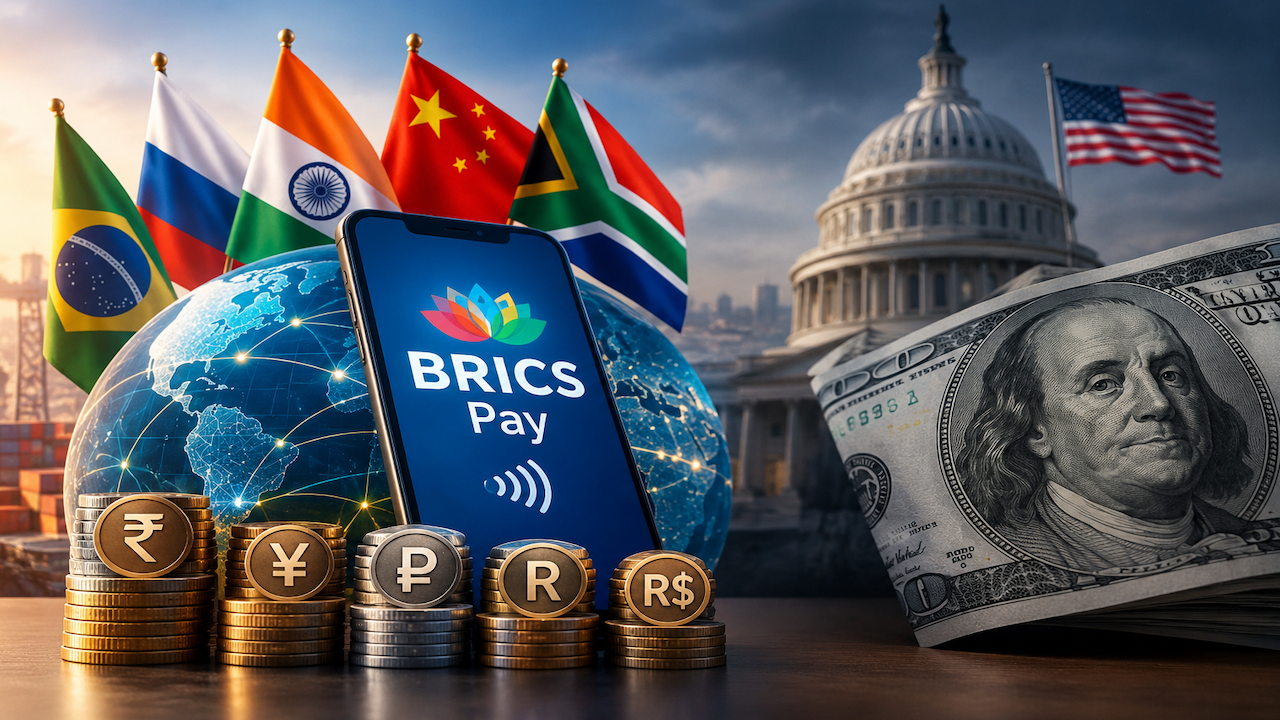
When world leaders gather at Bharat Mandapam in New Delhi on September 12 and 13 for the 18th BRICS Summit, the cameras will be on the hugs and handshakes. The real work, however, is in a payments task force that has been meeting all year — and India is running it.
On August 11, just weeks before the summit, RBI Governor Sanjay Malhotra stood at the annual FIBAC conference in Mumbai and said something that went largely unreported outside financial circles. “Cross-border payments is an area of interest for all of us, including the BRICS, because we feel there is a lot of scope for reducing cost,” he told the gathering, as per PTI. He confirmed a dedicated BRICS Payments Task Force is at work on two tracks: linking national fast-payment systems and connecting central bank digital currencies. “Various methods, various options are on the table,” he said. “It is still at the discussion stage, including CBDC and linkages of fast payment systems.”
Still at discussion stage. Not shelved. On the agenda.
UPI processed a record 23.66 billion transactions worth ₹29.88 lakh crore in July 2026 — its highest-ever monthly volume, as per NPCI data. A domestic transfer settles in seconds, at near-zero cost. An international remittance covering the same distance takes hours to days and passes through multiple correspondent banks, each adding a fee. RBI Deputy Governor T. Rabi Sankar has called this gap “unconscionable given available technology” — and in April 2026 confirmed the RBI is in active talks with central banks across key remittance corridors to fix it.
What India is building — and what it is not
Commerce Minister Piyush Goyal was unambiguous at the BRICS trade and industry ministers’ meeting in Jaipur on August 7.”India is not in favour of a BRICS currency. We do not support the introduction of any such BRICS currency scheme; India opposes it,” PTI reported. What India is pushing instead is interoperability — linking existing national rails. India has UPI. Brazil has Pix. China runs the digital yuan platform alongside CIPS, its cross-border interbank system. Russia has SPFS. Connecting these systems would allow trade to settle in local currencies without routing every transaction through dollar-denominated correspondent banks.
The RBI has already signed MoUs with the central banks of the UAE, Mauritius, Maldives and Indonesia to promote local-currency transactions, with more in progress, Malhotra confirmed at FIBAC. UPI is already live for merchant payments in 10 countries — Bhutan, Singapore, UAE, France, Mauritius, Sri Lanka, Nepal, Qatar, Cambodia and the Maldives, according to NPCI data.
The July 2025 Rio BRICS Leaders’ Declaration — Paragraph 50 — formally tasked finance ministers and central bank governors to continue work on the BRICS Cross-Border Payments Initiative and acknowledged the BRICS Payment Task Force’s progress on interoperability. That mandate lands at the Delhi summit for its first public reckoning.
Is the US dollar under threat? NO!
The dollar is not under threat of replacement — it still dominates global forex at roughly 88%, per BIS data. But the architecture underneath global trade is being rewired, one bilateral corridor and one task force mandate at a time. Delhi will decide whether that work gets a formal multilateral spine or stays a patchwork of bilateral links.
India’s position is consistent: the infrastructure without the ideology. The workaround, not the war.
