
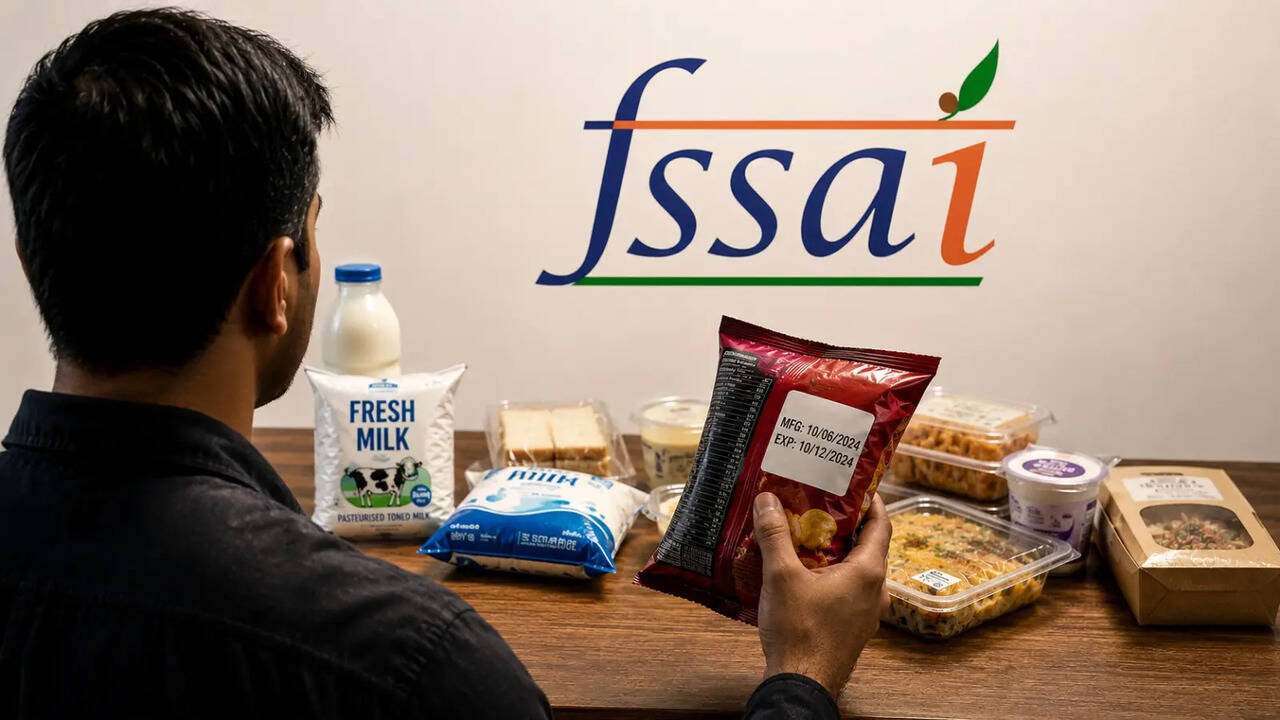
The Food Safety and Standards Authority of India (FSSAI) has appealed the customers to stay vigilant in terms of the manufacturing and expiry dates mentioned on the food labels and help to reduce the food wastage and stay healthy.
“A date on a food package is more than just a number, it helps you make safer and smarter food choices. Understanding what different date labels mean can reduce food waste while protecting your health. Always read the label before you eat,” FSSAI said in a post on social media platform X.
Under the campaign, #HarLabelKuchKehtaHai, FSSAI said always check the Use By/Expiry Date which is equal to Safety. “Do not consume after this date.”
Best Before = Quality. Food may still be safe if stored properly, but quality may decline, it said.
Always check the date, storage conditions & signs of spoilage before consuming packaged food.
Last date the food is safe to consume. After this date, the food may become unsafe, even if it looks or smells normal. Never consume food after the Use By/Expiry Date.
It said the Best Before date implies to Quality.
It indicates how long the food will maintain its best taste, texture, and flavour. Food may still be safe after this date if stored properly and the packaging is intact. Quality may reduce, but safety is not necessarily affected.
E-Comms Hiding Health Info: Times Now Campaign
The lack of visibility of the manufacturing and expiry dates on the e-commerce platforms remain a key concern,
It is that gap that Times Now Digital’s ‘E-Comms Hiding Health Info’ campaign has been targeting — holding platforms including Zepto, Amazon Now, Swiggy Instamart, Blinkit, BigBasket and Flipkart Minutes accountable for failing to display critical product information such as manufacturing dates, expiry dates and other mandatory disclosures.
To understand how consumers are experiencing these issues, Times Now Digital ran an online survey. The findings suggest concerns over freshness are widespread.
Nearly 52 per cent of respondents reported receiving either expired or near-expiry products. Of these, 33.5 per cent said they had received products close to their expiry date, while 18.9 per cent said they had received products that had already expired — together accounting for 52.4 per cent of responses, or more than one in two users.
