
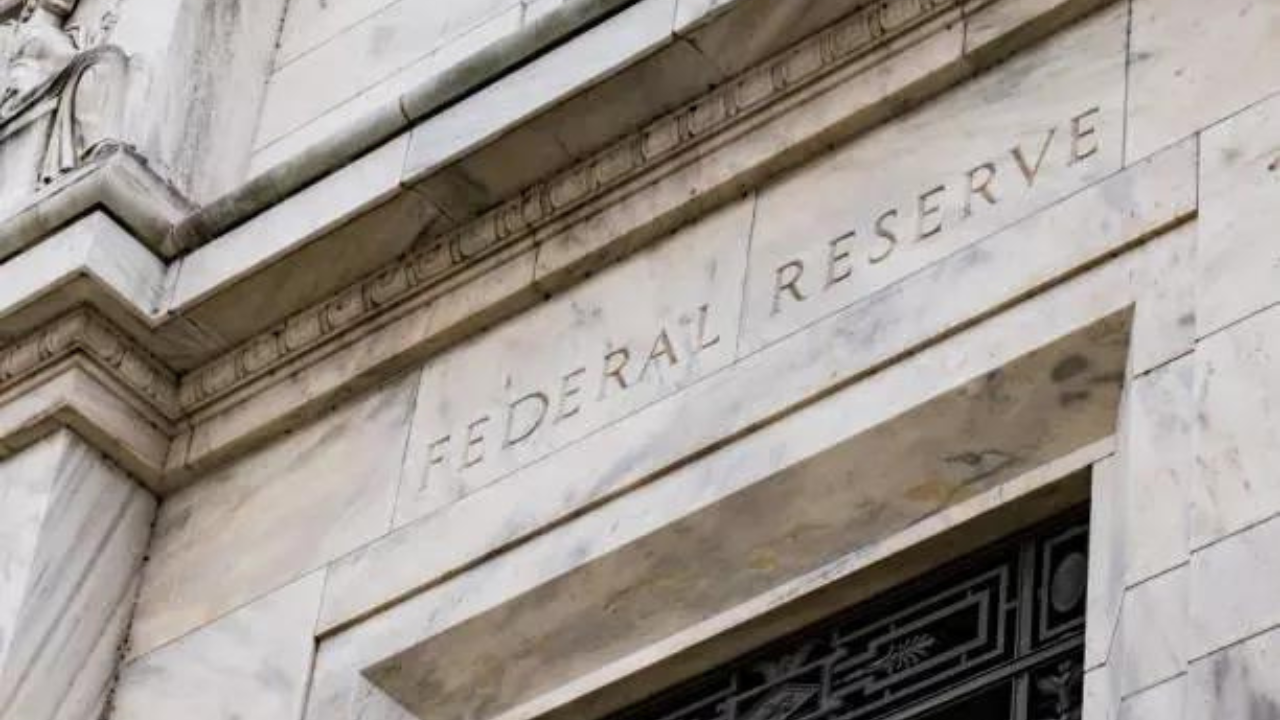
The US Federal Reserve announced a leadership team of five high-level task forces that will review how the central bank approaches monetary policy, with three prominent Indian-origin professionals among those selected. Former Reserve Bank of India (RBI) Governor Raghuram Rajan, Harvard economist Raj Chetty, and Microsoft Executive Vice President Asha Sharma will each co-lead separate panels as part of the sweeping institutional review.
The initiative was first announced by Federal Reserve Chair Kevin Warsh during his inaugural press conference on June 17. The task forces are expected to work independently before submitting evidence-based recommendations to the Federal Open Market Committee (FOMC) later this year.
“The Federal Reserve’s commitment to price stability and maximum employment is unwavering. As is our resolve to pursue our mandate with rigor,” Warsh said in a statement.
“I am honoured that the best minds from a range of disciplines have agreed to work with us to sharpen our performance as an institution. The goal is straightforward: to ensure the Fed is best positioned to achieve our objectives in this consequential time,” he added.
According to the Fed, each task force will include experts from academia, business and central banking, supported by Federal Reserve staff. Warsh has said the review is expected to conclude by the end of the year.
Raghuram Rajan To Review The Fed’s Massive Balance Sheet
Former RBI Governor Raghuram Rajan has been appointed to the Balance Sheet Policy task force, where he will work alongside Harvard economist Karen Dynan and former Federal Reserve Governor Jeremy Stein.
The panel will examine the benefits, risks and institutional implications of the Federal Reserve’s balance sheet strategy, including the role of its asset holdings in implementing monetary policy. The Fed’s balance sheet currently stands at around $6.7 trillion, and Warsh has previously argued that it should be reduced.
Rajan, now a professor of finance at the University of Chicago Booth School of Business, is widely recognised for steering India’s economy through the 2013 “taper tantrum.” During his tenure as RBI Governor between 2013 and 2016, he also strengthened the banking sector and helped establish India’s inflation-targeting framework.
Raj Chetty And Asha Sharma To Shape Future Policy Research
Harvard economist Raj Chetty will co-head the Data task force with former Walmart CEO Doug McMillon and University of Chicago economist Kevin Murphy.
The group’s objective is to improve the quality, reliability and timeliness of economic data used by the Federal Reserve when making policy decisions. Chetty is internationally known for his work using large-scale administrative and real-time datasets to analyse economic mobility, inequality and labour market trends.
Meanwhile, Microsoft Executive Vice President Asha Sharma has been selected to co-lead the Productivity and Jobs task force alongside venture capitalist Marc Andreessen and Stanford economist Charles I. Jones.
This panel will evaluate how emerging technologies—particularly artificial intelligence—are influencing productivity, employment and long-term economic growth. Its recommendations are expected to help the Fed better understand how technological advancements could reshape labour markets and influence future monetary policy.
Two Other Panels To Examine Communication And Inflation Strategy
In addition to the three panels led by Indian-origin experts, the Federal Reserve has established two more task forces as part of the review.
The Communications task force, led by Peter Fisher, Arminio Fraga and former Bank of England Governor Mervyn King, will assess how the central bank communicates policy decisions and economic guidance, particularly during periods of heightened uncertainty.
The Inflation Frameworks task force, headed by Harvard economist Greg Mankiw, Nobel laureate Thomas Sargent and former Bank for International Settlements adviser William White, will revisit the Fed’s understanding of inflation dynamics and evaluate whether changes to its policy framework are needed.
The recommendations from all five panels will be presented to the Federal Open Market Committee (FOMC) by the end of the year. Their findings could influence how the US central bank approaches interest rates, inflation management, employment and emerging technologies in the years ahead, with potential implications for global financial markets.
