
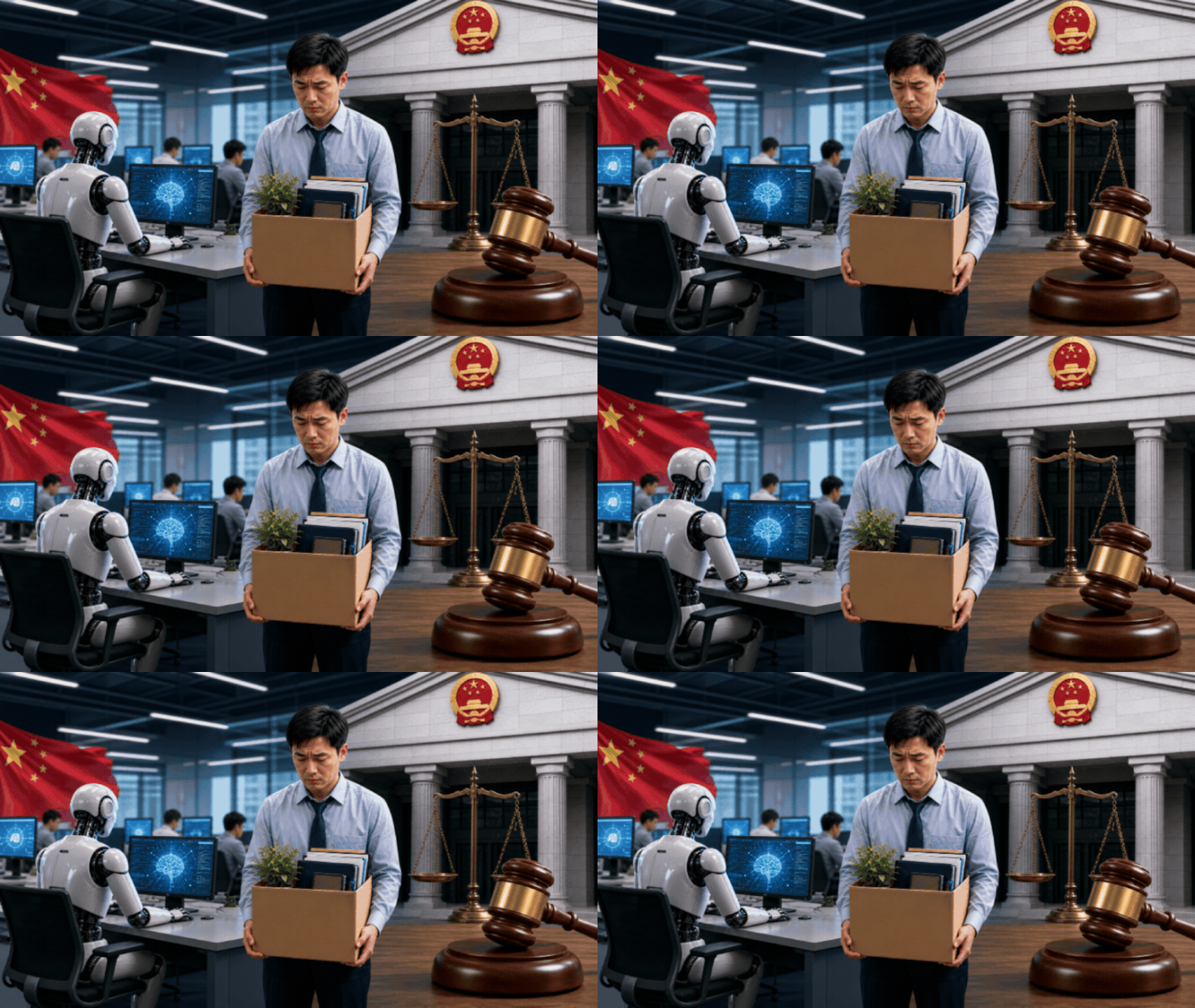
A court in China has delivered a crucial ruling that could shape how companies deploy artificial intelligence (AI) in the workplace. The decision makes it clear that employers cannot fire workers solely to replace them with AI systems, reinforcing legal protections for employees amid rapid technological change. The verdict came after a dispute involving a technology firm in eastern China, where an employee was terminated after refusing to accept a demotion linked to automation of his role.
The Hangzhou Intermediate People’s Court examined the case and ruled that the company’s actions were unlawful, according to a Bloomberg report.
In its findings, the court stated that the company failed to justify the dismissal under legally acceptable conditions.
“The termination grounds cited by the company did not fall under negative circumstances such as business downsizing or operational difficulties, nor did they meet the legal condition that made it ‘impossible to continue the employment contract,'” the court said in the article dated April 28, the report said.
The ruling underscores that technological upgrades, including automation through AI, do not automatically qualify as valid reasons for ending employment contracts.
Companies Can Not Use Tech As An Excuse
In a separate clarification tied to the same case, the court stressed that businesses cannot act unilaterally when it comes to workforce decisions driven by innovation. Employers are not permitted to cut salaries or lay off workers simply because machines or AI tools can perform certain tasks more efficiently, as per the report.
This stance reflects a broader legal principle that prioritises fairness and due process, even as industries undergo digital transformation.
The judgment arrives at a time when Chinese firms are aggressively adopting AI technologies, supported by a national push to lead in advanced tech sectors. At the same time, policymakers, including those within the Chinese Communist Party, are grappling with the need to maintain job stability.
With economic growth facing pressure and youth unemployment remaining a concern, authorities appear keen to prevent large-scale job displacement triggered by automation. The ruling signals an effort to strike a balance—encouraging innovation while safeguarding livelihoods.
