
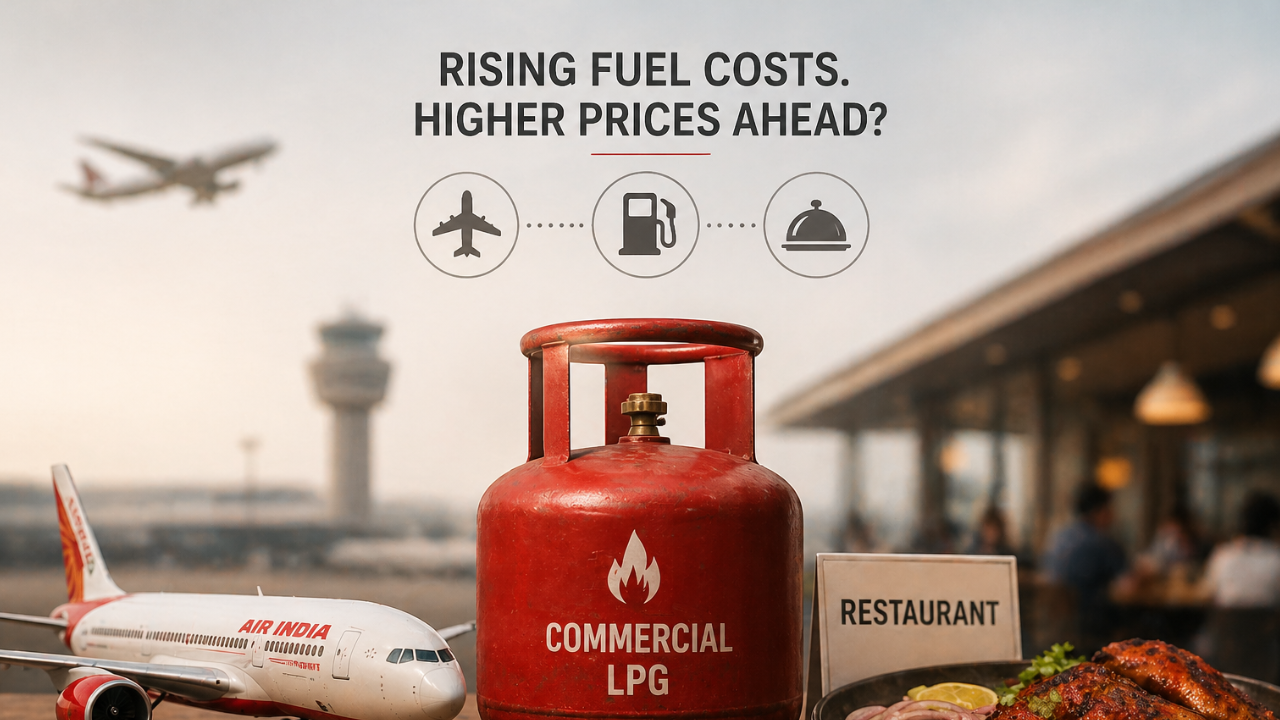
New Delhi: From airlines to restaurants, rising fuel costs are beginning to hit consumers hard as tensions in West Asia push energy prices sharply higher. Air India is set to cut nearly 100 flights a day across domestic and international routes starting June, as soaring aviation turbine fuel (ATF) prices put immense pressure on operations. The airline, which currently operates around 1,100 flights daily, is expected to trim services on routes to Europe, North America, Australia and Singapore. The reduction of flights will put more pressure on existing flights, and with summer holidays approaching, flight tickets are expected to get costlier.
Global jet fuel prices have surged nearly 80 per cent, climbing to $179.46 per barrel in the week ended April 24 from $99.40 at the end of February.
“We are not recovering even the operating cost on most flights. A sustained increase will force us to cut more,” a senior Air India official told Economic Times.
To offset costs, Air India is also considering making meals optional on domestic and short-haul international flights. Passengers who skip meals could save over Rs 250 on their tickets. The airline is also weighing optional lounge access for business-class travellers.
Hike In Commercial Cylinder Prices
Meanwhile, restaurants and hotels are facing an even bigger shock. The price of a 19-kg commercial LPG cylinder has been hiked by Rs 993 amid escalating tensions in West Asia. In Delhi, the new price now stands at Rs 3,071.50.
This is the third hike since late February, following increases in March and April. Smaller 5-kg Free Trade LPG cylinders have also become costlier, with prices rising by Rs 261.
The sharp jump is expected to squeeze margins for restaurants, caterers and small businesses, many of which rely heavily on commercial LPG for daily operations.
“Restaurants operating margins have been under pressure due to higher rentals & rising wages for some time now & this consistent commercial LPG price hike will strain the operating margins further,” said Ashish Begwani A Restauranteer who owns high-end Restaurants in Multiple Metros Cities like Mumbai & Kolkatta.
Begwani further added that, “ For now we are trying to hold the price-line so that it doesn’t bite the customers.”
Hotels, too, are adapting quickly to the rising fuel costs and supply disruptions.
A popular hotel chain Diector in Chennai, said, “Hotels across cities have started exploring more energy sources. We now have a fully functional bio gas plant within our hotel premises. Initially, our offerings were minimised when scarcity hit, buffet were minimised, but within a week we were back to the regular offerings. In between we were paying a premium to get cylinders for hotel and started using coal instead of gas for paranthas, moved to tandoori parantha, avoided pizza ovens but now we are very much back and fully operational.”
There is, however, some relief for households. Domestic LPG cylinder prices remain unchanged.
The government has also cut export duties on diesel and ATF for the next fortnight starting May 1. Export duty on diesel has been reduced to Rs 23 per litre from Rs 55.5, while ATF duty has been cut to Rs 33 per litre from Rs 42. Petrol export duty remains nil.
With crude oil and fuel prices remaining elevated, consumers could soon feel the impact everywhere – from airfares and restaurant bills to the everyday cost of doing business.
