
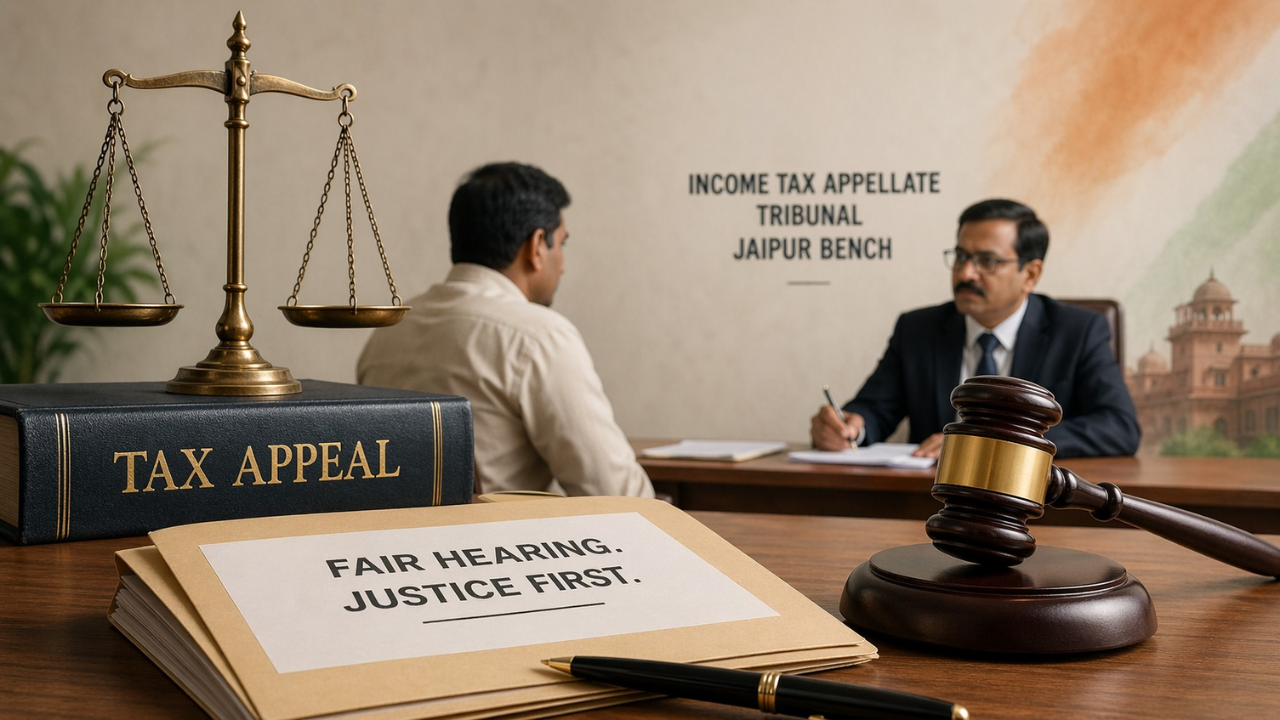
In a notable decision that highlights the importance of fairness in tax proceedings, the Jaipur bench of the Income Tax Appellate Tribunal (ITAT) has granted relief to a Jaipur-based taxpayer who filed his appeal after a delay of more than 600 days. The individual argued that it was due to his limited understanding of digital systems and tax procedures. The case, titled Kishan Lal Meena vs ITO, saw the tribunal condone a 631-day delay and send the matter back to the Assessing Officer (AO) for fresh consideration.
The ruling stressed that procedural hurdles should not deprive a taxpayer of the opportunity to present their case, according to a report from Financial Express.
The dispute dates back to the Assessment Year 2009–10. The Income Tax Department reopened the assessment after identifying credit card expenses amounting to Rs 15.75 lakh through financial data tracking.
The taxpayer had neither filed an income tax return nor responded to notices issued under Sections 148 and 142(1). In the absence of any reply or supporting documents, the AO proceeded with a best judgment assessment and classified the entire expenditure as unexplained under Section 69C, states the FE report.
As recorded in the order: “No submission or evidence has been received… therefore it is presumed that the assessee has nothing to say.”
Appeal Stage And Setback
The taxpayer later approached the Commissioner of Income Tax (Appeals) [CIT(A)], but the situation remained unchanged. No documents or explanations were submitted during this stage either.
Consequently, the CIT(A) dismissed the appeal ex-parte, upholding the addition made by the AO. The authority stated that “the appellant has failed to discharge the burden of proof… no evidence has been submitted.”
When the matter eventually reached ITAT, there was a delay of 631 days in filing the appeal. The taxpayer explained that he had studied only up to Class 12 and lacked familiarity with computers and the online tax portal. This, he said, prevented him from responding to notices and pursuing the appeal process on time.
He maintained that the delay was unintentional and stemmed from a lack of awareness and technical knowledge.
ITAT’s Stand: Justice Over Procedure
Taking a balanced view, the tribunal acknowledged the challenges faced by the taxpayer and observed that he had remained unrepresented in earlier proceedings. Denying him an opportunity to be heard, it said, would be unjust. In a key observation, the ITAT remarked: “The lis between the parties has to be decided on merits so that nobody’s rights could be scuttled down without providing opportunity of being heard.”
Rather than deciding the case on merits, the tribunal chose to condone the delay and set aside previous orders. It directed that the matter be reconsidered by the AO, giving the taxpayer a fresh chance to present evidence and arguments.
However, the tribunal also cautioned the taxpayer to actively cooperate in future proceedings and avoid unnecessary delays. It clarified that no opinion had been expressed on the merits of the case.
Why This Ruling Is Significant
This decision brings attention to a broader issue within India’s tax system, the gap between increasing digitalisation and taxpayer readiness. While compliance processes have largely shifted online, many individuals, particularly from smaller towns or limited educational backgrounds, continue to face difficulties. The ruling reinforces the principle that procedural shortcomings should not override the fundamental right to a fair hearing, especially in cases involving genuine hardship.
It is important to note that this is a ruling of the Income Tax Appellate Tribunal (ITAT). ITAT decisions can be challenged before the High Court and, thereafter, the Supreme Court. Therefore, legal positions may evolve depending on further appeals.
