
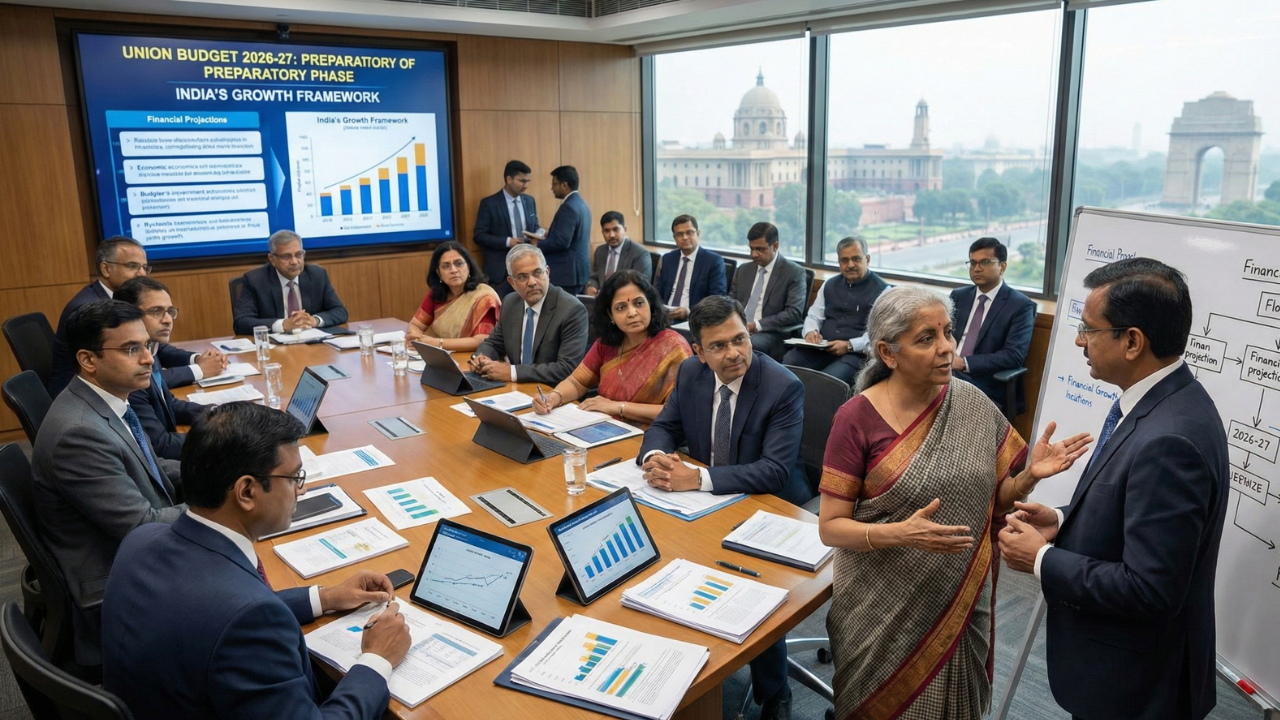
The Union Budget for the 2026–27 financial year is set to be presented in the Lok Sabha on February 1, preceded by the tabling of the Economic Survey on January 29. Finance Minister Nirmala Sitharaman will make history by presenting the Union Budget for the ninth time.
Notably, this will be the second instance of the Union Budget being presented on a Sunday. The last time it happened was on February 28, 1999, when then Finance Minister Yashwant Sinha presented the Budget for the 1999–2000 financial year.
According to Times Now sources, the Budget session will start with Presidential address followed by Economic Survey. Sources stated that it is going to be a working weekend with President Droupadi Murmu addressing the Parliament.
Also Read | Budget 2026 Expectations: Can Policy Ease India’s Costly And Complex Home Buying Process?
Among recent finance ministers, P Chidambaram presented nine Union Budgets, while Pranab Mukherjee delivered eight during their tenures under different prime ministers.
Nirmala Sitharaman became India’s first full-time woman finance minister in 2019 after Prime Minister Narendra Modi returned to power for a second term. She retained the finance portfolio when the Modi-led government won a third consecutive term in 2024.
Meanwhile, the government’s First Advance Estimates released on January 7 project India’s real gross domestic product (GDP) to grow by 7.4% in FY 2025–26, despite global headwinds and an ongoing tariff war. This would mark an improvement over the 6.5% growth recorded in the previous year.
Also Read | Budget 2026: How India’s Budget Is Made – The Full Process & Expectations
The advance estimates form a key input for the preparation of the Union Budget, which is scheduled to be presented on February 1.
The Union Budget has traditionally been presented on February 1 since 2017, a change introduced by former finance minister Arun Jaitley. Last year, February 1 fell on a Saturday and an interim Budget was presented on that day.
How India’s Budget Is Made
Preparing the Union Budget is a long, complex, and demanding process in which some of the country’s sharpest minds work day and night. When the Finance Minister presents the Budget on February 1, 2026, it will reflect months of hard work and a vision aimed at shaping India’s economic direction.
The responsibility of preparing the Budget lies with the Department of Economic Affairs (DEA) under the Ministry of Finance.
The “Blue Sheet” is the most crucial Budget document and is not allowed to be taken outside the Finance Ministry.
The Union Budget is usually presented in Parliament on February 1 so that all decisions can be implemented before the new financial year begins.
Before the Budget documents are printed, a long-standing tradition known as the Halwa Ceremony is observed at the Finance Ministry. After this ceremony, officials and staff associated with the Budget are effectively locked into the North Block basement. Their mobile phones and internet access are suspended to ensure absolute secrecy and prevent any leaks. This strict confidentiality is considered vital for safeguarding the country’s economic interests.
