
Shopping for a new mattress can be stressful—this is something you plan to sleep on for years to come, after all. But your old one can be its own problem for the environment.
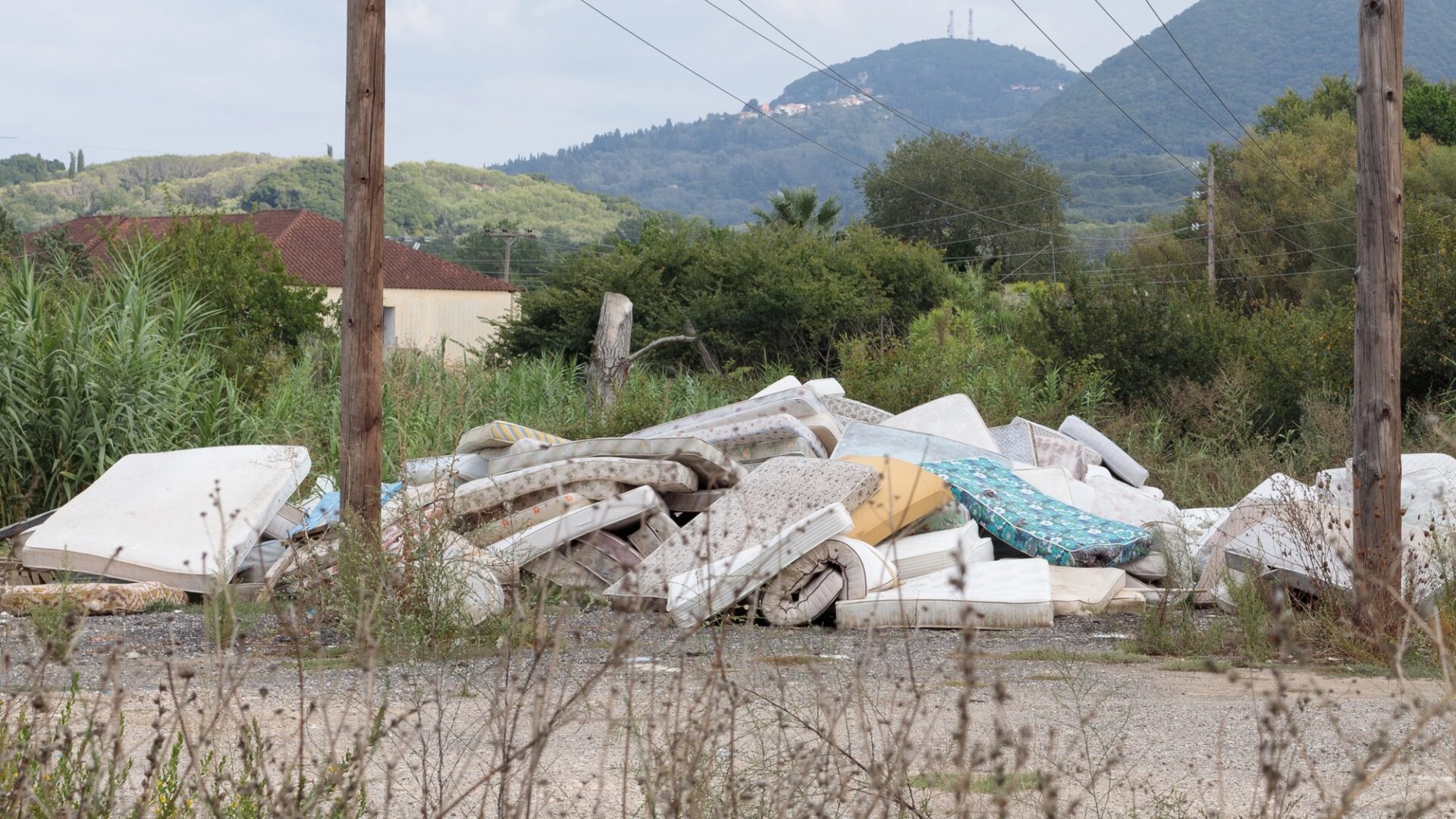
Despite containing upwards of 75 percent recyclable material, an estimated 50,000 mattresses are still discarded every day in the United States. Once in a landfill, the bulky trash can take as long as 120 years to decompose. It’s such a huge problem that there’s now even a Mattress Recycling Council dedicated to addressing the issue.
Luckily, its council members may soon have a new cause for celebration. According to a recently published study in the journal Scientific Reports, researchers at Australia’s Swinburne University of Technology have developed a process that converts retired mattresses into safe, eco-friendly building insulation. Their secret weapon for making it happen? A fungal relative of penicillin.
“Mattresses are durable, bulky, and often end up in landfill,” study co-author and chemical engineer The Nguyen said in a statement. “Through natural biological processes, we can give this waste a second life.”
Photographic and microscopic analysis of mattress waste before and after treatment. (a) Shredded mattress waste, (b) Optical image of mycelium-based bio-composites derived from recycled mattress waste, (c) Scanning electron micrograph of the mycelium-based bio-composites. Credit: Scientific Reports
In this case, Nguyen’s team relied on Penicillium chrysogenum to get the job done. P. chrysogenum isn’t the same species of fungi famously repurposed by Alexander Fleming (that would be Penicillium rubens), it is in the same genus as that lifesaving antibiotic. After cultivating the spores, the researchers then combined them with shredded polyurethane foam harvested from old mattresses. As the fungal roots began binding to the trash, they formed naturally occurring calcium carbonate deposits. These mineral compounds then meshed with the foam to create a lightweight solid that is also incredibly heat resistant. In stress tests, the material easily withstood exposure to temperatures nearing 1,832 degrees Fahrenheit.
“The material performed well as an insulator, with heat-blocking ability very close to commercial insulation products already used in homes and buildings,” explained Nguyen.
The team believes that with further development, their new recycling strategy could create a new generation of materials used for fire-resistant insulation, building panels, and possibly even 3D-printed construction components.
“Our work shows how combining biology with waste materials, while leveraging deep manufacturing science, can lead to smart, low-impact solutions that better the environment and the lives of everyone,” said Nguyen.
The post Fungi help turn old mattresses into insulation appeared first on Popular Science.
Fungi help turn old mattresses into insulation
